Skip to content
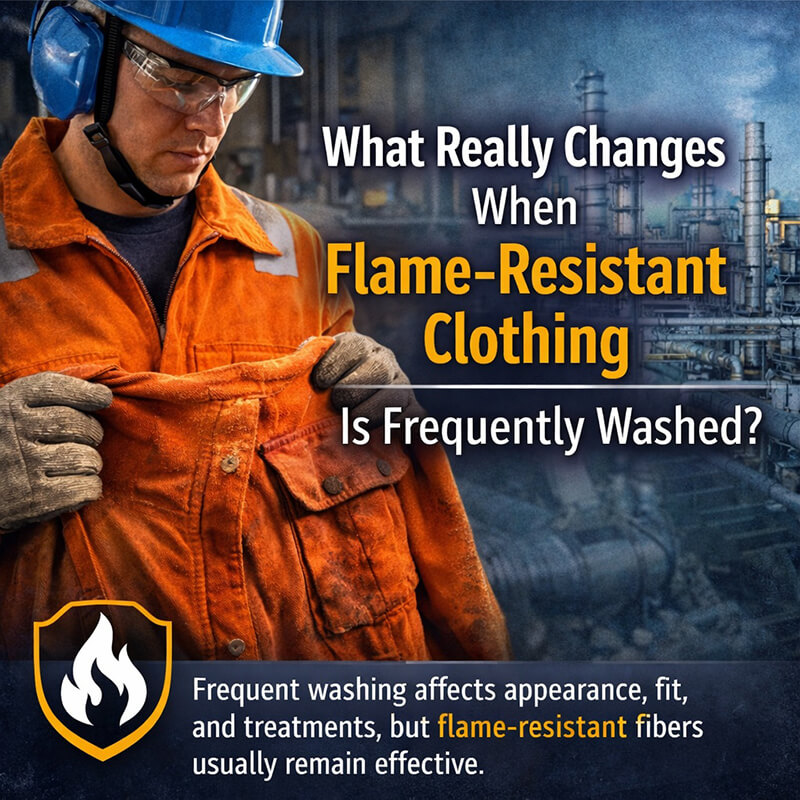
Flame-resistant (FR) clothing is a critical component of workplace safety in many industrial environments. While it is designed to protect against fire hazards, many users wonder:
“If I wash my FR clothing frequently, does it lose its protective properties?”
Understanding the effects of washing on FR garments is essential to maintain both safety and comfort.
1️⃣ The Fabric Structure: Core Protection vs Surface Appearance
FR clothing is made from fibers and fabrics specifically engineered to resist ignition and self-extinguish. These properties are built into the fiber structure, not just a surface coating.
When FR clothing is washed frequently:
-
Surface wear may occur – fading, pilling, or slight fabric thinning
-
Fiber integrity largely remains – the inherent flame-resistant property of the fibers is generally not removed
Key takeaway:
The garment may look worn, but it does not necessarily mean the flame-resistant protection is gone.
2️⃣ Coatings and Treatments: What Can Be Affected
Some FR garments have chemical finishes or treatments applied to enhance performance, such as:
-
Anti-wrinkle
-
Water repellency
-
Enhanced flame resistance (for certain blended fabrics)
With repeated washing:
-
These surface treatments may gradually diminish
-
As a result, secondary performance features like water repellency may reduce
-
Core flame-resistance generally remains intact, but always check the garment label for care instructions
3️⃣ The Role of Detergents and Water Temperature
FR clothing care instructions are designed for safety and longevity. Frequent washing with:
-
Strong detergents
-
High water temperatures
…can accelerate wear, cause minor fiber damage, or reduce surface treatments.
Best practice:
-
Use mild detergents, avoid bleach
-
Follow manufacturer-recommended water temperatures
-
Avoid fabric softeners that may leave residues affecting fabric performance
4️⃣ Comfort, Fit, and Protective Coverage
Frequent washing can also impact:
-
Fit – shrinkage or slight stretching may occur
-
Comfort – fibers may feel stiffer or softer depending on fabric
-
Coverage – cuffs, hems, and seams may wear faster
While these changes do not always reduce flame-resistance, they can affect user comfort and safety perception, which in turn influences compliance.
5️⃣ How to Know When an FR Garment Should Be Retired
Even though flame-resistant fibers are durable, repeated washing plus daily wear eventually requires replacement. Signs include:
-
Visible damage – holes, tears, worn-out seams
-
Reduced coverage – gaps that expose skin
-
Significant loss of secondary properties – water repellency, anti-static performance
Tip: Regular inspection is just as important as washing frequency.
Conclusion: Washing Changes Appearance More Than Core Protection
Frequent washing of FR clothing primarily affects:
-
Appearance and feel of the fabric
-
Surface treatments and secondary features
-
Fit and coverage
The core flame-resistant property usually remains, as it is built into the fibers. Proper washing, inspection, and care help maintain safety and prolong the life of the garment.
Flame-resistant clothing continues to protect effectively when users follow care guidelines, inspect garments regularly, and replace them when wear compromises coverage or safety features.
Want to understand more about flame-resistant clothing in different industrial contexts? Check out our posts on Flame-Resistant + Anti-Static Clothing: Added Protection or a Misunderstood Safety Combination? and Why Choosing Flame Resistant Clothing Based Only on Fabric Weight Is a Common—and Dangerous—Mistake.