Skip to content
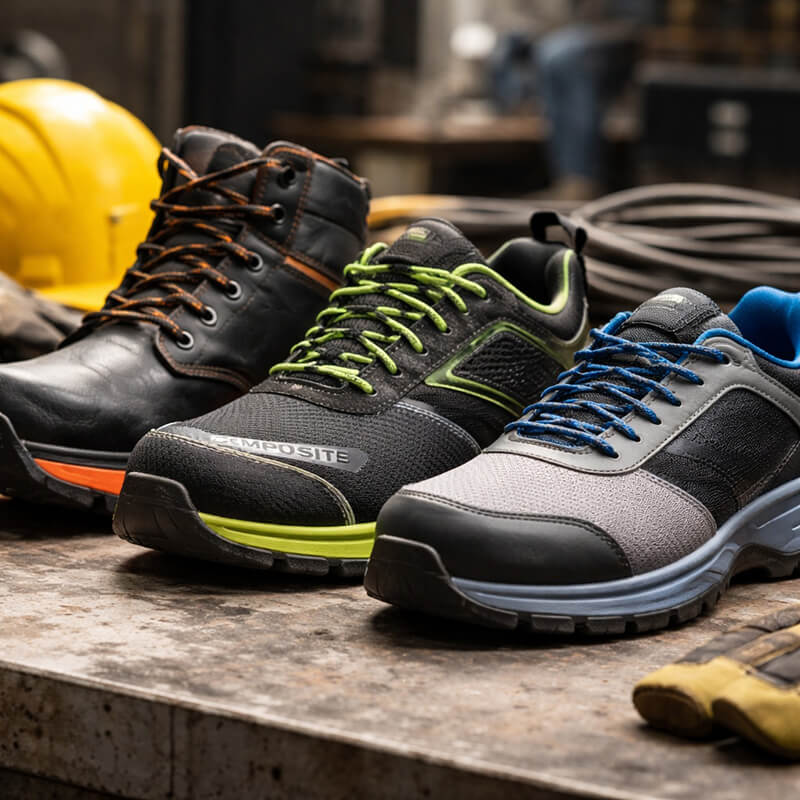
Choosing safety shoes isn’t just about the model – the material matters. This article analyzes steel toe, composite, and other safety shoe materials, helping you pick the right pair for different work environments.
1. Why Safety Shoe Materials Matter
The main purpose of safety shoes is to protect your feet from impact, compression, or puncture. The material of the toe cap and sole determines protection level, comfort, and suitability for different environments. When choosing safety shoes, material is often more important than appearance.
⚠️ If you’re still unsure about safety shoe standards, check out our previous blog: How to Understand EN ISO 20345: A Simple Guide to Choosing the Right Safety Shoes
2. Steel Toe Shoes
Advantages:
-
Strong impact and compression resistance (typically 200–250J)
-
High puncture resistance, ideal for heavy industry and construction
-
Widely available and reasonably priced
Disadvantages:
-
Heavier, can cause fatigue during long work hours
-
Conducts cold in winter and heat in summer, less comfortable
-
Metal toe caps may trigger metal detectors or be inconvenient in high-temperature environments
Best For: Construction, steel, heavy machinery, warehouse logistics
3. Composite Toe Shoes
Advantages:
-
Made from fiber, carbon fiber, or plastic; lighter than steel
-
Non-conductive and heat-resistant, suitable for electricians or high-temperature work
-
Comparable protection to steel toe shoes (meets EN ISO 20345 standards)
-
Comfortable for long hours
Disadvantages:
-
More expensive than steel toe shoes
-
Slightly lower protection against extreme impact or sharp punctures
Best For: Electronics, electrical work, light industry, long-standing work
4. Aluminum Toe Shoes
Advantages:
-
Lightweight, 30–50% lighter than steel toe
-
Metal protection with standard impact resistance
-
Sleeker appearance, suitable for daily industrial use
Disadvantages:
-
Less resistant to extreme impacts or high temperatures
-
Slightly more expensive than standard steel toe shoes
Best For: Warehousing, light industry, logistics
5. Other Special Materials
-
Kevlar / high-strength fiber soles: puncture-resistant, cut-resistant
-
Rubber soles: anti-slip, chemical-resistant
-
PU / EVA midsoles: lightweight and cushioning for comfort
6. How to Choose the Right Safety Shoe
-
Identify your work environment: Steel or composite toe for heavy industry; composite toe for electrical or high-temperature work.
-
Consider comfort: For long hours standing or walking, composite or lightweight materials are preferable.
-
Check standards: Make sure shoes meet EN ISO 20345 or local safety standards.
-
Balance cost and lifespan: High-quality composite shoes cost more but are more comfortable; steel toe shoes are durable and affordable.
💡 Tip: If possible, keep two pairs for different environments to extend shoe lifespan.
Conclusion
Each safety shoe material has its pros and cons. Choosing the right one requires balancing protection, comfort, and the working environment. The right material not only protects your feet but also improves work efficiency.