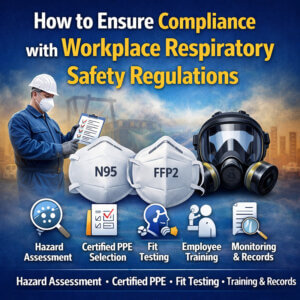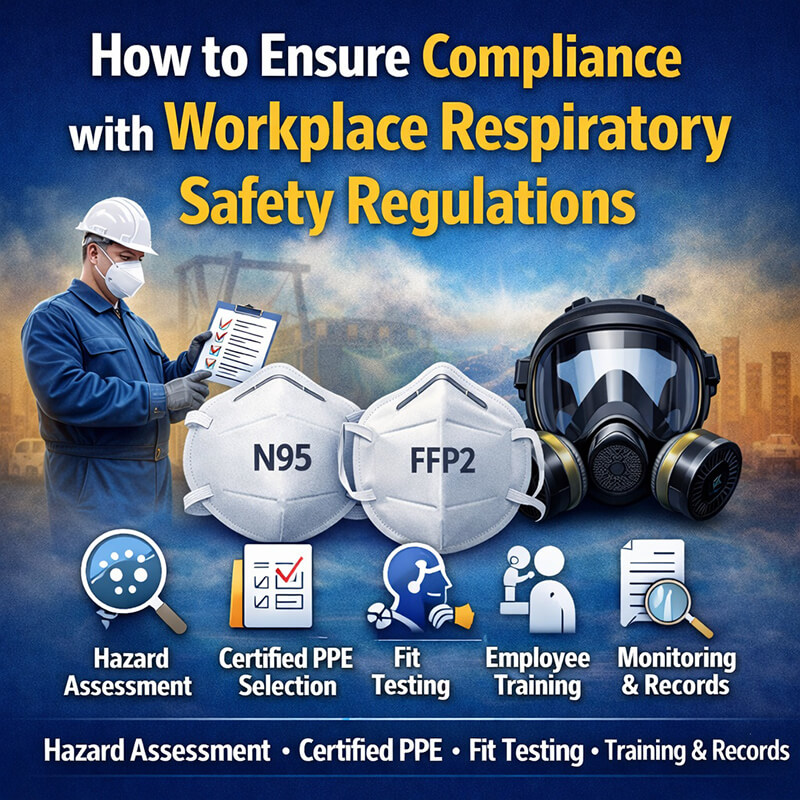
Workplace respiratory safety is critical for protecting employees from dust, fumes, and hazardous gases. Learn how to ensure compliance with regulations through proper PPE selection, training, and monitoring.
Why Compliance Matters
Non-compliance with respiratory safety regulations can lead to:
-
Health risks for employees
-
Legal penalties and fines
-
Reduced productivity due to illness or accidents
Proper compliance ensures that respirators and PPE are effective, safe, and meet regulatory standards.
Key Steps to Ensure Compliance
1. Conduct a Hazard Assessment
-
Identify airborne hazards in the workplace: dust, fumes, vapors, gases
-
Determine the level of exposure to select appropriate PPE
2. Select Certified Respiratory Protection
-
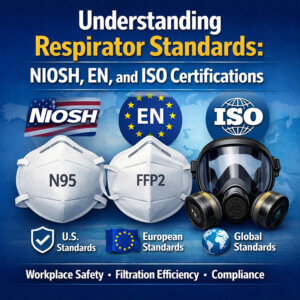
Choose respirators that meet NIOSH, EN, or ISO standards
-
Ensure the right type and fit for the specific hazard
3. Fit Testing and Seal Checks
-
Perform fit tests for tight-fitting respirators
-
Conduct seal checks each time the respirator is worn
4. Employee Training
-
Teach proper donning, doffing, and maintenance procedures
-
Train employees to recognize filter saturation and equipment failure
5. Maintenance and Record-Keeping
-
Clean and inspect respirators regularly
-
Replace filters, cartridges, and damaged parts as needed
-
Maintain records of training, inspections, and PPE usage
Additional Compliance Tips
-
Follow local workplace safety regulations (OSHA, NFPA, EU directives)
-
Review and update safety programs periodically
-
Encourage a safety-first culture among employees
Key Takeaways
-
Compliance requires hazard assessment, proper PPE, training, and maintenance
-
Certified respirators and regular fit checks are essential
-
Record-keeping and periodic program review ensure long-term safety and compliance