Skip to content
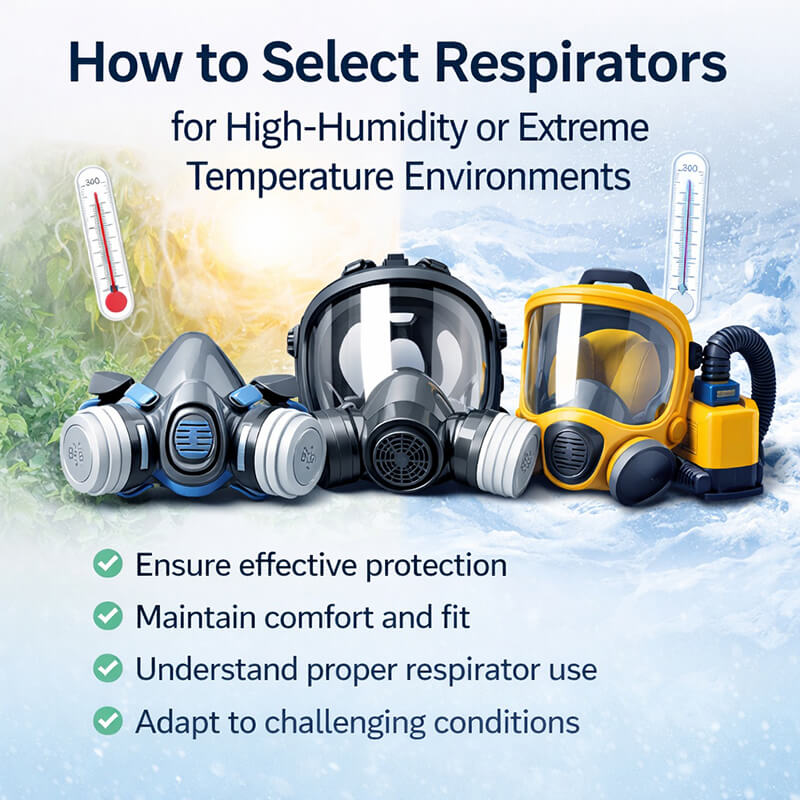
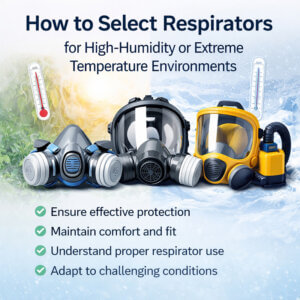
High humidity and extreme temperatures can affect respirator performance. Learn how to select and use the right respirators to ensure safety, comfort, and reliable protection in challenging environments.
Why Environmental Conditions Matter
Respirators are tested under standard conditions, but high humidity, heat, or cold can impact:
-
Filtration efficiency
-
Seal and fit
-
User comfort and endurance
Improper selection may reduce protection and increase risk of exposure to dust, fumes, or chemicals.
Key Considerations for High-Humidity Environments
-
Filter Performance
-
High humidity can clog filters faster
-
Use respirators with moisture-resistant filters
-
-
Comfort and Breathability
-
Humid environments increase heat and moisture inside the mask
-
Consider lightweight half-mask respirators or PAPRs with airflow
-
-
Seal Maintenance
-
Sweat or condensation can break the face seal
-
Choose respirators with adjustable straps and soft, flexible sealing material
-
Key Considerations for High-Temperature Environments
-
Material Selection: Use heat-resistant masks and components to prevent deformation
-
Breathing Comfort: High temperatures increase fatigue; PAPRs can reduce breathing effort
-
Durability: Avoid respirators that degrade under prolonged heat exposure
Key Considerations for Low-Temperature Environments
-
Face Seal Flexibility: Cold can stiffen sealing materials, reducing effectiveness
-
Filter Performance: Ensure filters remain functional in freezing conditions
-
Condensation Management: Warm exhaled air may condense inside mask; choose full-face or PAPR models with airflow control
Practical Tips
-
Select respirators tested for extreme conditions – Check manufacturer specifications
-
Use airflow-assisted respirators (PAPRs) for high heat or humidity
-
Regularly inspect seals, straps, and filters in harsh environments
-
Train workers to adjust and maintain respirators in different weather conditions
Key Takeaways
-
High humidity → moisture-resistant filters, proper airflow, adjustable seal
-
High temperature → heat-resistant materials, lightweight or PAPR options
-
Low temperature → flexible seals, condensation management, full-face or PAPR
-
Proper selection, fit, and maintenance are crucial for reliable protection in extreme environments
To learn more, you may refer to the following resources:
→ Choosing Respirators for Chemical, Dust, and Fume Protection
→ N95, FFP2, FFP3 Masks: What’s the Difference and How to Choose?