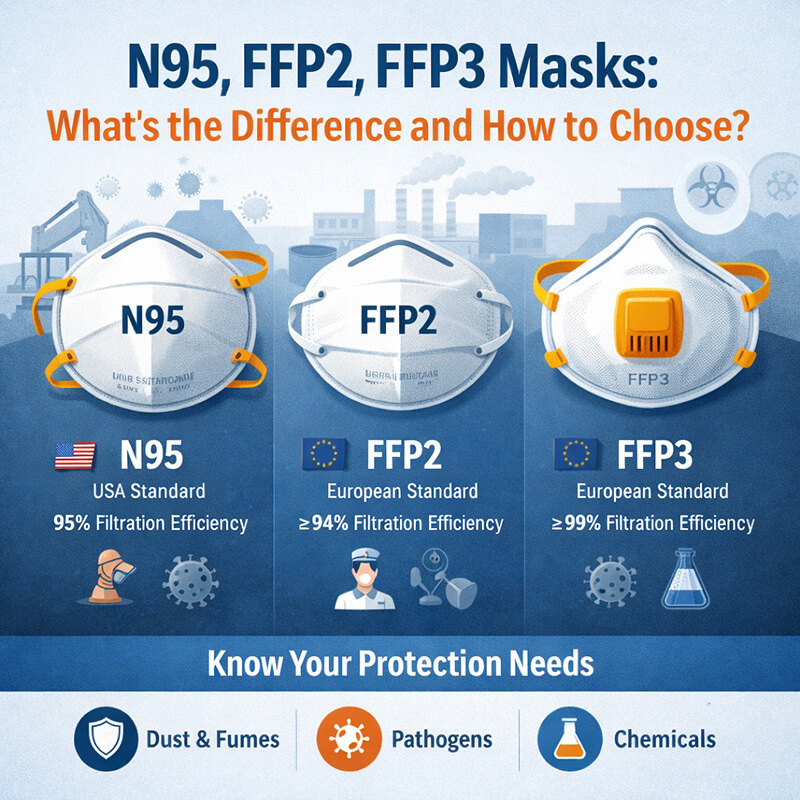
N95, FFP2, and FFP3 masks protect against airborne particles, but their filtration efficiency and applications differ. Learn the differences and how to select the right mask for your workplace or environment.
Why Choosing the Right Mask Matters
Respiratory hazards, including dust, fumes, and pathogens, require proper protection. Wearing the wrong mask may reduce effectiveness and increase exposure risk. Selecting the right mask ensures:
-
Optimal filtration efficiency
-
Comfort for long-term use
-
Compliance with safety standards
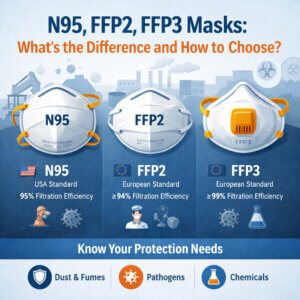
Key Differences Between N95, FFP2, and FFP3
| Mask Type | Filtration Efficiency | Standards | Typical Use |
|---|---|---|---|
| N95 | 95% of airborne particles | NIOSH (USA) | Construction dust, woodworking, light chemical exposure, pandemic protection |
| FFP2 | ≥94% of airborne particles | EN 149:2001 (Europe) | Industrial dust, moderate chemical exposure, medical environments |
| FFP3 | ≥99% of airborne particles | EN 149:2001 (Europe) | High-risk chemical, toxic dust, viruses, or biohazard environments |
Notes:
-
All three are tight-fitting, designed to minimize leakage.
-
FFP3 offers the highest protection level, suitable for environments with dangerous airborne hazards.
How to Choose the Right Mask
-
Assess the Hazard
-
Determine whether the exposure is dust, chemical, or biohazard.
-
Consider particle size, concentration, and exposure duration.
-
-
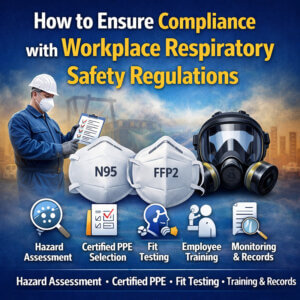
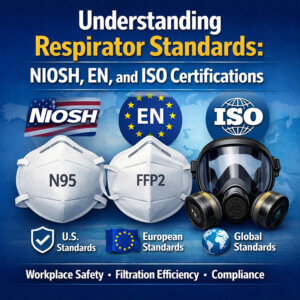
Check Certification
-
N95 → NIOSH approved
-
FFP2/FFP3 → EN 149:2001 compliant
-
-
Fit and Comfort
-
Ensure a tight seal around nose and mouth
-
Look for adjustable nose clips and straps for long-term wear
-
-
Intended Use Duration
-
Disposable masks are suitable for single or limited use
-
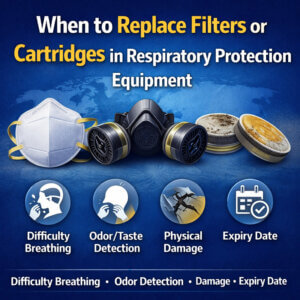
For prolonged work, consider reusable respirators with replaceable filters
-
Key Takeaways
-
N95 masks → Effective for moderate airborne particles, widely used in healthcare and low-risk industrial work
-
FFP2 masks → Similar to N95, often preferred in Europe and moderate industrial hazards
-
FFP3 masks → Maximum filtration, best for high-risk environments
-
Always match mask type to hazard, ensure proper fit, and follow usage guidelines for optimal protection