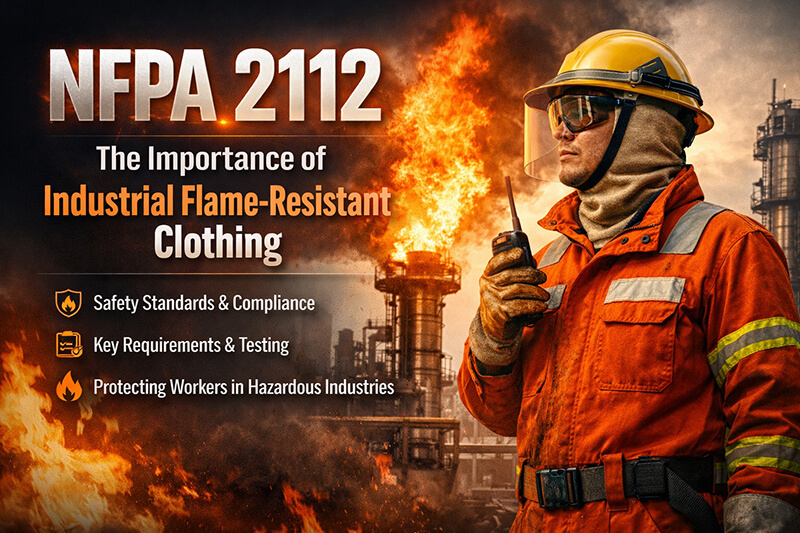
In high-risk industries such as oil & gas, chemical plants, refineries, and power generation, the risk of fire and flash explosions is always present. Protecting employees with the right personal protective equipment (PPE) is critical. NFPA 2112 is a key standard for flame-resistant (FR) clothing in these environments.
What is NFPA 2112?
NFPA 2112 is a performance standard established by the National Fire Protection Association (NFPA) in the United States. It focuses on industrial flame-resistant garments designed for workers exposed to flames or flash fires. The standard defines requirements for garment design, materials, performance testing, and maintenance.
The main objectives are:
Provide protection against short-term flame exposure, reducing the severity of burn injuries.
Standardize materials, stitching, and garment performance for durability and reliability.
Give companies and workers a clear benchmark for protective clothing.
Key Requirements of NFPA 2112
Flame Resistance Testing
Garments must pass the Vertical Flame Test, ensuring that after 3 seconds of flame exposure, the fabric does not continue burning for more than 2 seconds, and the char length remains within allowed limits.
Material Selection
Only certified flame-resistant fibers such as Nomex or Kevlar (or equivalent NFPA-approved materials) are allowed to maintain flame resistance even after repeated washing.
Stitching and Design
NFPA 2112 sets strict requirements for seams, fasteners, and trims to prevent flame propagation through structural weaknesses.
Labels and Information
All garments must have clear labels indicating NFPA 2112 compliance, material composition, and care instructions.
Why NFPA 2112 Compliance Matters
Employee Safety: FR garments compliant with NFPA 2112 significantly reduce the risk of serious burns in fire or flash events.
Regulatory Compliance: Many industrial companies and insurers require NFPA 2112-compliant garments to meet safety audits or insurance requirements.
Worker Confidence: Employees wearing certified FR clothing feel safer and can focus on their work.
How to Choose NFPA 2112-Compliant Clothing
Verify Certification: Ensure the product has NFPA 2112 certification or third-party testing.
Consider Your Work Environment: Different roles require different designs; choose garments suited to actual hazards.
Comfort Matters: FR clothing should not only be protective but also breathable and flexible.
Regular Inspection and Maintenance: Check seams, wear, and other damage to maintain compliance and protection.
Conclusion
NFPA 2112 is the gold standard for industrial flame-resistant clothing. It ensures worker safety, regulatory compliance, and confidence in high-risk workplaces. When purchasing FR clothing, always choose certified, high-quality garments and follow proper care and maintenance to fully benefit from the protection NFPA 2112 guarantees.