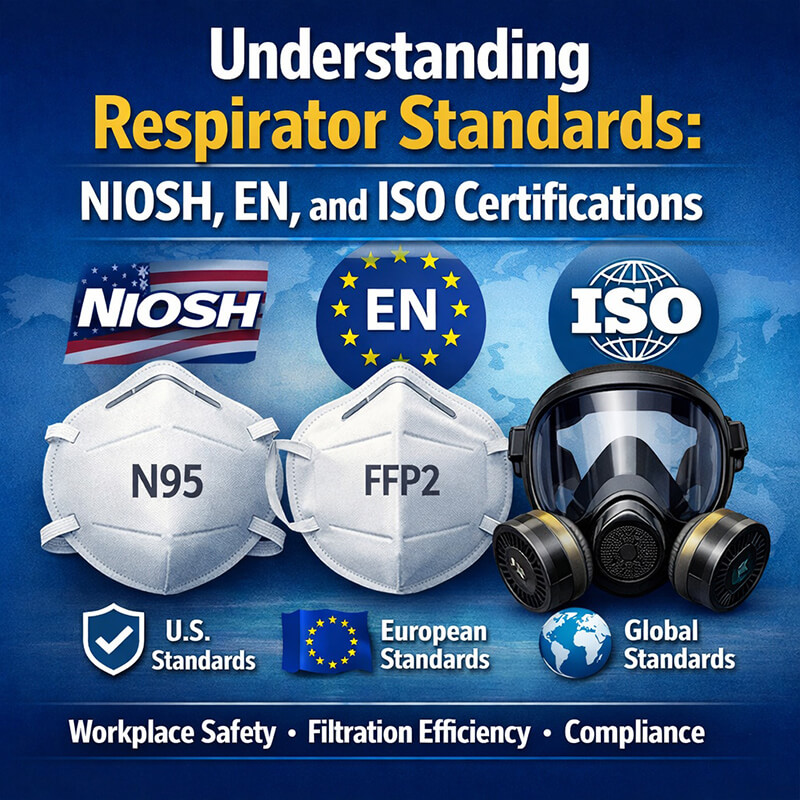
Respirator standards ensure safety and reliability. Learn the key differences between NIOSH, EN, and ISO certifications to select the right respiratory protection for your workplace.
Why Respirator Standards Matter
Standards certify that respirators meet performance, filtration, and safety requirements. Understanding these certifications helps you:
-
Choose the right respirator for hazards
-
Ensure compliance with workplace regulations
-
Protect workers effectively from dust, fumes, and chemicals
Key Respirator Standards
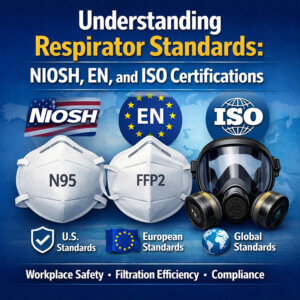
1. NIOSH (National Institute for Occupational Safety and Health)
-
Region: United States
-
Focus: Filtration efficiency and performance under U.S. occupational standards
-
Examples: N95, N99, P100 respirators
-
Application: Industrial dust, construction, healthcare
2. EN (European Norms)
-
Region: European Union
-
Focus: PPE performance and protection levels under European standards
-
Examples: FFP1, FFP2, FFP3 respirators
-
Application: Dust, fumes, aerosols in EU workplaces
3. ISO (International Organization for Standardization)
-
Region: Global
-
Focus: Quality management, manufacturing consistency, and international safety standards
-
Application: Ensures respirators meet international safety and quality benchmarks
How to Choose Based on Standards
-
Match standard to your region: NIOSH in the U.S., EN in Europe, ISO globally
-
Check protection levels: Compare N95 vs FFP2, P100 vs FFP3 based on filtration efficiency
-
Ensure compatibility with workplace hazards: chemical, dust, or fume exposure
Key Takeaways
-
NIOSH, EN, and ISO certifications ensure reliable respiratory protection
-
Selecting the right standard depends on region, hazard type, and required protection level
-
Proper understanding of standards ensures safety, compliance, and performance