Fabric weight directly impacts comfort, protection, and durability of coveralls. This article explains common fabric weight ranges and features, including CHEAMY reflective coverall weight references.
1. What is Fabric Weight?
Fabric weight refers to the weight of one square meter of fabric, measured in g/m² (grams per square meter).
-
Higher weight: thicker, more durable, better protection
-
Lower weight: lighter, breathable, comfortable, but less protective
Fabric weight is a key factor for balancing comfort, durability, and safety.
2. Common Coverall Fabric Weights
| Fabric Weight | Features | Suitable Work Environments |
|---|---|---|
| 40–60 g/m² | Extremely light and breathable | Dust protection, labs, low-contamination environments |
| 60–80 g/m² | Lightweight, moderate durability | General protection, minimal liquid splash work |
| 90–120 g/m² | Medium thickness, good durability, improved protection | Chemical handling, construction, industrial operations |
| 120–150 g/m² | Thick, strong tear resistance, high protection | Painting, heavy industry work |
| 150 g/m²+ | Very thick, maximum protection | High-risk operations, corrosive or flammable environments |
Tip: Balance protection, comfort, and flexibility when selecting fabric weight.
3. CHEAMY Reflective Coverall Weight Reference
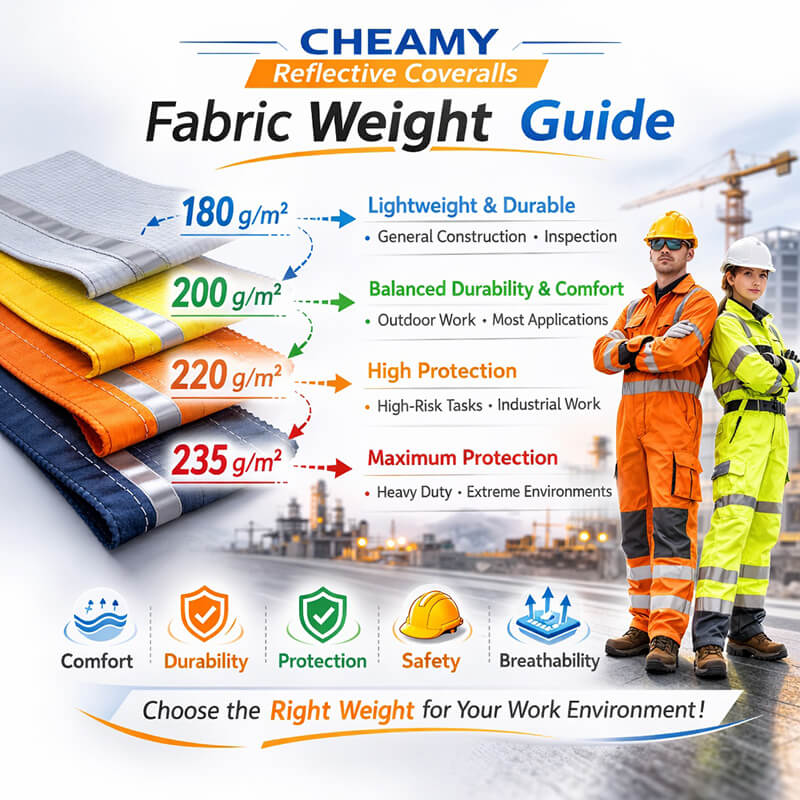
CHEAMY reflective coveralls are designed for industrial and construction environments. Standard fabric weights:
| Fabric Weight | Features |
|---|---|
| 180 g/m² | Lightweight yet durable, suitable for general construction and inspection |
| 200 g/m² | Balanced durability and comfort, suitable for most outdoor tasks |
| 220 g/m² | High-strength protection, suitable for higher-risk work |
| 235 g/m² | Very thick and durable, suitable for heavy industry or high-risk operations |
Tip: Choose fabric weight according to work risk and comfort requirements.
4. Characteristics of Different Fabric Weights
-
Low weight (40–80 g/m²): Lightweight, breathable, comfortable for long-term wear, limited protection
-
Medium weight (90–120 g/m²): Balanced durability and protection, suitable for most industrial tasks
-
High weight (120 g/m²+): Strong protection and tear resistance, heavier, less flexible
5. Tips for Choosing Coverall Fabric
-
Select weight based on work risk
-
Consider comfort: mid-to-low weight for summer or indoor work
-
Balance durability and cost: higher weight fabrics are heavier and more expensive; choose based on frequency of use and budget