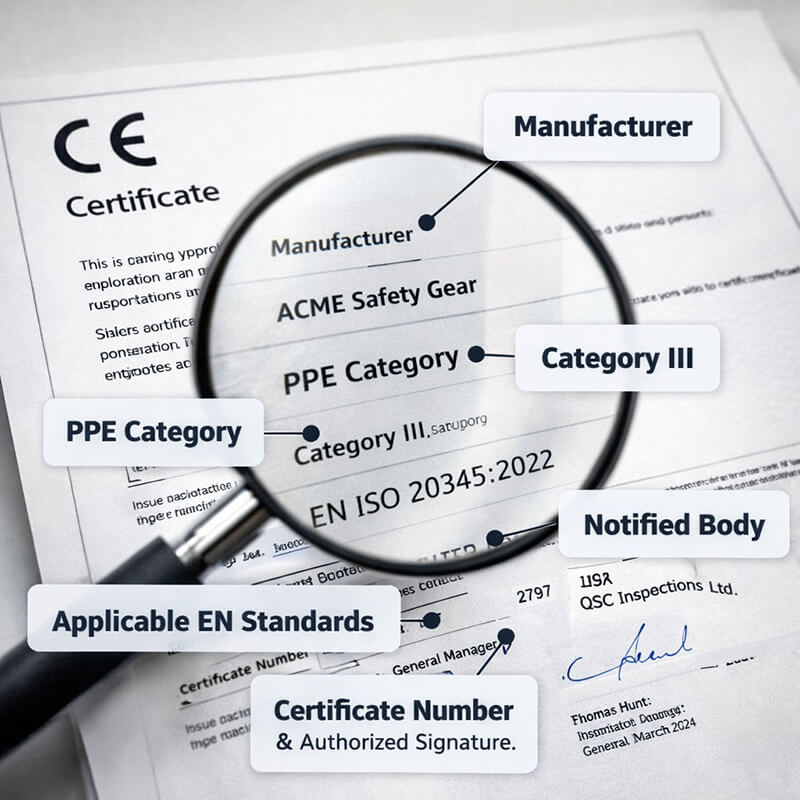
When sourcing PPE products, CE certificates are often the first thing buyers check.
But not every detail on a CE certificate is equally important. Some information is critical for ensuring compliance, while other parts are more administrative.
Understanding which items truly matter can save time, prevent misunderstandings, and ensure you get the PPE that actually protects workers.
1. Manufacturer & Authorized Representative
Why it matters:
-
Confirms who is legally responsible for the PPE.
-
Ensures traceability if any product issues arise.
Tip: Always check that the manufacturer listed on the certificate matches the product label.
If an EU Authorized Representative is listed, it indicates the manufacturer has appointed someone to handle compliance matters in Europe.
2. PPE Product Description & Category
Why it matters:
-
Shows what the certificate actually covers (gloves, helmets, protective clothing, etc.).
-
Specifies PPE category (I, II, or III) which relates to risk level:
-
Category I: simple design, minimal risk
-
Category II: intermediate risk, tested against relevant standards
-
Category III: complex PPE, protects against serious risks, often requiring independent testing
-
Tip: Make sure the category matches your intended use. Category III requires the most stringent testing.
3. Applicable Standards
Why it matters:
-
Lists which EN standards the PPE complies with (e.g., EN 388 for gloves, EN ISO 20345 for safety shoes).
-
Indicates specific protection properties: cut resistance, puncture resistance, impact resistance, etc.
Tip: A CE certificate is only valid for the standards listed. Don’t assume it covers other types of protection.
4. Notified Body Number (if applicable)
Why it matters:
-
Category II PPE may be self-certified; Category III must involve a Notified Body (independent EU testing organization).
-
The Notified Body number confirms third-party verification for high-risk PPE.
Tip: No Notified Body listed for Category III PPE = potential compliance problem.
5. Certificate Number & Issue Date
Why it matters:
-
Certificate number allows you to verify authenticity with the issuer.
-
Issue and expiry dates ensure the certificate is current, not expired.
Tip: Always ask for the latest version of the CE certificate. Outdated certificates may not reflect current standards.
6. Signature / Authorized Signatory
Why it matters:
-
Confirms the certificate is officially issued.
-
Provides a contact point for verification if needed.
Tip: Certificates without a signature or stamp may be invalid or forged.
7. What Doesn’t Really Matter
Some information on CE certificates is mostly administrative, like:
-
Minor formatting details
-
Company address (unless you need it for verification)
-
Internal reference codes
These should not distract from the critical parts listed above.
Conclusion
Not all CE certificate details are equally important.
For PPE buyers, the key points to focus on are:
-
Manufacturer & Authorized Representative
-
Product description & category
-
Applicable EN standards
-
Notified Body number (for Category III)
-
Certificate number & dates
-
Authorized signature
By understanding these, you can read CE certificates confidently and avoid compliance risks.
At CHEAMYPPE, we make sure the PPE we provide not only meets standards but comes with clear, verifiable CE certification, so you know your employees are truly protected.