An emergency eyewash station is not just a piece of equipment — it’s a critical safety measure that can prevent permanent eye damage. Learn why it’s essential, how to choose the right type, and where to install it in your workplace.
When Seconds Matter: The Role of Emergency Eyewash Stations
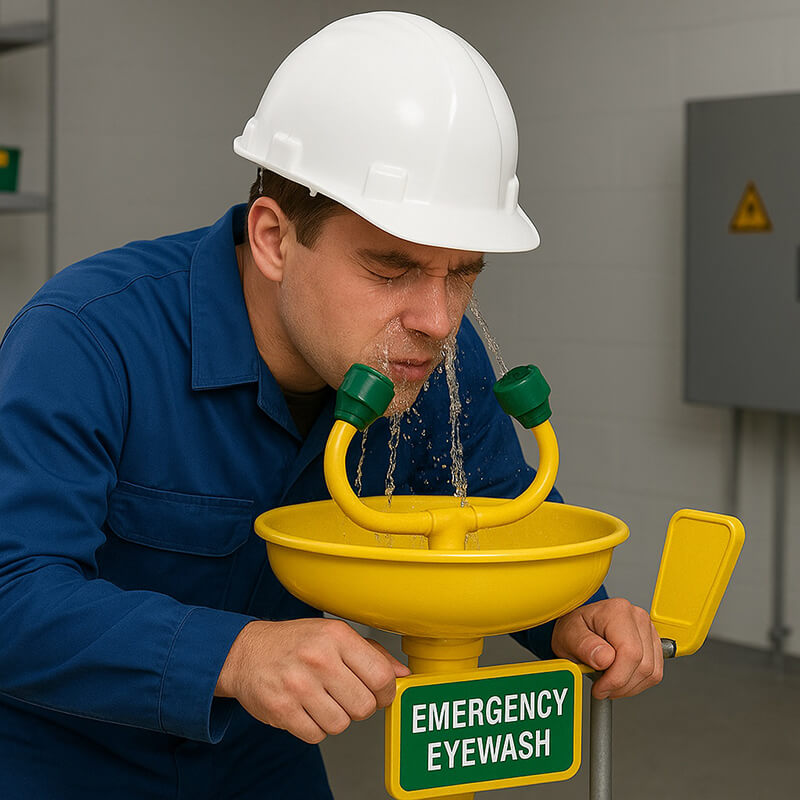
In any workplace where chemicals, dust, or hazardous substances are present, an accident can happen in the blink of an eye — literally. Emergency eyewash stations provide immediate flushing to remove harmful contaminants before they cause lasting eye injury. According to safety standards, even a few seconds’ delay can determine whether vision is preserved or lost.
These stations are especially critical in industries such as construction, laboratory, manufacturing, chemical handling, and automotive maintenance — anywhere workers might be exposed to splashes, fumes, or airborne particles.
Types of Emergency Eyewash Stations
Choosing the right eyewash station depends on the work environment and mobility needs. Here are the most common types:
-
Plumbed Eyewash Stations – Permanently connected to a clean water supply, offering continuous flow. Ideal for fixed work areas such as laboratories or workshops.
-
Portable Eyewash Stations – Self-contained units with their own water supply, perfect for remote sites or temporary workplaces.
-
Combination Units – Combine an eyewash station with a safety shower for full-body decontamination, often used in chemical plants or industrial settings.
Where to Install an Eyewash Station
Placement can make all the difference in an emergency. According to ANSI Z358.1 standards, eyewash stations should be:
-
Located within 10 seconds (around 15 meters) of a potential hazard
-
Clearly marked and well-lit
-
On the same level as the hazard, with no obstacles in between
-
Able to deliver 15 minutes of continuous water flow
Regular testing and maintenance are also essential to ensure proper operation at all times.
Key Features to Look For
When selecting an eyewash station, pay attention to:
-
Flow rate and temperature – Tepid water (16–38°C) is recommended
-
Ease of activation – Hands-free operation is ideal
-
Maintenance accessibility – Easy inspection and cleaning
-
Durability – Resistant to corrosion and impact
Maintenance: Don’t Wait Until It’s Too Late
Many workplaces install eyewash stations but forget about regular maintenance. Water stagnation, dirt buildup, or corrosion can render the system useless when it’s most needed.
Conduct weekly inspections to ensure water clarity, test valves, and check pressure. Also, document maintenance schedules to stay compliant with safety regulations.
Final Thoughts
An emergency eyewash station is a small investment that can save eyesight — or even a life. It reflects a company’s commitment to safety and responsibility.
At CHEAMY, we provide a range of PPE and safety solutions designed to protect your team in every situation — because we believe “We don’t just provide PPE, we provide safety.”