Skip to content
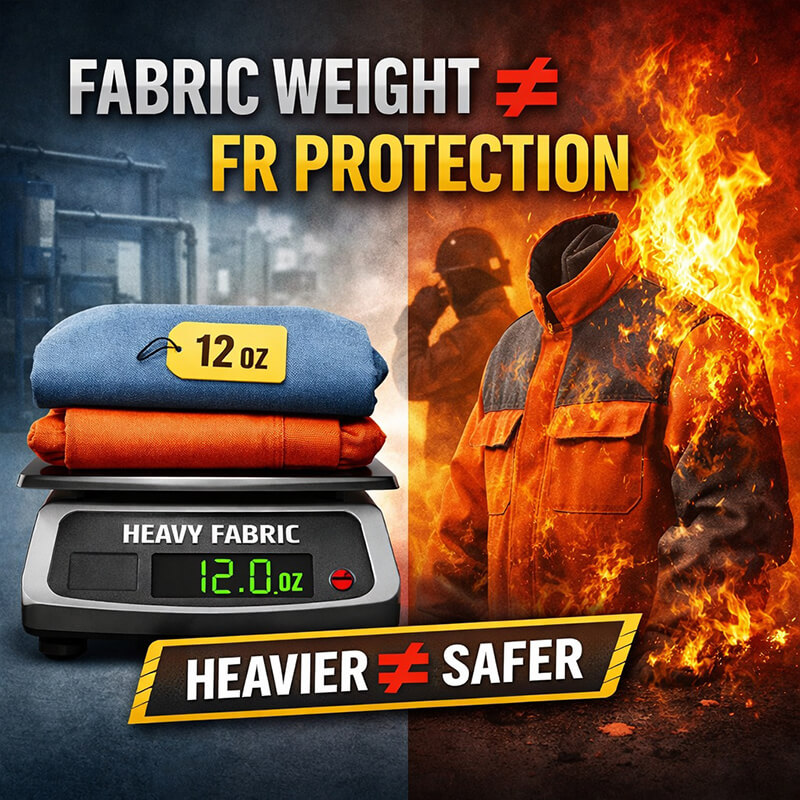
When selecting flame resistant (FR) clothing, fabric weight (measured in GSM or oz/yd²) is often one of the first parameters buyers look at.
At first glance, this seems logical.
Heavier fabric feels thicker, stronger, and more protective.
But in reality, using fabric weight as the primary—or only—decision factor is a common and potentially dangerous misunderstanding.
Because when it comes to thermal hazards, weight does not equal protection.
Fabric Weight Tells You How Heavy the Garment Is — Not How It Protects You
Fabric weight simply describes how much the fabric weighs per square meter or per square yard.
It can indicate:
-
Durability
-
Breathability
-
Comfort in different climates
What it does not reliably indicate is:
-
Thermal insulation against flash fire
-
Heat transfer behavior
-
Performance under real ignition scenarios
Two FR fabrics with the same weight can behave very differently when exposed to flame or radiant heat.
Why Heavier Does Not Always Mean Safer
A heavier FR garment may offer longer burn-through time, but that does not automatically translate to better protection.
Here’s why:
1. Fiber Type Matters More Than Weight
An 8 oz inherent FR fabric and an 8 oz treated cotton FR fabric are not equivalent, even if the weight is identical.
-
Inherent FR fibers resist ignition by nature
-
Treated fabrics rely on chemical finishes that may degrade over time
Weight alone does not tell you how stable that protection is.
2. Heat Transfer Can Increase with Thickness
Heavier fabrics can absorb and retain more heat.
In short-duration flash fire scenarios, this retained heat may:
-
Continue transferring to the skin after flame exposure
-
Increase the risk of deeper burns
Protection is about controlled heat release, not just resistance to flame.
3. Garment Design Changes Everything
Two garments made from the same fabric weight can perform very differently depending on:
-
Air gaps between fabric and skin
-
Layering compatibility
-
Seam construction and closures
Thermal protection depends on the system, not the fabric alone.
The Real Metrics That Matter More Than GSM
If fabric weight is not the answer, what should buyers focus on?
🔹 Certified Performance Standards
Look for compliance with recognized standards such as:
-
ISO 11612
-
NFPA 2112
-
IEC 61482 (for arc flash exposure)
These tests simulate real hazard conditions, not just lab fabric properties.
🔹 Thermal Performance Values
Key indicators may include:
-
Heat transfer index (HTI)
-
Arc Thermal Performance Value (ATPV)
-
After-flame and after-glow time
These values directly relate to injury risk, not comfort or durability.
🔹 Intended Exposure Scenario
Ask the most important question first:
What kind of thermal event am I protecting against?
-
Flash fire
-
Electric arc
-
Molten metal splash
-
Intermittent heat exposure
Different hazards demand different protective strategies—no single fabric weight fits all.
When Fabric Weight Does Matter — and When It Doesn’t
Fabric weight still has a role, but it should be considered last, not first.
It matters when:
-
Balancing comfort and durability
-
Matching climate conditions
-
Managing worker fatigue and compliance
It does not define protection on its own.
A Safer Way to Select Flame Resistant Clothing
Instead of asking:
“How many grams per square meter is this fabric?”
Ask:
-
What hazard standards does it meet?
-
What thermal performance values are certified?
-
Is the protection inherent or treatment-based?
-
Does the garment design support heat dissipation?
Because in FR clothing, protection is engineered—not weighed.
Final Thought
Fabric weight is easy to compare.
Real protection is not.
Choosing FR clothing based only on GSM may feel practical, but it overlooks the very risks FR garments are meant to address.
And in thermal safety, oversimplification is often the most dangerous mistake.
To explore more about flame resistant clothing, we suggest reading:
Why “Flame Resistant” Does Not Always Mean Real Thermal Protection
Inherent vs Treated Flame-Resistant Fabrics: Which One Truly Protects Workers?