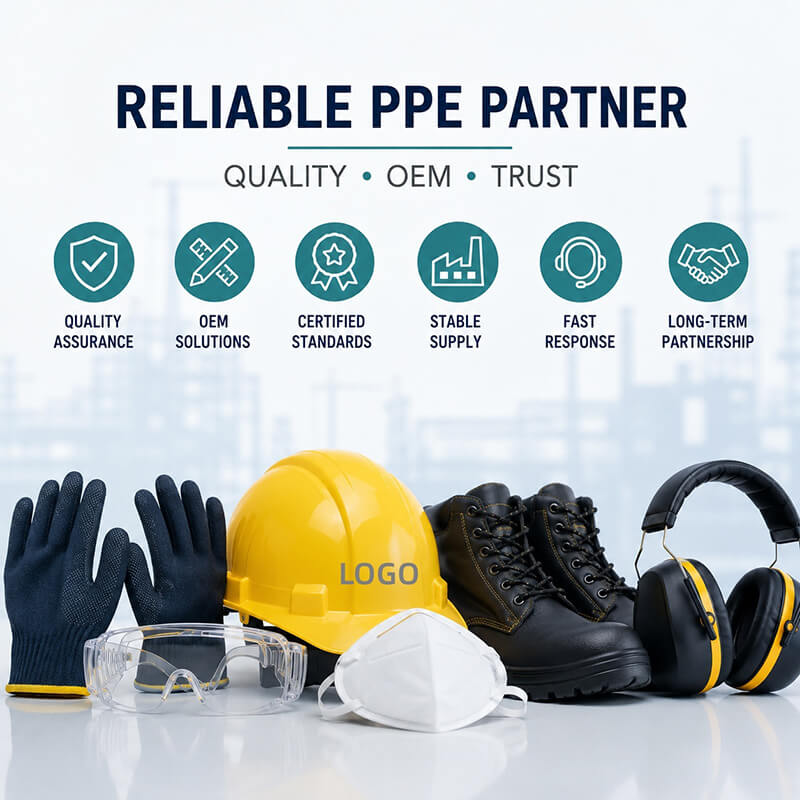
In today’s global safety supply chain, choosing the right PPE manufacturer is not just about placing an order—it is about building a stable, long-term partnership that can support your business growth, brand reputation, and project safety requirements.
Especially for companies looking for OEM PPE solutions, the manufacturer you choose directly affects product consistency, delivery reliability, and market competitiveness.
So what actually makes a PPE manufacturer suitable for long-term cooperation?
1. Consistent Quality That You Can Rely On
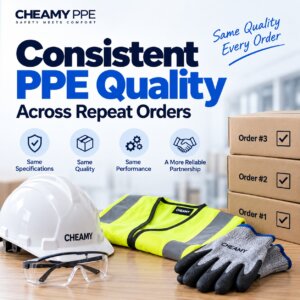
The most important factor in any PPE manufacturer is consistency.
A sample might look perfect, but long-term cooperation depends on whether every batch matches the same standard.
Inconsistent PPE can lead to:
- Uneven protection performance
- Size or material variations
- Compliance risks in different shipments
- Customer complaints or project delays
A reliable manufacturer should have:
- Stable raw material sourcing
- Strict quality control at every production stage
- Clear inspection standards before shipment
- Traceable production records
In PPE sourcing, consistency is more important than occasional excellence.
2. Real OEM PPE Capability (Not Just Logo Printing)
Many suppliers claim they offer OEM services, but true OEM PPE capability goes far beyond adding a logo.
A strong PPE manufacturer should be able to:
- Develop products based on your technical requirements
- Modify materials, colors, design structure, or packaging
- Support private labeling and branding systems
- Maintain repeatable production for future orders
For long-term cooperation, OEM is not a one-time service—it is a continuous development process.
If a supplier cannot maintain stable OEM output, it becomes difficult to build a recognizable brand in your market.
3. Understanding of Real Working Environments
A professional PPE manufacturer should understand how PPE is actually used in the field—not just how it looks in a catalog.
Different industries require different protection priorities:
- Construction: durability and impact resistance
- Oil & gas / industrial sites: chemical and fire protection
- Logistics: flexibility and comfort
- Hot climate regions: breathability and heat reduction
When a manufacturer understands these differences, they can recommend better solutions instead of just selling products.
This is especially important for OEM PPE development, where product design must match end-user needs.
4. Strong Communication and Fast Response
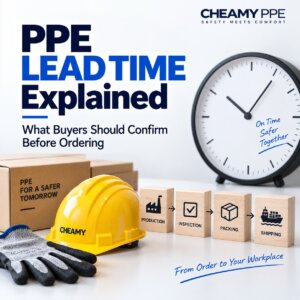
In PPE business, delays in communication often lead to delays in production.
A good long-term PPE manufacturer should provide:
- Fast and clear responses to inquiries
- Honest feedback on feasibility and limitations
- Regular updates during production
- Clear documentation and order tracking
More importantly, communication should be solution-oriented. Problems are normal in manufacturing, but how they are handled defines the partnership quality.
5. Certification and Compliance Support
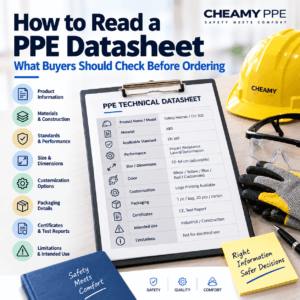
PPE is a regulated product category in most markets. A reliable manufacturer should understand global compliance requirements, such as:
- EN standards (Europe)
- ANSI standards (United States)
- ISO quality management systems
- Product-specific certification requirements
For OEM PPE projects, compliance support becomes even more critical, because different markets may require different documentation and testing standards.
A strong manufacturer not only provides certificates but also helps ensure the product is designed to meet those standards from the beginning.
6. Scalable Production Capacity
Long-term cooperation means your demand will change over time.
A good PPE manufacturer should be able to support:
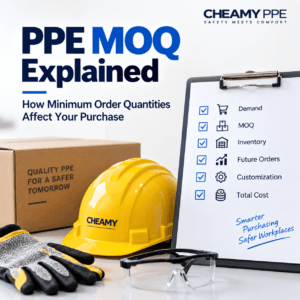
- Small trial orders for new markets
- Medium-sized regular supply
- Large-scale project orders when business expands
Scalability ensures you don’t need to switch suppliers when your business grows.
A stable production system also helps reduce risk during peak seasons or urgent projects.
7. Problem-Solving Mindset
In real manufacturing, problems will happen—material delays, design changes, or unexpected production issues.
The difference between an average supplier and a long-term partner is attitude.
A reliable PPE manufacturer will:
- Communicate issues early
- Offer practical alternatives
- Take responsibility where appropriate
- Focus on protecting your delivery timeline
This kind of mindset is essential for building trust over time.
Conclusion
Choosing a PPE supplier is easy. Choosing a long-term PPE manufacturer partner is strategic.
If you are developing your brand or expanding into new markets, especially with OEM PPE products, the right manufacturer should offer more than just products—they should offer stability, adaptability, and long-term support.
A strong cooperation is built on:
- Consistent quality
- Real OEM capability
- Industry understanding
- Clear communication
- Compliance support
- Scalable production
- Problem-solving attitude
In the PPE industry, safety is the foundation—but partnership is what sustains long-term success.