Skip to content
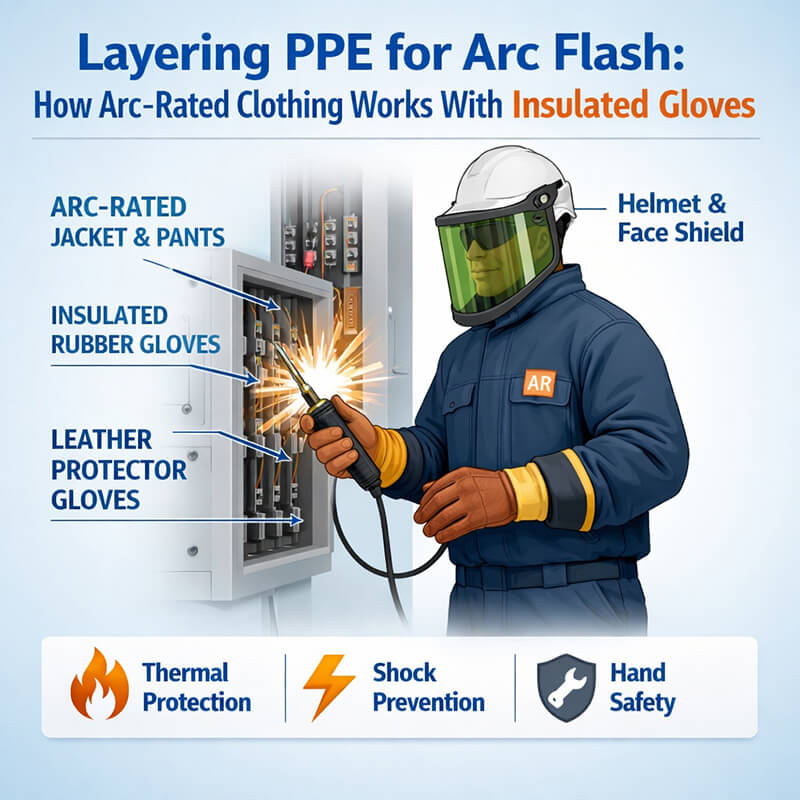
Proper layering of PPE is essential for full protection against electrical arc flash hazards. This guide explains how arc-rated clothing and insulated gloves work together to ensure safety during high-risk electrical work.
Why Layering PPE Matters
Arc flash incidents release extreme heat, molten metal, and intense energy in milliseconds. A single piece of PPE may not provide complete protection. Layering protective equipment helps:
-
Protect against thermal burns
-
Reduce risk of electrical shock
-
Shield from mechanical hazards such as cuts and punctures
How Arc-Rated Clothing and Insulated Gloves Work Together
1. Arc-Rated Clothing
-
Provides thermal protection for the torso, arms, and legs
-
Rated by ATPV (Arc Thermal Performance Value) to withstand specific energy levels
-
Forms the first barrier against heat and molten metal
2. Insulated Gloves
-
Protect hands from electric shock when working on live circuits
-
Typically made from rubber or latex and tested according to ASTM D120 or IEC 60903
-
Should always be worn under leather protector gloves for mechanical protection
3. Leather Protector Gloves
-
Worn over insulated gloves to prevent cuts, punctures, and wear
-
Extends the lifespan of insulated gloves while maintaining electrical safety
-
Provides better grip and tool handling
Tips for Effective PPE Layering
-
Match PPE to Hazard Level
-
Use ATPV ratings and arc flash risk assessments to select clothing
-
Gloves must meet voltage protection requirements for the task
-
-
Check for Proper Fit
-
Clothing should allow free movement
-
Gloves should fit snugly under leather protectors without restricting mobility
-
-
Inspect PPE Before Use
-
Check for cracks, punctures, or wear on gloves
-
Verify arc-rated clothing for tears, burns, or damage
-
-
Layer Strategically
-
Clothing → Insulated Gloves → Leather Protector Gloves
-
Add helmet, face shield, and other PPE as required
-
Key Takeaways
-
Layering PPE is critical for electrical safety during arc flash work.
-
Arc-rated clothing protects the body, insulated gloves protect against shock, and leather protector gloves protect hands from mechanical damage.
-
Proper selection, fit, and inspection of PPE ensure maximum safety and compliance with NFPA 70E and IEC 61482 standards.