Skip to content
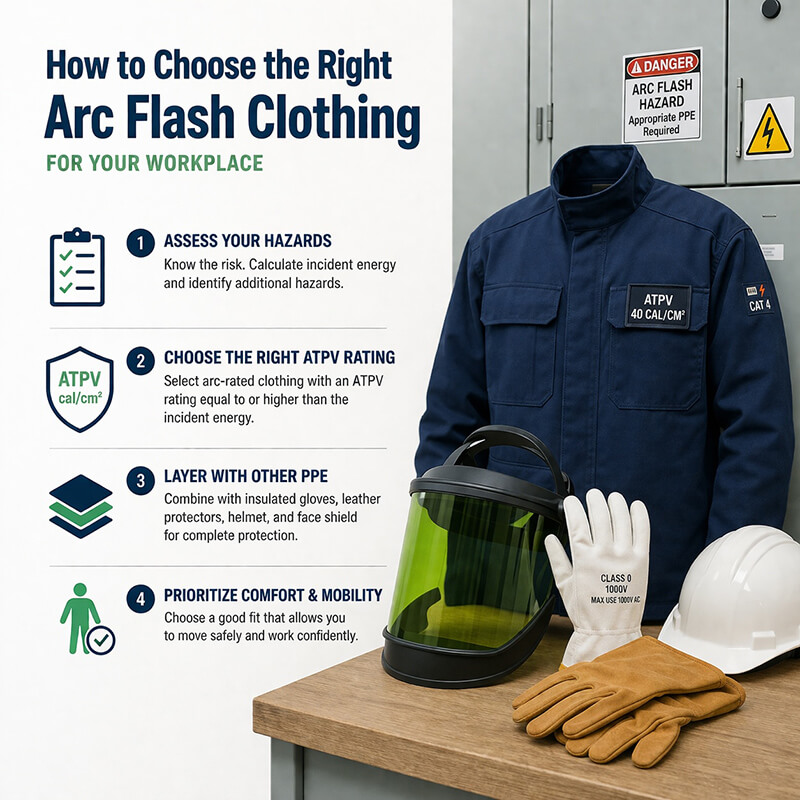
Selecting the right arc flash clothing is essential for protecting workers from burns and injuries. This guide explains how to evaluate workplace hazards, choose appropriate ATPV-rated garments, and layer with other PPE for complete protection.
Why Choosing the Right Arc Flash Clothing Matters
Electrical arc flashes can release extreme heat, molten metal, and intense light in milliseconds. Wearing the correct arc-rated clothing:
-
Protects workers from severe burns
-
Ensures compliance with NFPA 70E, IEC 61482, and other standards
-
Reduces workplace injuries and fatalities
Choosing the wrong clothing can put workers at serious risk, even if they are wearing other protective equipment.
Step 1: Assess Your Workplace Hazards
-
Determine the Arc Flash Risk Level
-
Conduct a hazard analysis to calculate incident energy (cal/cm²).
-
Identify high-risk tasks like live work, high-voltage maintenance, or outdoor electrical operations.
-
-
Identify Additional Hazards
-
Consider sparks, molten metal, chemical exposure, or mechanical impacts.
-
Some garments are rated for multi-hazard protection, combining flame-resistance and mechanical durability.
-
Step 2: Choose the Right ATPV Rating
-
ATPV (Arc Thermal Performance Value) indicates the maximum energy a garment can withstand before a second-degree burn.
-
Example:
-
ATPV 8 cal/cm² – suitable for low-risk tasks
-
ATPV 40 cal/cm² – required for high-risk electrical environments
-
-
Always select clothing with an ATPV rating equal to or higher than the calculated incident energy.
Step 3: Consider PPE Layering
Arc flash clothing is most effective when combined with other PPE:
-
Insulated gloves – inner protection against electric shock
-
Leather protector gloves – mechanical protection over insulated gloves
-
Helmet and face shield – protect head and face from arc flash
-
Arc-rated pants and jacket – full-body coverage
Proper layering ensures comprehensive protection from electrical hazards.
Step 4: Ensure Comfort and Mobility
-
Choose garments with a good fit, allowing full range of motion.
-
Comfortable clothing encourages consistent use, reducing the risk of improper PPE handling.
-
Check for breathability, moisture management, and flexibility, especially for outdoor or physically demanding work.
Key Takeaways
| Step | Recommendation |
|---|---|
| Hazard Assessment | Conduct arc flash risk analysis and identify additional hazards |
| ATPV Rating | Choose clothing rated equal to or above incident energy |
| Layering PPE | Combine with insulated gloves, leather gloves, helmets, and face shields |
| Comfort & Fit | Ensure proper fit for mobility and consistent use |
Choosing the right PPE, including arc-rated clothing, gloves, and face protection, is essential for electrical safety. Evaluate hazards, select the correct ATPV rating, and layer with other PPE to protect workers from severe burns and injuries.