Skip to content
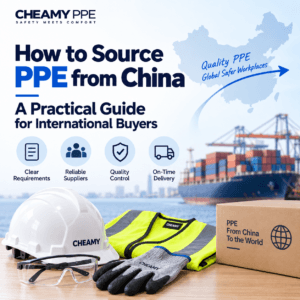
Sourcing PPE from overseas suppliers can significantly reduce cost and expand product options, especially for large contractor projects. However, many buyers run into avoidable problems that lead to delays, quality issues, or unexpected expenses.
Understanding the most common PPE sourcing mistakes helps you build a safer and more stable procurement strategy.
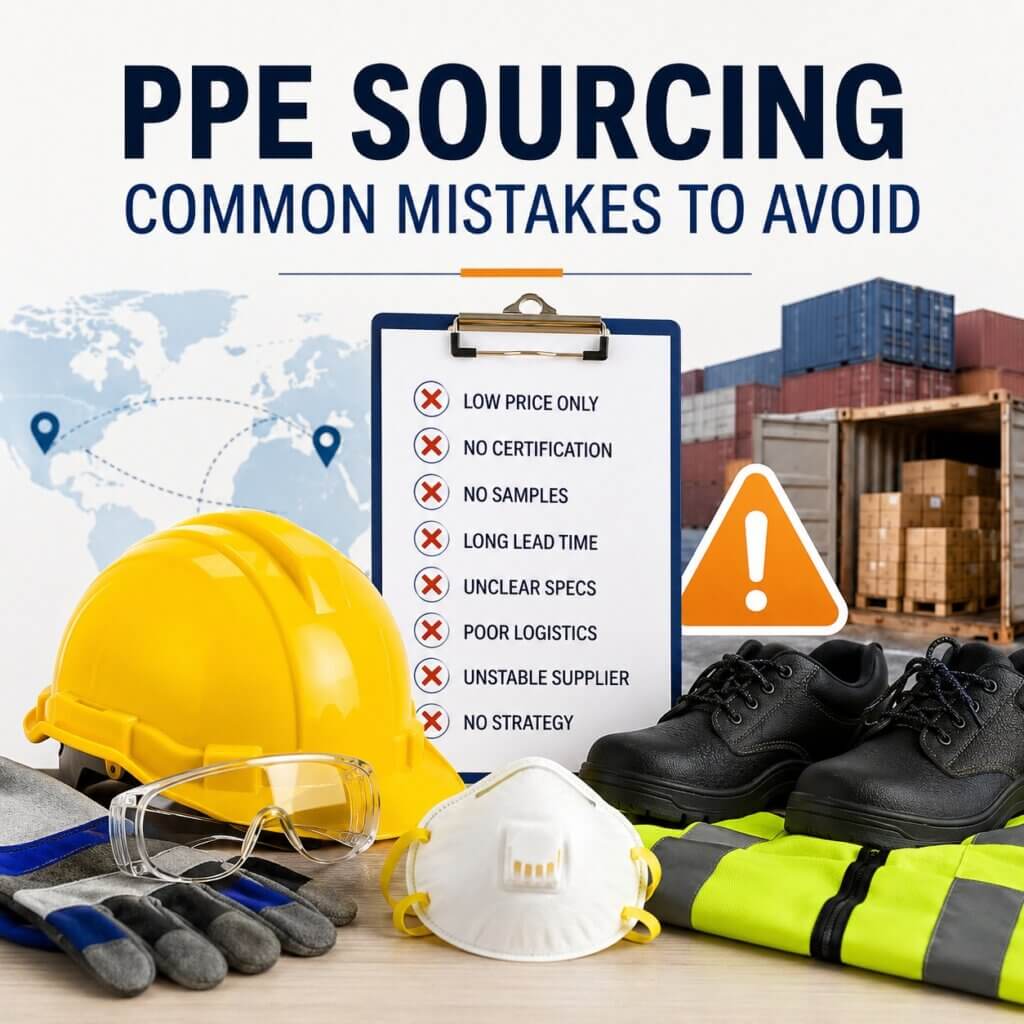
1. Choosing Suppliers Based Only on Price
The most common mistake is selecting the cheapest offer without evaluating overall capability.
Low price often hides risks such as:
- Inconsistent product quality
- Weak quality control systems
- Unstable production capacity
- Hidden costs in logistics or rework
In PPE sourcing, the lowest unit price does not always mean the lowest total cost.
2. Ignoring Certifications and Compliance
Many buyers assume PPE products automatically meet safety standards, which is not always true.
Common oversights include:
- Not checking EN / ANSI / ISO certifications
- Accepting unclear or unverifiable test reports
- Ignoring country-specific compliance requirements
Without proper certification, PPE may be rejected at customs or fail project safety audits.
3. Not Requesting Proper Samples Before Bulk Orders
Skipping sample evaluation is a critical PPE sourcing mistake.
Risks include:
- Material mismatch
- Incorrect sizing or fit
- Poor durability under real working conditions
A proper sample process helps verify both quality and usability before committing to bulk PPE orders.
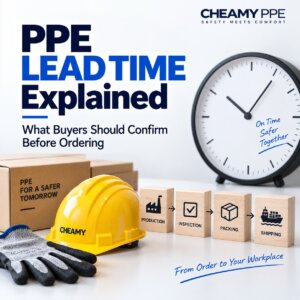
4. Underestimating Lead Time and Production Schedules
Overseas PPE sourcing requires careful time planning.
Common issues:
- Not considering production queue delays
- Ignoring shipping and customs clearance time
- Expecting urgent delivery from factory production orders
This often results in project delays and emergency procurement costs.
5. Poor Communication of Technical Requirements
Many sourcing problems come from unclear specifications.
Examples:
- Missing fabric weight or material details
- Unclear safety level requirements
- No clarification on usage environment (heat, chemical, impact, etc.)
Clear technical communication is essential to avoid incorrect PPE production.
6. Ignoring Packaging and Logistics Planning
Even good PPE products can be damaged or delayed due to poor logistics planning.
Mistakes include:
- Weak packaging for long-distance shipping
- No pallet or container optimization
- Lack of consolidated shipment planning
This increases both damage risk and shipping cost per unit.
7. Overlooking Supplier Stability and Experience
Not all PPE suppliers are suitable for long-term projects.
Risk factors:
- New or unverified factories
- No experience in bulk export orders
- Lack of project-based supply capability
For contractor PPE sourcing, supplier stability is as important as product quality.
8. No Long-Term Procurement Strategy
Many buyers treat PPE sourcing as one-time purchasing instead of a continuous supply chain.
Problems include:
- Price fluctuations between orders
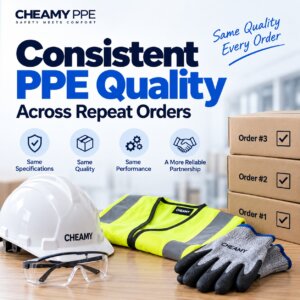
- Inconsistent product batches
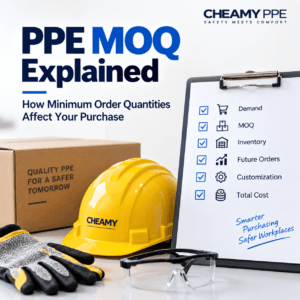
- No negotiation leverage for bulk PPE pricing
A long-term sourcing strategy improves cost stability and supply reliability.
Final Thoughts
Avoiding these common PPE sourcing mistakes can significantly improve project efficiency, reduce hidden costs, and ensure consistent safety performance.
Successful overseas PPE sourcing is not just about finding a supplier—it is about building a controlled, predictable, and reliable supply chain.