Skip to content
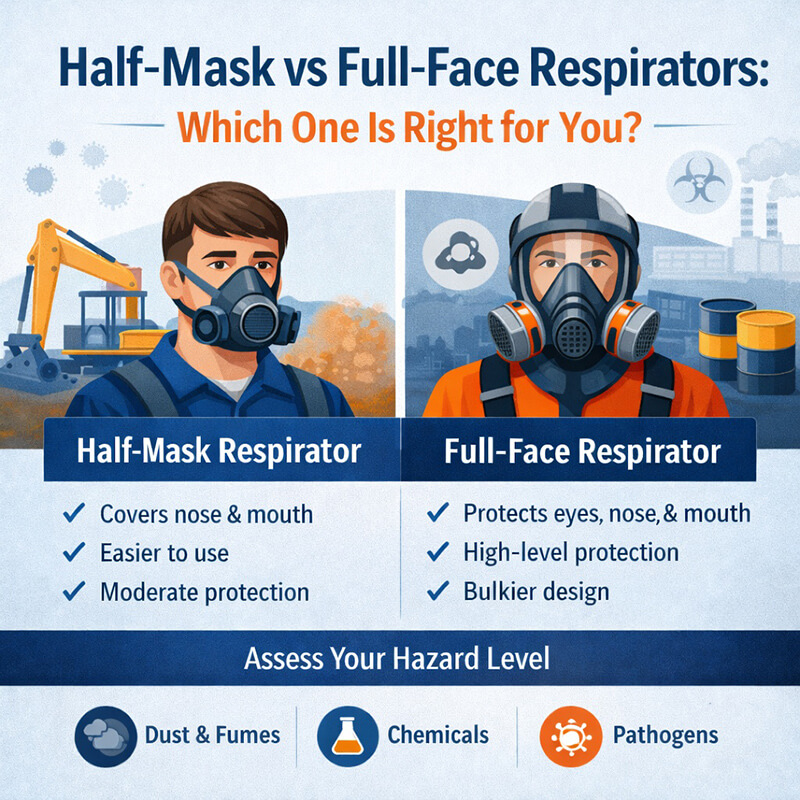
Choosing the right respirator is essential for workplace safety. This guide compares half-mask and full-face respirators, their protection levels, and how to select the best option for your environment.
Why Choosing the Right Respirator Matters
Respirators protect workers from airborne hazards, including dust, fumes, chemicals, and pathogens. The wrong choice can compromise safety and increase exposure risk. Selecting the proper type ensures:
-
Maximum filtration efficiency
-
Eye and face protection (if needed)
-
Comfort and usability for prolonged wear
Half-Mask Respirators
Features:
-
Covers nose and mouth only
-
Uses replaceable filters or cartridges
-
Lightweight and easier to wear
Advantages:
-
Reusable with proper cleaning
-
Moderate chemical and particulate protection
-
Lower cost than full-face models
Limitations:
-
Does not protect eyes
-
Requires proper fit testing for full effectiveness
Typical Use Cases:
-
Painting or spraying
-
Light chemical handling
-
Dusty environments
Full-Face Respirators
Features:
-
Covers entire face, including eyes
-
Uses replaceable filters or cartridges
-
Provides a tight seal against contaminants
Advantages:
-
Protects eyes, nose, and mouth
-
Suitable for high-risk environments
-
Higher overall filtration efficiency
Limitations:
-
Bulkier and heavier than half-mask respirators
-
Requires more maintenance and cleaning
-
May be less comfortable for prolonged use
Typical Use Cases:
-
Handling toxic chemicals or gases
-
Welding or soldering fumes
-
Environments with biological hazards
How to Choose
-
Assess Workplace Hazards
-
Dust only → Half-mask may be sufficient
-
Chemicals, gases, or biohazards → Full-face preferred
-
-
Check Standards
-
Ensure compliance with NIOSH, EN, or ISO certifications
-
-
Consider Fit and Comfort
-
Proper fit testing is critical for both types
-
Full-face may be heavier; balance protection vs comfort
-
-
Maintenance
-
Both types require cleaning, filter replacement, and proper storage
-
Key Takeaways
-
Half-mask respirators → Lightweight, reusable, protect nose and mouth, ideal for moderate hazards
-
Full-face respirators → Maximum protection including eyes, essential for high-risk chemical, dust, or biological exposure
-
Always select based on hazard assessment, standards, and comfort
Check out our comprehensive guide Respirators for Chemicals, Dust, and Fumes: How to Choose for more details on filter types and workplace applications.