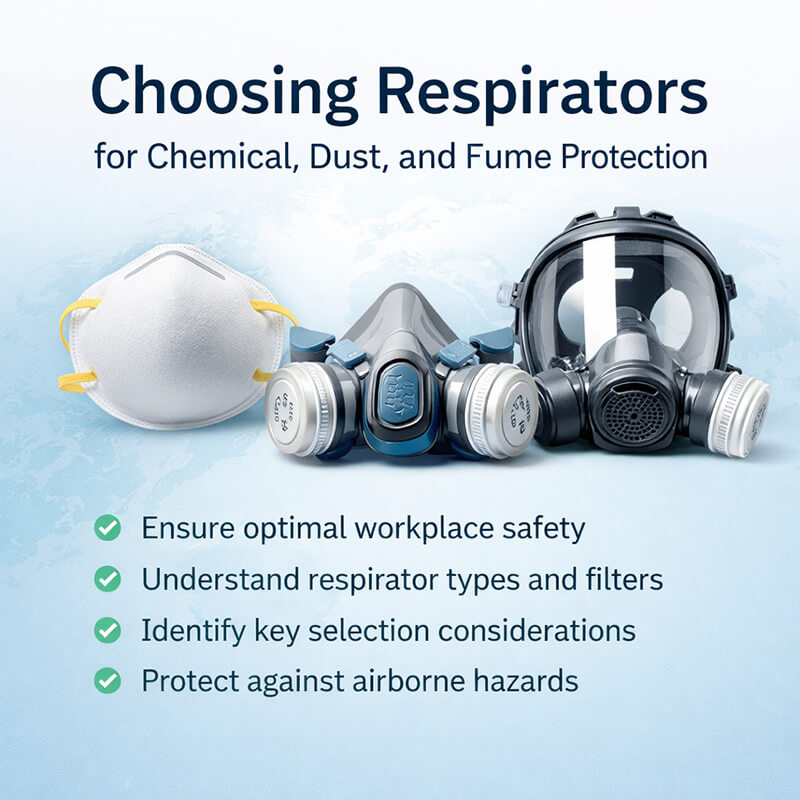
Selecting the right respirator is essential when working with chemicals, dust, or fumes. This guide explains the types of respirators, filter options, and key considerations to ensure optimal workplace safety.
Why Proper Respiratory Protection Matters
Workers exposed to dust, fumes, or hazardous chemicals face serious health risks, including respiratory diseases, chemical burns, and long-term lung damage. Proper respirator selection helps:
-
Provide effective filtration against airborne hazards
-
Ensure regulatory compliance (NIOSH, EN, ISO standards)
-
Increase worker comfort and safety during prolonged use
Types of Respirators for Chemical, Dust, and Fume Protection
1. Disposable Masks (N95, FFP2, FFP3)
-
Protection: Particles, dust, and some aerosols
-
Best Use: Low-risk dust, general construction, or pandemic protection
-
Limitations: Not suitable for gases or heavy chemical exposure
2. Half-Mask Respirators with Cartridges
-
Protection: Nose and mouth coverage; filters or cartridges for chemicals, dust, or fumes
-
Best Use: Spray painting, chemical handling, welding fumes
-
Advantages: Reusable with replaceable cartridges
-
Limitations: No eye protection
3. Full-Face Respirators with Cartridges
-
Protection: Nose, mouth, and eyes; filter or cartridge-based
-
Best Use: Toxic gases, high-concentration chemical fumes, biological hazards
-
Advantages: Higher protection and eye coverage
-
Limitations: Bulkier, requires fit testing
4. Powered Air-Purifying Respirators (PAPR)
-
Protection: Battery-powered blower pushes air through filters
-
Best Use: High-risk chemical labs, pharmaceutical production, welding with heavy fumes
-
Advantages: Easier breathing, more comfortable for long shifts
-
Limitations: Heavier and more expensive
Key Considerations When Choosing a Respirator
-
Identify the Hazard
-
Dust → particulate filters
-
Chemical fumes → gas/vapor cartridges
-
Combination → multi-purpose cartridges
-
-
Filter or Cartridge Type
-
Particulate filters: P, R, or N series
-
Gas/vapor cartridges: Organic vapors, acid gases, multi-gas
-
Ensure compatibility with your respirator model
-
-
Comfort and Fit
-
Proper fit is critical to prevent leaks
-
Adjustable straps, nose clips, and face seal help maintain comfort
-
-
Maintenance
-
Inspect before use for damage
-
Replace filters and cartridges according to manufacturer recommendations
-
Clean and store properly
-
Key Takeaways
-
Assess hazard type: Dust, fumes, or chemicals dictate respirator choice
-
Select appropriate filter or cartridge for the contaminant
-
Consider fit, comfort, and maintenance to ensure continuous protection
-
Full-face and PAPR options offer maximum protection in high-risk environments