Skip to content
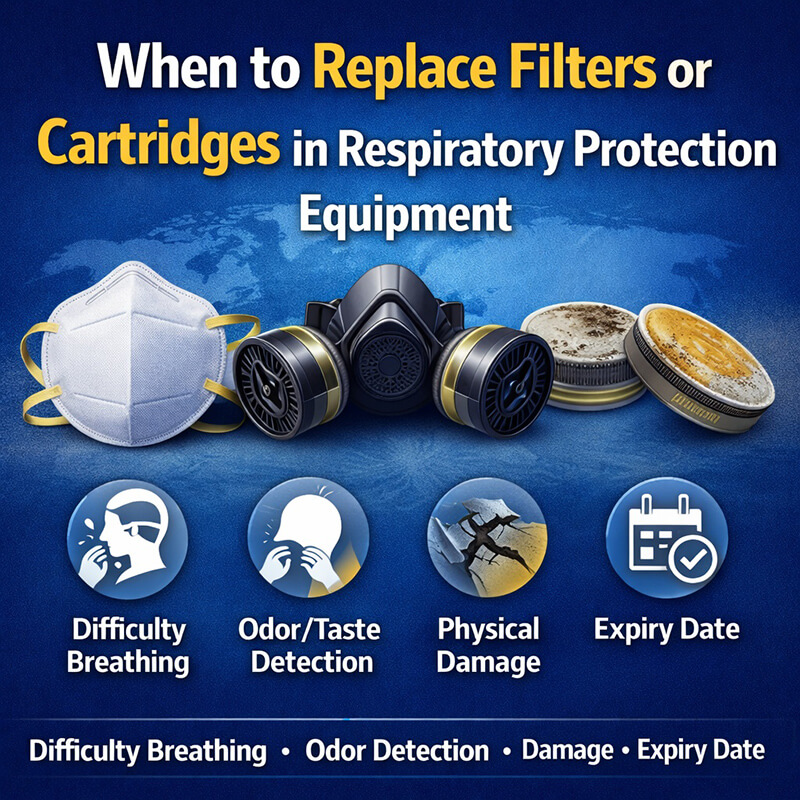
Knowing when to replace filters or cartridges is crucial for effective respiratory protection. Learn the signs, schedules, and best practices to ensure safety and compliance in the workplace.
Why Timely Replacement Matters
Filters and cartridges prevent exposure to dust, fumes, chemicals, and pathogens. Worn or clogged components can:
-
Reduce filtration efficiency
-
Compromise the seal and fit
-
Increase the risk of respiratory illness or exposure
Signs You Need to Replace Filters or Cartridges
1. Difficulty Breathing
-
Increased breathing resistance is a common sign that particulate filters are clogged
2. Odor or Taste Detection
-
Sensing chemical odors or gases indicates that gas/vapor cartridges are saturated
3. Physical Damage
-
Cracks, tears, or worn-out surfaces reduce effectiveness
4. Manufacturer’s Expiry Dates
-
Check shelf-life and usage limits specified by the manufacturer
Recommended Replacement Practices
-
Follow Manufacturer Guidelines
-
Replace filters or cartridges according to usage hours or exposure level
-
-
Replace After High Exposure Events
-
After heavy smoke, chemical spills, or dusty operations
-
-
Routine Inspection
-
Inspect respirators before each use for wear or clogging
-
-
Use Compatible Replacement Parts
-
Ensure filters or cartridges match the respirator model and hazard type
-
Key Takeaways
-
Replace filters or cartridges when breathing resistance increases, odors are detected, or damage occurs
-
Follow manufacturer schedules and high-exposure triggers
-
Proper replacement ensures maximum protection, comfort, and compliance