Skip to content
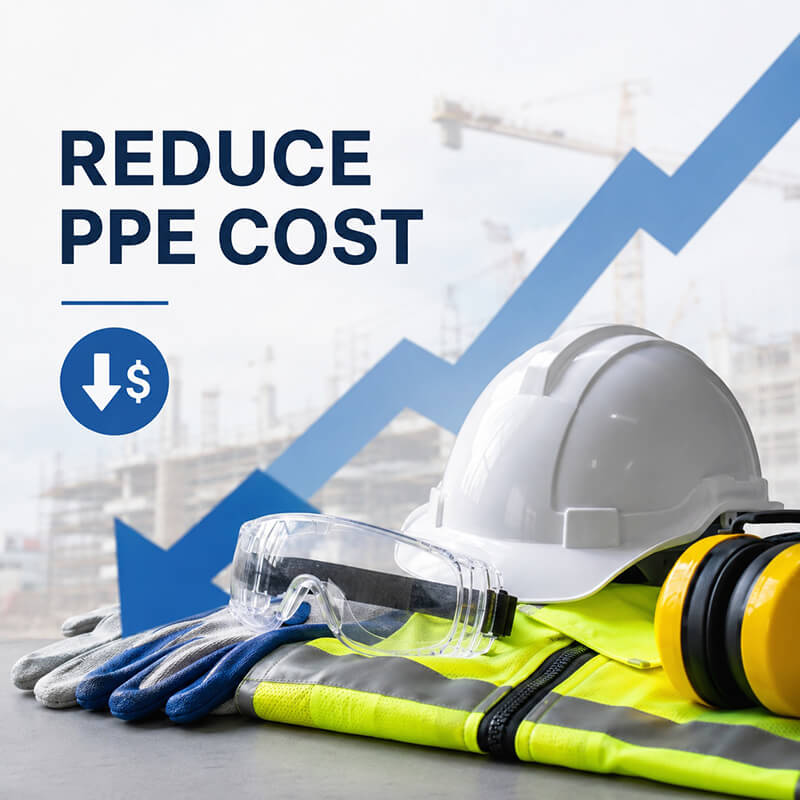
When managing large-scale construction, mining, or industrial projects, PPE cost quickly becomes a significant part of the overall safety budget. The challenge is simple: you cannot compromise protection, but you also cannot let bulk PPE procurement drain your project budget.
The good news is that PPE cost can be optimized through smarter sourcing, better planning, and supplier strategy—not just price negotiation.
1. Plan PPE Requirements Accurately Before Purchasing
One of the biggest hidden costs in bulk PPE procurement is overbuying or emergency reordering.
Common mistakes:
- Estimating PPE quantities without workforce phases
- Ordering full project volume upfront
- Ignoring replacement cycles (gloves, filters, etc.)
Better approach:
- Break PPE demand by project phase
- Calculate usage rate per worker per month
- Add controlled buffer (not excessive stock)
This alone can reduce PPE cost by 10–20%.
2. Buy in Consolidated Bulk Orders Instead of Fragmented Purchases
Bulk PPE purchasing is always more cost-efficient than multiple small orders.
Why fragmentation increases cost:
- Higher per-unit manufacturing cost
- Repeated shipping fees
- Multiple customs and handling charges
- Lost negotiation leverage
For large projects, combining PPE demand into scheduled bulk shipments helps:
- Reduce unit cost
- Lower logistics cost
- Improve supplier pricing tiers
3. Standardize PPE Models Across the Project
Customization increases cost. Variety increases cost. Complexity increases cost.
To reduce PPE cost:
- Limit unnecessary product variations
- Standardize glove types, helmets, and coveralls where possible
- Use unified sizes and models across departments
Standardization helps suppliers optimize production, which directly lowers unit price.
4. Work Directly with PPE Manufacturers Instead of Trading Layers
Every middle layer adds margin.
When sourcing PPE:
- Distributors = higher cost but faster availability
- Manufacturers = lower PPE cost but requires planning
For large projects, working closer to the PPE factory level allows:
- Better bulk pricing
- More flexible customization
- Direct production scheduling
This is especially effective for PPE sourcing in long-term infrastructure projects.
5. Optimize Material Selection Without Reducing Safety Level
Not all PPE needs to be premium-grade industrial specification.
Example optimizations:
- Choose breathable lightweight fabrics for hot climates instead of heavy-duty materials
- Use task-specific PPE instead of “multi-purpose” over-engineered products
- Match protection level to actual risk assessment
The key is compliance with safety standards, not over-specification.
6. Use Long-Term Supplier Agreements for Price Stability
Spot purchasing often leads to fluctuating PPE cost due to:
- Raw material price changes
- Shipping volatility
- Currency fluctuations
Long-term agreements help:
- Lock pricing for project duration
- Ensure stable supply chain
- Reduce emergency procurement costs
7. Improve Packaging and Shipping Efficiency
Logistics can account for a large portion of bulk PPE cost.
Cost-saving strategies:
- Optimize carton size and loading efficiency
- Use mixed container planning instead of partial shipments
- Reduce air freight dependence for non-urgent PPE
Even small improvements in container utilization can significantly reduce landed cost per unit.
8. Reduce PPE Waste Through Better Inventory Control
A hidden cost many projects ignore is PPE wastage:
- Expired stock
- Damaged storage conditions
- Unused surplus after project completion
Solutions:
- FIFO (First In, First Out) system
- Centralized warehouse tracking
- Monthly usage monitoring
Less waste = lower effective PPE cost.
9. Choose Suppliers with Project Experience, Not Just Low Price
Low unit price does not always mean lower total PPE cost.
A reliable PPE supplier for large projects should provide:
- Stable production capacity
- Consistent quality control
- Experience in bulk PPE export and project delivery
- Flexible scheduling for phased delivery
This reduces hidden risks like delays, rework, and replacement shipments.
Final Thoughts
Reducing PPE cost in large projects is not about cutting corners—it is about smarter procurement structure.
The most successful projects typically achieve lower PPE cost through:
- Better planning
- Bulk purchasing strategy
- Supplier consolidation
- Standardization
- Logistics optimization
When these elements work together, PPE becomes a controlled cost—not an unpredictable expense.