A full PPE protection system is more than just providing safety equipment—it is a structured approach to identifying hazards, selecting the right protection, training workers, and maintaining compliance across all job roles.
For companies in construction, manufacturing, energy, logistics, or maintenance, a well-built PPE system reduces accidents, improves efficiency, and ensures consistent safety standards.
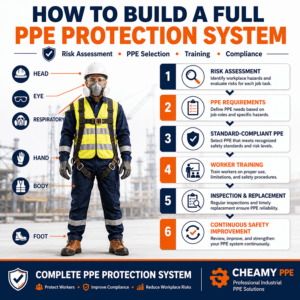
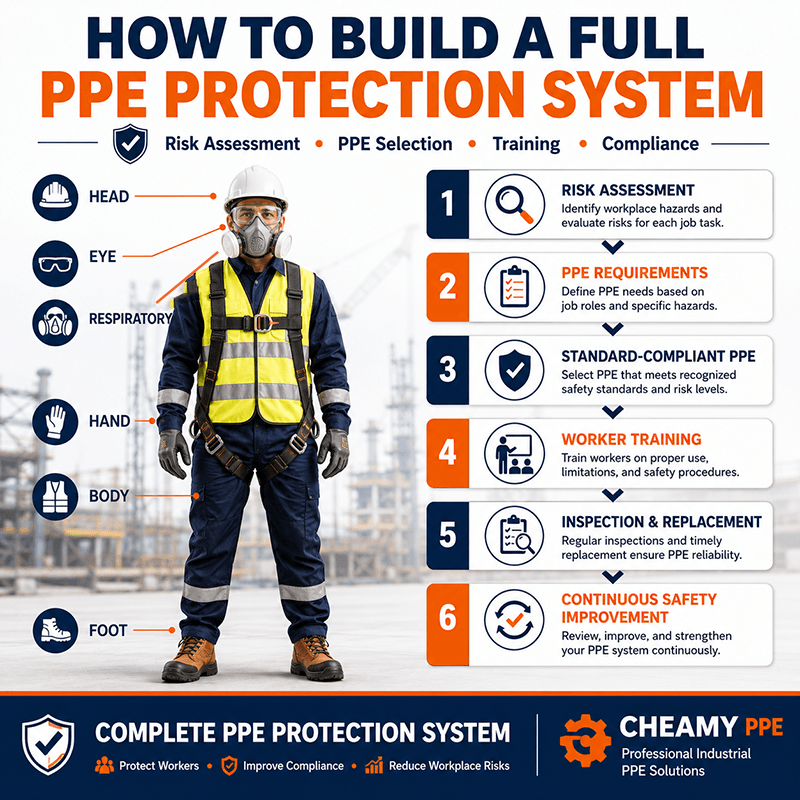
1. Conduct a Workplace Risk Assessment
The foundation of any PPE system is understanding hazards.
Key steps:
- Identify physical, chemical, electrical, and environmental risks
- Evaluate task-specific hazards (not just job titles)
- Analyze frequency and severity of exposure
- Document high-risk zones and operations
✔ No PPE system is effective without proper risk mapping
✔ Update assessments when processes or equipment change
2. Define PPE Requirements by Job Role
Different roles require different levels of protection.
Examples:
- Construction workers → helmet, gloves, safety boots, fall protection
- Warehouse staff → hi-vis clothing, safety shoes, gloves
- Welders → FR clothing, welding helmet, respirator
- Maintenance workers → multi-hazard PPE depending on task
✔ Avoid “one-size-fits-all” PPE distribution
✔ Build role-based PPE matrices for clarity
3. Select Standard-Compliant PPE
All PPE must meet recognized safety standards.
Common standards include:
- Head protection: EN 397 / ANSI Z89.1
- Eye protection: ANSI Z87.1 / EN 166
- Gloves: EN 388 / EN 374
- Footwear: EN ISO 20345
- Flame resistance: EN ISO 11612 / NFPA 2112
✔ Compliance ensures performance reliability
✔ Always match PPE rating with actual risk level
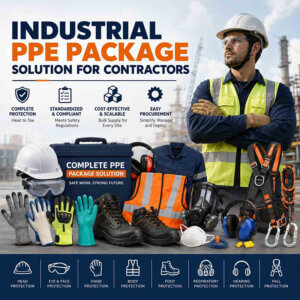
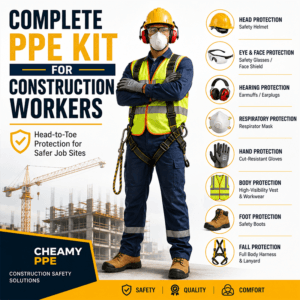
4. Build a Full Head-to-Toe Protection System
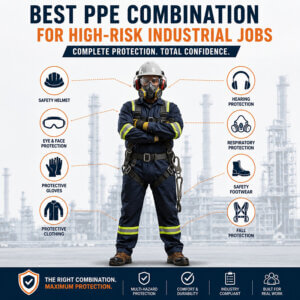
A complete PPE system should cover all exposure points:
- Head protection (helmets, bump caps)
- Eye and face protection (glasses, goggles, shields)
- Hand protection (cut, chemical, heat-resistant gloves)
- Body protection (hi-vis, FR, chemical suits)
- Foot protection (safety boots)
- Respiratory protection (masks, respirators, PAPR)
- Hearing protection (earplugs, earmuffs)
- Fall protection (harness systems where needed)
✔ Protection must work as a system, not isolated items
5. Ensure Proper Fit and Comfort
Even high-quality PPE is ineffective if not worn correctly.
Key requirements:
- Size options for all workers
- Adjustable helmets, straps, and harnesses
- Breathable and lightweight materials when possible
- Compatibility between multiple PPE items
✔ Comfort increases compliance
✔ Poor fit leads to unsafe behavior
6. Provide Training and Safety Awareness
Workers must understand how and why PPE is used.
Training should include:
- Correct wearing procedures
- Equipment limitations
- Inspection and maintenance steps
- Emergency response procedures
✔ Training improves long-term safety behavior
✔ Reinforce PPE use during toolbox talks
7. Implement Inspection and Replacement Systems
PPE must be regularly checked and replaced.
System requirements:
- Daily pre-use inspection by workers
- Scheduled PPE audits by supervisors
- Replacement policy for damaged or expired PPE
- Proper storage conditions
✔ Worn-out PPE is a hidden safety risk
✔ Track PPE lifecycle for cost control
8. Standardize PPE Kits Across Projects
For companies working across multiple sites:
- Create standardized PPE kits per job type
- Ensure consistent quality across all locations
- Simplify procurement and inventory management
- Reduce mismatch or missing equipment issues
✔ Standardization improves efficiency and compliance
9. Partner with a Reliable PPE Supplier
A strong PPE system depends on consistent supply and quality control.
CHEAMY PPE provides complete PPE system solutions, including:
- Full head-to-toe PPE kits for different industries
- Customized protection systems based on risk assessments
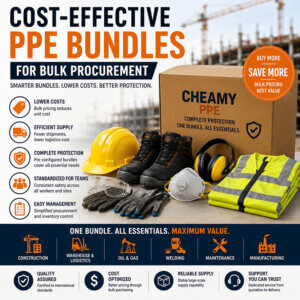
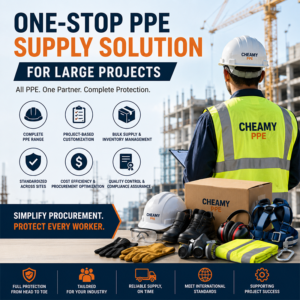
- Bulk supply for contractors and industrial projects
- Consistent quality control across all PPE categories
- Practical solutions designed for real working environments
Conclusion
Building a full PPE protection system requires more than selecting equipment—it requires structured risk assessment, role-based planning, compliance standards, training, and continuous improvement.
A well-designed system ensures workers are protected consistently, while also improving productivity, compliance, and operational safety across all job sites.