Chemical-resistant gloves help protect workers who handle hazardous chemicals and potentially contaminated materials. However, different gloves offer different levels of protection, and understanding the relevant standards is essential when selecting suitable products.
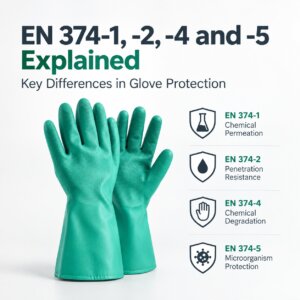
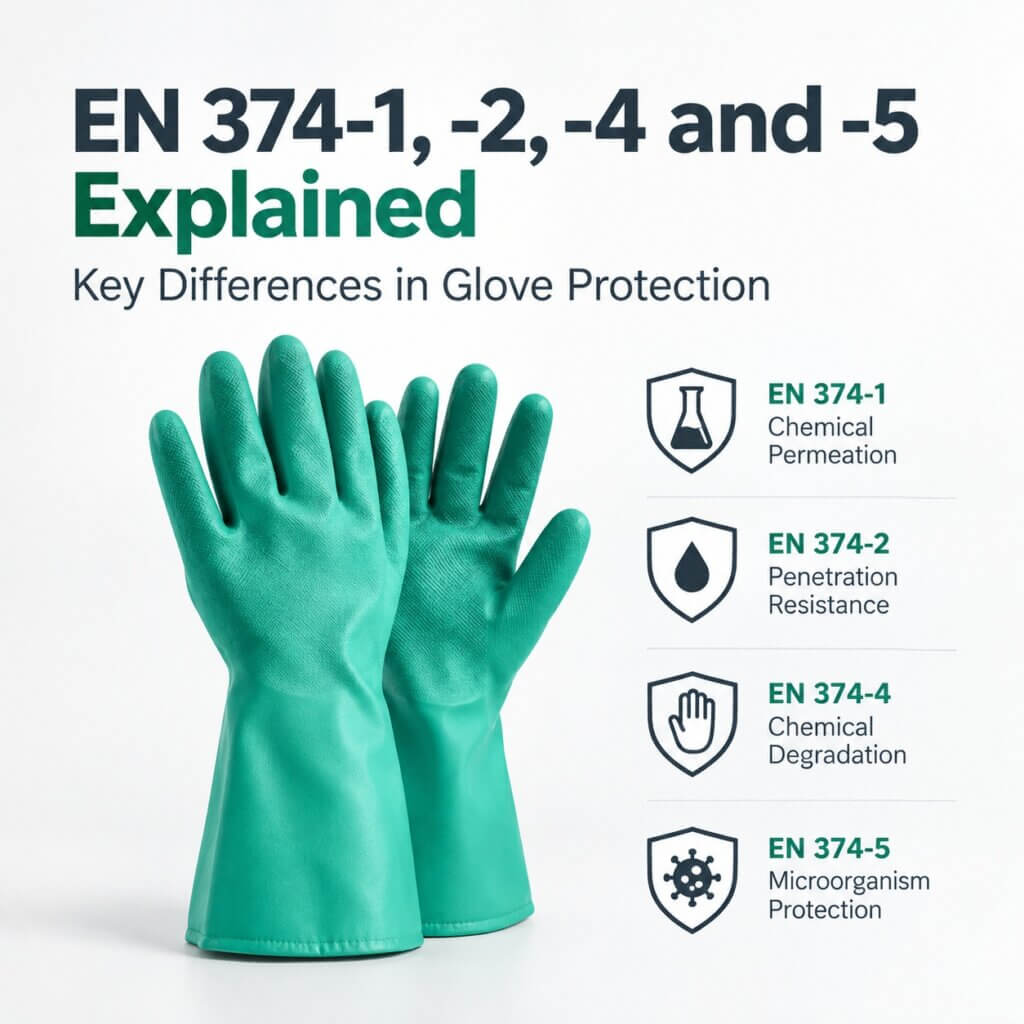
The EN ISO 374 series addresses chemical and microorganism protection from several perspectives. This guide explains EN ISO 374-1, EN ISO 374-2, EN ISO 374-4, and EN ISO 374-5, with practical tips for PPE buyers.
1. EN ISO 374-1: Protection Against Dangerous Chemicals
EN ISO 374-1 specifies terminology and performance requirements for gloves designed to protect against dangerous chemicals.
It addresses chemical permeation, which occurs when a chemical passes through glove material at the molecular level. Gloves are classified according to their tested performance against specified chemicals.
The familiar Type A, Type B, and Type C classifications indicate different levels of chemical permeation performance under the applicable test requirements.
Buyer tip: Check the specific chemicals tested, the glove’s classification, and the relevant permeation data. No single glove material is suitable for every chemical.
2. EN ISO 374-2: Resistance to Penetration
EN ISO 374-2 specifies methods for testing a glove’s resistance to penetration through defects such as holes.
Testing can include air-leak or water-leak methods, depending on the applicable procedure. These tests help identify defects that could allow substances to pass through the glove.
Buyer tip: Penetration and permeation are different. A glove that passes a penetration test is not automatically resistant to every chemical.
3. EN ISO 374-4: Resistance to Chemical Degradation
Chemical degradation occurs when exposure to a chemical changes the physical properties of glove material. Possible effects include swelling, hardening, softening, or deterioration.
EN ISO 374-4 provides a method for evaluating resistance to chemical degradation by assessing changes in the material’s puncture resistance after chemical exposure.
Buyer tip: Consider degradation alongside permeation when selecting gloves. A glove’s material may be affected by chemical contact even when its permeation performance appears suitable.
4. EN ISO 374-5: Protection Against Microorganisms
EN ISO 374-5 specifies requirements and test methods for protective gloves intended to protect users against microorganisms, including bacteria and fungi. Additional requirements apply when protection against viruses is claimed.
Microorganism protection is different from chemical protection, so buyers should confirm that the glove is suitable for the actual biological hazard.
Buyer tip: Check the product marking and supporting test documentation, especially when viral protection is required. Do not assume that microorganism protection automatically provides chemical protection.
5. How Should Buyers Select EN 374 Protective Gloves?
Before purchasing chemical-resistant gloves, buyers should confirm:
- Chemical exposure: Identify the chemicals, concentrations, and expected contact conditions.
- Performance evidence: Review relevant classifications and test reports.
- Material suitability: Consider permeation, penetration, and degradation.
- Intended application: Check glove length, thickness, fit, and other required protective features.
- Applicable standards: Confirm the relevant standard edition and destination-market requirements.
ISO 374-1:2024 and ISO 374-5:2024 are published international editions. For products intended for the European market, buyers should also verify the applicable EN editions and the current harmonized-standard status.
Conclusion
EN ISO 374-1, EN ISO 374-2, EN ISO 374-4, and EN ISO 374-5 address different aspects of chemical and microorganism protection. Understanding their differences helps buyers assess glove suitability and review supplier documentation more effectively.
For more information about EN 374 standards and chemical-resistant gloves, please read our related guide: How to Choose Chemical & Microbial Protective Gloves Under EN 374 Standards.
At CHEAMY PPE, we support international buyers in sourcing personal protective equipment according to their product specifications and purchasing requirements. Contact our team to discuss your protective glove sourcing needs.