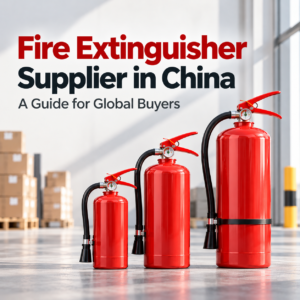
Finding a reliable fire extinguisher supplier in China involves more than comparing prices. International buyers need to evaluate product specifications, certification requirements, quality control, packaging, and shipping arrangements before placing an order.
Whether you are an importer, wholesaler, distributor, or project purchaser, understanding these factors can help you select suitable products and reduce sourcing risks.
In this guide, CHEAMY PPE explains what global buyers should consider when sourcing fire extinguishers from China and how to prepare for a more efficient purchasing process.
1. What Types of Fire Extinguishers Can You Source from China?
Chinese suppliers offer different types of fire extinguishers for residential, commercial, industrial, and other applications. The right choice depends on the potential fire hazards, required performance, local regulations, and purchasing specifications.
Common options include:
ABC Dry Powder Fire Extinguishers
ABC dry powder extinguishers are widely used for a range of fire risks involving ordinary combustible materials, flammable liquids, and flammable gases, subject to the extinguisher’s approved rating and instructions.
They are available in different capacities, including 1 kg, 2 kg, 4 kg, 6 kg, and larger sizes, depending on the product range.
Buyers should confirm the extinguishing rating, agent type, operating instructions, and applicable certification rather than selecting a product based on capacity alone.
CO₂ Fire Extinguishers
Carbon dioxide (CO₂) extinguishers are commonly considered for certain flammable-liquid and energized electrical equipment fire risks. They do not leave the powder residue associated with dry powder extinguishers.
However, CO₂ extinguishers have limitations, including the risk of oxygen displacement in confined spaces. Their suitability should be assessed against the actual application and safety requirements.
Foam Fire Extinguishers
Foam extinguishers are designed for specified fire classes, commonly involving certain solid combustible materials and flammable liquids. Their permitted uses depend on the formulation, product approval, and local fire classification system.
Buyers should also confirm whether the foam formulation meets any applicable environmental or chemical restrictions in the destination market.
Water-Based Fire Extinguishers
Water-based extinguishers may be suitable for certain ordinary combustible materials, depending on the product design and rating. They should not be assumed suitable for energized electrical equipment or flammable-liquid fires unless the specific product is designed and approved for that use.
Important: Fire classifications and certification requirements vary between markets. Always confirm the product’s approved applications and local requirements before purchasing.
2. How to Evaluate a Fire Extinguisher Supplier in China
A competitive quotation is only one part of a successful purchasing decision. Buyers should also evaluate the supplier’s ability to provide consistent products and the documentation required for their market.
Check Product Specifications
Request a detailed specification sheet for each proposed model. Relevant information may include:
- Extinguishing agent and nominal charge
- Capacity and total product weight
- Extinguishing rating and applicable fire classes
- Cylinder material and operating pressure, where applicable
- Valve, hose, nozzle, and other components
- Operating temperature range
- Dimensions, mounting options, and packaging details
These specifications make it easier to compare products on an equivalent basis.
Verify Certifications and Test Reports
Fire extinguishers are safety-critical products, and applicable requirements depend on the destination market and product type.
For example, buyers sourcing products for China should check the applicable national standards and compulsory certification requirements. China’s National Certification and Accreditation Administration published revised compulsory certification implementation rules for fire extinguishers in 2024, including changes to the certification basis for portable fire extinguishers.
For other markets, buyers should identify the relevant local standards, approvals, and conformity assessment requirements before confirming an order.
Ask suppliers to provide the actual certificates and test reports, then verify:
- Whether the document covers the exact product model
- Whether the certificate is valid and issued by an appropriate body
- Whether the tested product matches the offered specification
- Whether the approval is accepted in the destination market
- Whether the required labels and product markings are included
A general quality management certificate should not be treated as proof that an individual fire extinguisher meets all applicable product requirements.
Understand Quality Control
Before placing a bulk order, discuss how product quality will be checked.
Depending on the product and contract, this may include incoming component inspection, production checks, pressure-related testing, leakage checks, functional testing, label verification, and final inspection.
Ask which checks are performed, what records are available, and how nonconforming products are handled. Where appropriate, agree on a pre-shipment inspection plan and acceptance criteria before production begins.
Confirm the Supplier’s Role
Not every company selling fire extinguishers is the manufacturer. Some suppliers are trading companies that coordinate products from different manufacturing partners.
A trading company may help buyers source multiple categories, consolidate orders, coordinate documentation, and communicate with different suppliers. However, buyers should clarify who manufactures the product, who is responsible for certification, and which company will handle quality issues.
The most suitable supplier is the one that can meet your actual product, documentation, communication, and delivery requirements.
3. How to Choose the Right Fire Extinguisher Capacity
Fire extinguishers are available in various capacities, but a larger extinguisher is not automatically the right choice for every application.
The selection should consider the fire risk, required extinguishing rating, expected user, installation location, and applicable local requirements.
| Capacity | Potential purchasing considerations |
|---|---|
| 1 kg | Compact applications where the approved rating and intended use are suitable |
| 2 kg | Portable applications requiring a different balance of size and capacity |
| 4 kg | Commercial or workplace applications where the product rating and local requirements support its use |
| 6 kg and above | Applications that may require greater agent capacity and an appropriate installation or handling arrangement |
This table is a general purchasing reference, not a substitute for a fire risk assessment or local fire safety rules.
When comparing models, ask suppliers for the certified extinguishing rating, dimensions, gross weight, mounting options, and applicable product documentation. These details are more useful than capacity alone when determining whether two models are comparable.
4. What Should International Buyers Know About Fire Extinguisher Compliance?
Compliance is one of the most important considerations when importing fire extinguishers.
A product that can be sold in one country may not automatically meet the requirements of another. Certification, testing, labeling, language, and documentation requirements can differ substantially.
Before requesting quotations, establish the destination market and the applicable product requirements.
For example, buyers may need to verify:
- Applicable product standards and fire performance ratings
- Required certification or third-party approvals
- Product labels, instructions, and warning information
- Language and marking requirements
- Documentation needed for customs clearance or market entry
- Any restrictions relating to the extinguishing agent or materials
Do not rely solely on a supplier’s statement that a product is suitable for export. Request evidence that matches your intended market and exact product model.
For projects, tenders, and regulated installations, it is advisable to have the relevant requirements reviewed before finalizing the purchase order.
5. Packaging and Shipping: What Buyers Should Confirm
Fire extinguishers require careful shipping arrangements because their construction, operating pressure, and extinguishing agent may affect transport requirements.
Depending on the product, some extinguishers may be regulated as dangerous goods for transport. Classification must be confirmed for the actual product and the applicable transport mode; it should not be assumed that every fire extinguisher has identical shipping requirements.
Before shipment, confirm the following with your supplier and freight forwarder:
Product and transport classification
Provide the exact product model, agent, and relevant technical information so the transport classification can be assessed.
Required transport documents
Confirm whether the shipment requires a dangerous goods declaration, packaging documentation, test information, or other transport-specific documents.
Carton specifications
Check the number of units per carton, carton dimensions, gross weight, protective packaging, and palletization requirements.
Container loading
Estimate the shipment volume and weight using the actual packaging data. Confirm container suitability, loading arrangements, and any carrier restrictions before booking.
Destination requirements
Check import documentation, local product approvals, labeling, and any special handling requirements before the goods are dispatched.
Early coordination helps reduce the risk of shipping delays, document discrepancies, or unexpected handling costs.
6. How to Request an Accurate Fire Extinguisher Quotation
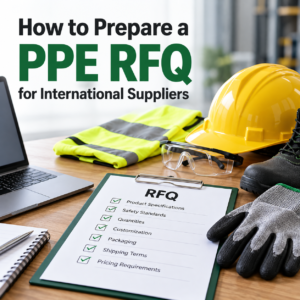
A detailed request for quotation (RFQ) helps suppliers understand your requirements and prepare a more accurate offer.
When contacting a fire extinguisher supplier in China, include the following information where available:
- Product type: ABC dry powder, CO₂, foam, water-based, or another specified type.
- Capacity and model: Required charge weight, product dimensions, and preferred configuration.
- Applicable standards: Destination-market requirements and any required approvals.
- Order quantity: Estimated quantity for each model.
- Customization: Logo printing, label language, color requirements, or packaging specifications.
- Documentation: Required certificates, test reports, declarations, and shipping documents.
- Delivery requirements: Destination port or location, preferred Incoterms® rule, and target delivery schedule.
- Inspection requirements: Any agreed product checks, sampling plan, or pre-shipment inspection.
Providing these details at the beginning can reduce repeated clarification and make quotations easier to compare.
Sample RFQ Email
Subject: Inquiry for Fire Extinguishers
Dear Sales Team,
We are interested in sourcing fire extinguishers for our market and would appreciate your quotation based on the following requirements:
- Product type: ABC dry powder fire extinguishers
- Capacities: 1 kg and 4 kg
- Quantity: To be confirmed
- Destination market: To be specified
- Certification and documentation: Please advise which documents are available for the proposed models
- Customization: Please confirm the available logo, label, and packaging options
- Shipping: Please provide the carton dimensions, gross weight, and estimated shipment volume
Please also share the product specifications, applicable test reports or certificates, minimum order quantity, production lead time, and quotation terms.
Thank you. We look forward to your reply.
Best regards,
[Your Name]
7. Why Consider CHEAMY PPE for Your Sourcing Requirements?
For international buyers, sourcing safety equipment often involves coordinating multiple products, specifications, and documentation requirements.
CHEAMY PPE focuses on supplying personal protective equipment to international customers, with support for multi-category sourcing and OEM/ODM customization.
When evaluating fire extinguisher sourcing options, we encourage buyers to define their required product specifications, destination-market requirements, and documentation needs before confirming an order.
This helps establish a clearer basis for product evaluation and supplier communication.
If your business is sourcing fire extinguishers alongside other workplace safety products, contact CHEAMY PPE to discuss your requirements and explore suitable sourcing options.
Conclusion
Choosing a fire extinguisher supplier in China requires a structured approach. Buyers should evaluate product specifications, verify applicable certification, understand quality control arrangements, and confirm packaging and shipping requirements before placing a bulk order.
The most effective purchasing process starts with a clear RFQ and a precise understanding of the destination market. By checking these details early, importers, distributors, and project purchasers can compare offers more accurately and reduce avoidable sourcing risks.
Looking for a PPE sourcing partner? Contact CHEAMY PPE to discuss your product requirements, customization needs, and documentation expectations.