When selecting chemical-resistant gloves, buyers often focus on glove material, thickness, or product labeling. However, these factors alone cannot determine whether a glove is suitable for a specific chemical exposure.
EN 16523 is an important testing standard used to evaluate the resistance of protective glove materials against chemical permeation. Understanding this standard helps PPE buyers better evaluate chemical-resistant gloves and supplier documentation.
What Is EN 16523?
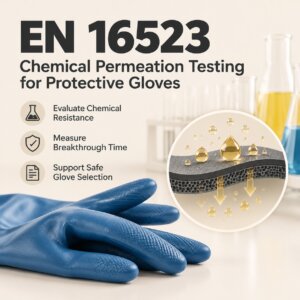
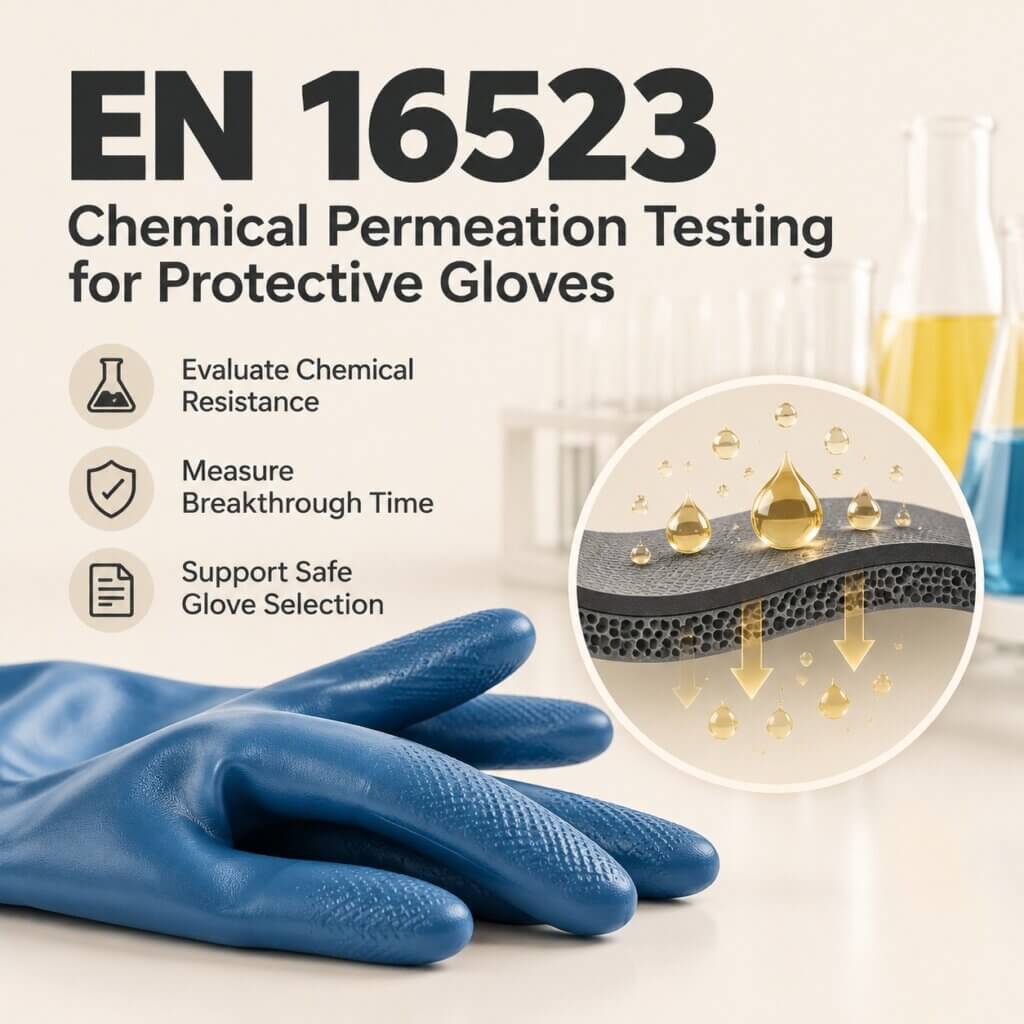
EN 16523 specifies test methods for determining the resistance of protective materials, including gloves, clothing, and footwear materials, against permeation by potentially hazardous chemicals under continuous contact conditions.
For chemical protective gloves, the most commonly referenced method is:
EN 16523-1: Determination of resistance to permeation by liquid chemicals
This test evaluates how long it takes for a chemical to pass through the glove material at a molecular level, which is known as the breakthrough time.
What Is Chemical Permeation?
Chemical permeation is different from leakage or visible damage.
A glove may appear intact while a chemical slowly moves through the material at the molecular level. EN 16523 testing measures this process and provides information about the material’s resistance against specific chemicals.
The key measurement is:
Breakthrough Time
This refers to the time required for the chemical to pass through the glove material at a defined testing rate.
A longer breakthrough time generally indicates better resistance under the tested conditions. However, test results apply only to the specific chemical and conditions evaluated.
Relationship Between EN 16523 and EN ISO 374
EN 16523 and EN ISO 374 serve different purposes.
- EN 16523: Defines the chemical permeation test method.
- EN ISO 374: Defines requirements and classification for chemical protective gloves.
In practice, EN 16523-1 test results are used to evaluate chemical permeation performance when assessing chemical-resistant gloves under EN ISO 374-1.
Therefore, buyers should review both the glove classification and the actual chemical permeation test information.
What Should PPE Buyers Check?
When purchasing chemical-resistant gloves, buyers should consider:
1. The Specific Chemical
A glove that performs well against one chemical may not provide the same protection against another.
Always confirm:
- Chemical name
- Concentration
- Contact conditions
- Required protection level
2. Breakthrough Time Data
Request technical documents or test reports showing chemical resistance performance.
Do not select gloves only based on material names such as nitrile, latex, or neoprene, as different formulations can provide different levels of protection.
3. Complete Product Information
A reliable supplier should provide:
- Product specifications
- Applicable standards
- Test reports or technical documentation
- Usage instructions
Conclusion
EN 16523 plays an important role in evaluating chemical permeation resistance for protective gloves and other PPE materials. It helps buyers understand how glove materials perform against specific chemicals under controlled test conditions.
However, chemical protection is not determined by one standard alone. The correct glove selection should consider the chemical hazard, working environment, required standards, and product documentation.
As an experienced PPE supplier, CHEAMY PPE helps international buyers source protective gloves and other safety equipment according to their application requirements and technical specifications.
Contact CHEAMY PPE to discuss your chemical-resistant glove sourcing needs.