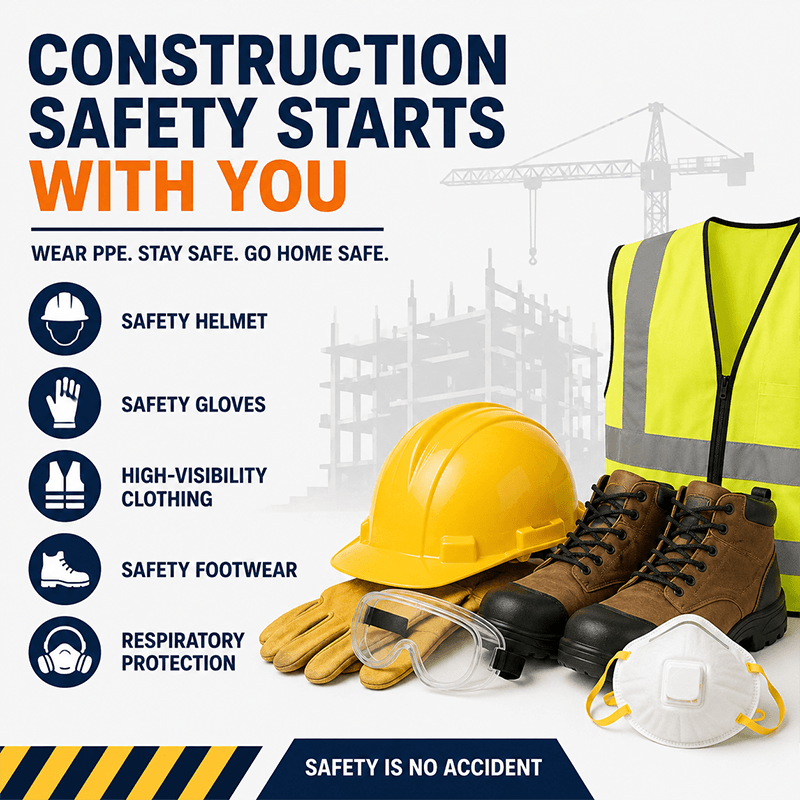
Construction job sites are among the most hazardous workplaces in the world. Workers are exposed to risks such as falling objects, sharp materials, dust, electrical hazards, loud noise, and slippery surfaces every day. That is why proper Personal Protective Equipment (PPE) is not just recommended—it is essential.
Understanding the PPE requirements for construction workers helps companies improve workplace safety, reduce accidents, and maintain compliance with safety regulations.
Why PPE Matters on Construction Sites
Construction environments change constantly. One task may involve working at heights, while another may involve welding, cutting, grinding, or heavy machinery operation. Without proper PPE, even a small mistake can lead to serious injuries.
Proper PPE helps protect workers from:
- Head injuries
- Eye damage
- Respiratory hazards
- Hand injuries
- Foot injuries
- Hearing loss
- Falling accidents
- Chemical exposure
More importantly, using the right PPE creates a stronger safety culture on site and improves worker confidence and productivity.
Essential PPE for Construction Workers
1. Safety Helmets
Safety helmets are one of the most basic PPE requirements on construction sites. They help protect workers from falling objects, accidental impacts, and electrical hazards.
Common helmet materials include:
- HDPE
- ABS
Many projects also require helmets that comply with CE EN397 or ANSI standards.
Different colors are often used to identify worker roles on site, such as supervisors, engineers, electricians, or general laborers.
2. High Visibility Safety Vests
Construction workers must remain visible to equipment operators and moving vehicles, especially in low-light conditions.
High visibility vests usually feature:
- Reflective tape
- Bright fluorescent colors
- Lightweight breathable fabric
Reflective safety clothing is especially important for:
- Road construction
- Night shifts
- Traffic control
- Large industrial sites
3. Safety Footwear
Ordinary shoes are not suitable for construction environments. Workers need safety shoes or boots designed to protect against:
- Falling objects
- Sharp materials
- Slippery surfaces
- Electrical hazards
Common features include:
- Steel toe or composite toe protection
- Anti-slip outsole
- Puncture-resistant midsole
- Oil-resistant sole
Proper footwear also improves comfort during long working hours.
4. Protective Gloves
Different construction tasks require different types of gloves.
Examples include:
- Cut-resistant gloves
- Coated work gloves
- Welding gloves
- Chemical-resistant gloves
Choosing the correct gloves helps reduce hand injuries while maintaining flexibility and grip.
5. Eye and Face Protection
Dust, sparks, flying debris, and chemicals can easily cause eye injuries on construction sites.
Common eye and face protection products include:
- Safety glasses
- Goggles
- Face shields
- Welding helmets
Workers involved in grinding, cutting, or welding operations should always wear appropriate face protection.
6. Respiratory Protection
Construction sites often contain harmful dust, smoke, paint fumes, or airborne particles.
Respiratory PPE may include:
- Disposable dust masks
- KN95 masks
- Half-face respirators
- Full-face respirators
Proper respiratory protection is especially important during:
- Sanding
- Spray painting
- Demolition work
- Cement handling
7. Hearing Protection
Long-term exposure to loud machinery can permanently damage hearing.
Construction workers operating near:
- Generators
- Jackhammers
- Compressors
- Heavy machinery
should use hearing protection such as:
- Ear plugs
- Ear muffs
8. Fall Protection Equipment
Working at heights is one of the leading causes of construction injuries.
Fall protection equipment may include:
- Safety harnesses
- Lanyards
- Lifelines
- Anchorage systems
Workers performing roofing, scaffolding, or elevated work should always use approved fall protection systems.
How to Choose the Right Construction PPE
Selecting PPE should not focus only on price. Companies should also consider:
- Compliance with safety standards
- Worker comfort
- Durability
- Climate conditions
- Job-specific hazards
- Product quality consistency
Comfortable PPE is more likely to be worn correctly throughout the workday.
Common PPE Mistakes on Job Sites
Some common problems include:
- Using low-quality PPE
- Wearing damaged equipment
- Incorrect PPE sizing
- Reusing disposable products improperly
- Lack of worker training
Regular inspection and replacement of PPE are necessary to maintain safety performance.
CHEAMY PPE Supports Safer Construction Workplaces
At CHEAMY PPE, we understand that construction safety requires reliable and practical protection solutions. We provide a wide range of PPE products designed for demanding job site environments, helping companies improve worker safety and operational efficiency.
From head protection to respiratory safety, choosing the right PPE is an important step toward creating safer and more productive construction sites.
Conclusion
Construction PPE is more than just a workplace requirement—it is a critical investment in worker safety and project efficiency.
By equipping workers with suitable helmets, gloves, footwear, respiratory protection, and high visibility clothing, companies can reduce risks and create a safer working environment for everyone on site.