Skip to content
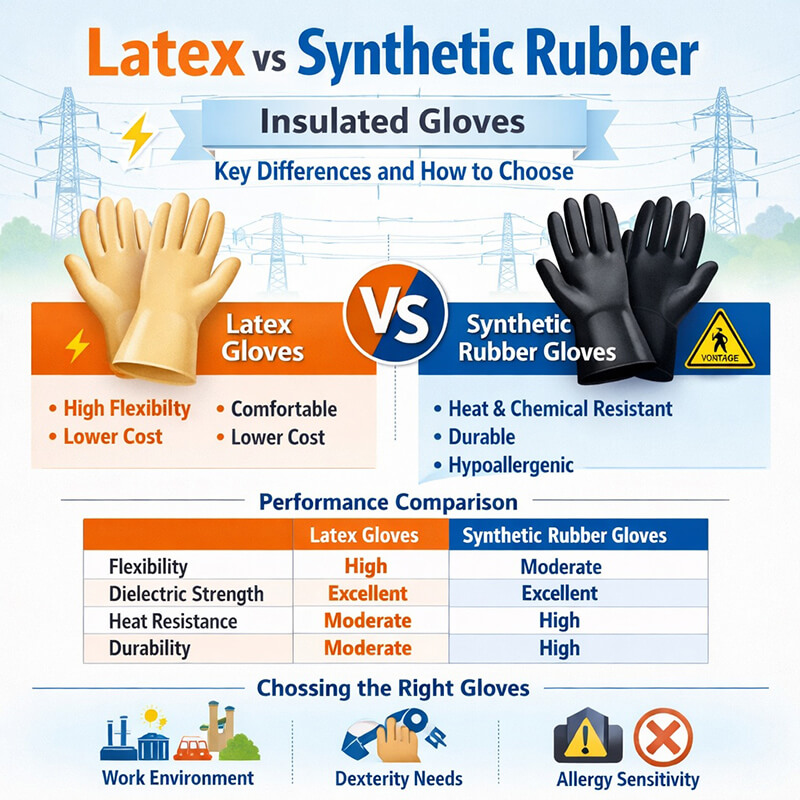
Electrical insulated gloves are crucial PPE for protecting workers from electric shock. Latex and synthetic rubber gloves are the most common types, each with unique properties. This guide explains the differences in materials, performance, and applications to help you choose the right gloves for your work environment.
What Are Electrical Insulated Gloves?
Electrical insulated gloves are protective gloves made from rubber materials that prevent electrical current from passing through the hands. They are widely used in power generation, electrical maintenance, construction, and industrial operations.
The two most common materials for insulated gloves are:
-
Natural Latex
-
Synthetic Rubber (such as EPDM, Neoprene, or Chloroprene)
1. Latex Insulated Gloves
Key Characteristics
-
Made from natural rubber latex
-
High elasticity and flexibility, comfortable for long-term wear
-
Excellent dielectric strength, suitable for low to medium voltage operations
-
Lightweight and soft, allowing better dexterity
-
Susceptible to allergic reactions in some users
Advantages
-
Comfortable and flexible for precise tasks
-
Easy to don and remove
-
Generally lower cost
Limitations
-
Can degrade faster under high heat, ozone, or UV exposure
-
May harden or crack in extreme temperatures
-
Not suitable for users with latex allergies
2. Synthetic Rubber Insulated Gloves
Key Characteristics
-
Made from materials such as EPDM, Neoprene, or Chloroprene
-
High resistance to heat, ozone, and aging
-
Good chemical resistance, suitable for industrial environments
-
Slightly stiffer than latex, less flexible for delicate tasks
Advantages
-
Longer service life under harsh conditions
-
Better for high temperature or extreme environments
-
Resistant to cracking and UV/ozone damage
Limitations
-
Less elastic than natural latex
-
Slightly heavier and bulkier
-
Higher cost compared to latex gloves
3. Performance Comparison
| Feature | Latex Gloves | Synthetic Rubber Gloves |
|---|---|---|
| Elasticity / Flexibility | High | Moderate |
| Dielectric Strength | Excellent | Excellent |
| Heat & UV Resistance | Moderate | High |
| Chemical Resistance | Low | High |
| Durability / Aging | Moderate | High |
| Comfort | Very comfortable | Slightly less comfortable |
| Allergy Risk | Possible latex allergy | Hypoallergenic |
4. Choosing Between Latex and Synthetic Rubber
When selecting insulated gloves, consider the following:
-
Work Environment
-
High temperature, UV, or chemical exposure → synthetic rubber
-
Normal indoor electrical maintenance → latex
-
-
Dexterity Requirements
-
Precise handling of tools → latex
-
Handling heavy equipment or long-term outdoor work → synthetic rubber
-
-
User Sensitivity
-
Users with latex allergies should always choose synthetic rubber
-
Final Thoughts
Both latex and synthetic rubber insulated gloves provide reliable electrical protection. Choosing the right material depends on the work environment, comfort, durability, and user requirements. By understanding their differences, companies and workers can ensure safety, comfort, and compliance with international standards.