Insulated gloves are critical for electrical safety, but regular testing is required to ensure they provide reliable protection. This guide explains when and how often insulated gloves should undergo electrical testing according to international standards.
Why Electrical Testing Is Important
Insulated gloves prevent electric shock, but over time, wear, cracks, punctures, and environmental exposure can compromise their insulation. Regular testing ensures:
-
Reliable dielectric protection
-
Compliance with safety standards
-
Reduced risk of electrical accidents
Testing Frequency Guidelines
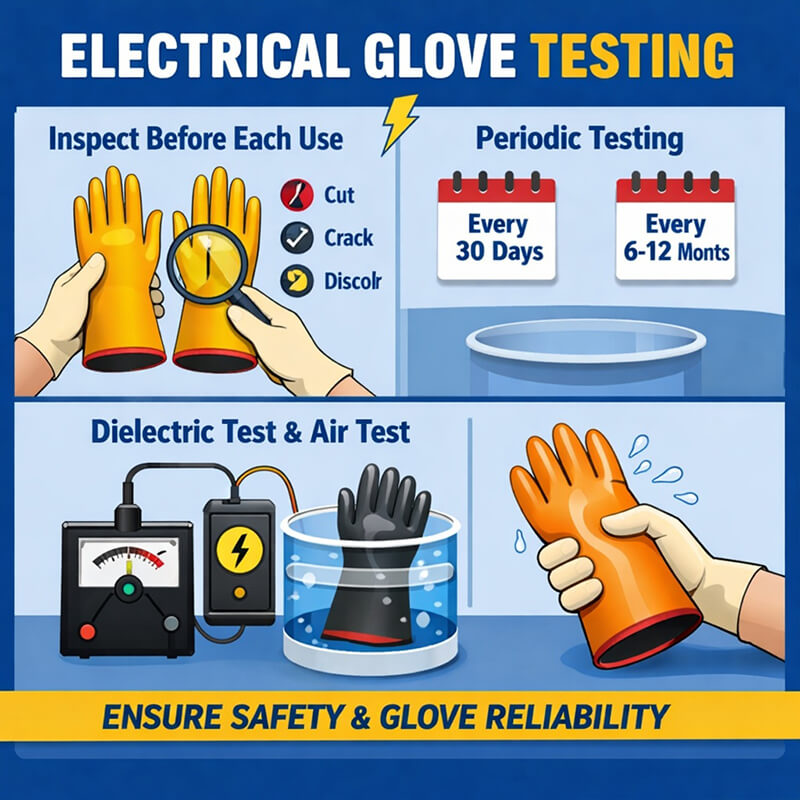
1. Before Each Use
-
Conduct a visual inspection for cuts, cracks, or discoloration.
-
Check the glove’s integrity, cuff, and seams.
2. Periodic Electrical Testing
-
Monthly or every 30 days for gloves in high-use environments (recommended by OSHA, ASTM D120, EN 60903).
-
Every 6–12 months for gloves used less frequently or in lower-risk environments.
3. After Any Incident or Damage
-
Gloves that have been dropped, punctured, or exposed to chemicals must be tested immediately before reuse.
Testing Methods
-
Dielectric (High-Voltage) Test
-
Each glove is submerged in water and subjected to a high-voltage current to check for insulation breakdown.
-
-
Air Test / Visual Inspection
-
Smaller punctures or cracks can be detected by inflating the glove and observing for leaks.
-
Tip: Always follow manufacturer recommendations and local standards for testing procedures.
Key Takeaways
-
Visual inspection before each use is essential.
-
Electrical testing should be done at least monthly for frequent-use gloves.
-
Gloves exposed to mechanical, chemical, or environmental stress should be tested immediately.
-
Proper testing ensures both worker safety and glove longevity.