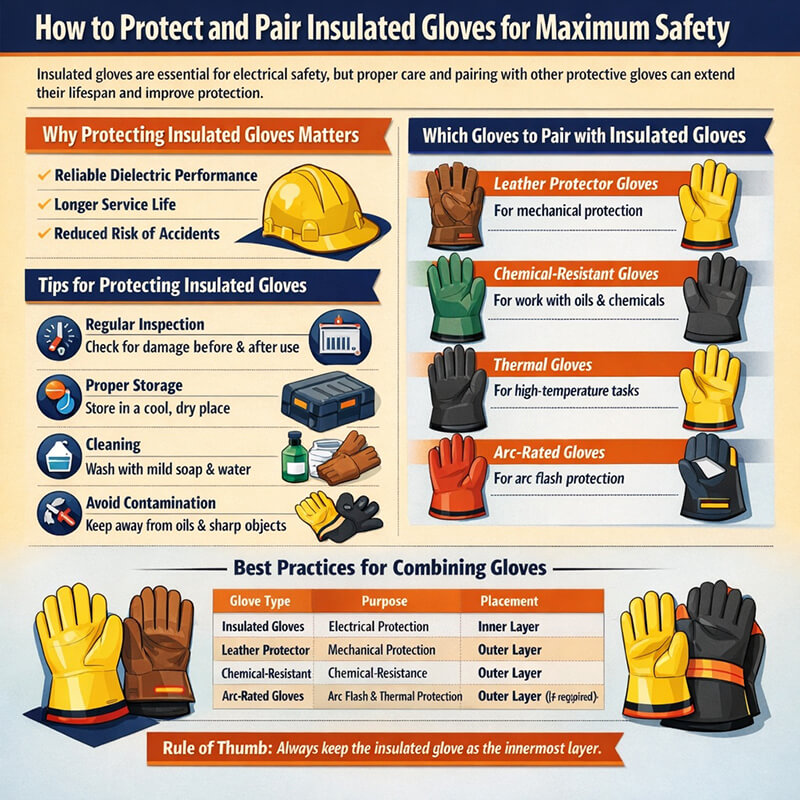
Insulated gloves are essential for electrical safety, but proper care and pairing with other protective gloves can extend their lifespan and improve protection. This guide explains storage, maintenance, and recommended glove combinations for safe electrical work.
Why Protecting Insulated Gloves Matters
Insulated gloves are your first line of defense against electric shock. Proper care ensures:
-
Reliable dielectric performance
-
Longer service life
-
Reduced risk of accidents
Neglecting glove care can lead to cracks, tears, or contamination, compromising safety.
Tips for Protecting Insulated Gloves
-
Regular Inspection
-
Check for holes, cuts, cracks, or discoloration before and after use.
-
Follow standard testing intervals as per ASTM D120, EN 60903, or IEC 60903.
-
-
Proper Storage
-
Keep gloves in a cool, dry place away from sunlight, ozone, or chemicals.
-
Avoid folding or compressing gloves for long periods.
-
-
Cleaning
-
Wash gloves with mild soap and water.
-
Dry naturally, away from direct heat sources.
-
-
Avoid Contamination
-
Keep gloves away from oil, solvents, and sharp objects.
-
Do not use insulated gloves for mechanical tasks unless protected.
-
Which Gloves to Pair with Insulated Gloves
1. Leather Protector Gloves
-
Worn over insulated gloves
-
Protects against cuts, punctures, abrasion, and mechanical damage
-
Increases durability of the inner insulated glove
2. Chemical-Resistant Gloves
-
For work in environments with oils, acids, or solvents
-
Worn over insulated gloves to prevent chemical degradation
3. Thermal Gloves
-
For high-temperature tasks
-
Helps protect the insulated glove from heat and burns
4. Layering for Arc Flash Protection
-
Combine insulated gloves + leather protector + arc-rated gloves for live work with arc flash risk
Best Practices for Combining Gloves
| Glove Type | Purpose | Placement |
|---|---|---|
| Insulated Gloves | Electrical protection | Inner layer |
| Leather Protector | Mechanical protection | Outer layer |
| Chemical-Resistant Gloves | Chemical resistance | Outer layer |
| Arc-Rated Gloves | Arc flash & thermal protection | Outer layer (if required) |
-
Rule of Thumb: Always keep the insulated glove as the innermost layer to maintain dielectric integrity.
Key Takeaways
-
Proper care and storage of insulated gloves prolongs service life and ensures safety.
-
Pairing insulated gloves with leather, chemical-resistant, or arc-rated gloves adds protection against mechanical, chemical, or thermal hazards.
-
Regular inspection and proper layering can significantly reduce the risk of electrical accidents.