Skip to content
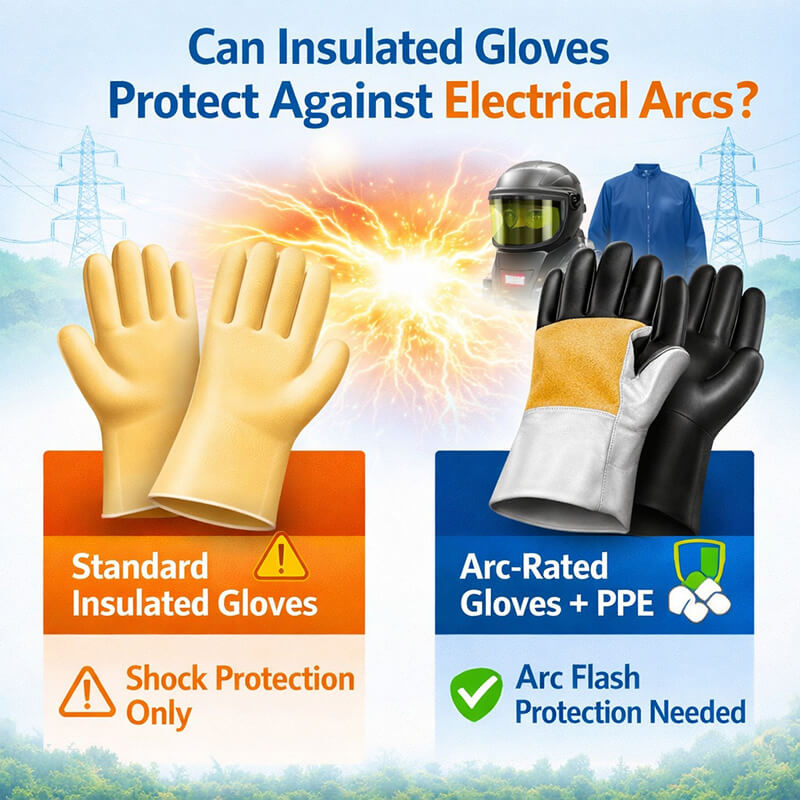
Insulated gloves are essential for electrical safety, but can they protect against electrical arcs? This article explains the capabilities and limitations of insulated gloves regarding arc flash protection, and provides guidance on selecting the right PPE for electrical work.
What Is an Electrical Arc?
An electrical arc is a sudden discharge of electricity through the air between two conductors. It generates:
-
Extremely high temperatures (up to 35,000°F / 19,400°C)
-
Intense light and ultraviolet radiation
-
Strong pressure waves and molten metal projections
Arc flash incidents can cause severe burns, eye injuries, and even fatal accidents.
Can Standard Insulated Gloves Stop Electrical Arcs?
Key Points
-
Primary Purpose of Insulated Gloves
-
Protect workers from direct contact with live electrical circuits
-
Rated by voltage class (Class 00–4) according to ASTM D120, EN 60903, or IEC 60903
-
-
Electrical Arc Exposure
-
Standard insulated gloves are not designed to resist high temperatures or thermal energy from an arc flash
-
Direct exposure to an arc can melt or damage the glove, causing burns
-
-
Protection Limitations
-
Insulated gloves prevent electric shock, not thermal burns from arcs
-
They must be combined with arc-rated PPE for full arc flash protection
-
How to Protect Against Arc Flash
To stay safe during potential arc flash incidents, workers should use:
-
Arc-Rated Gloves
-
Made from materials resistant to high temperatures and flames
-
Rated according to ASTM F2675, EN 61482-1-2, or IEC 61482-2 standards
-
-
Layering PPE
-
Insulated gloves + leather protector gloves + arc-rated sleeves or coveralls
-
Ensures both electrical insulation and thermal protection
-
-
Proper Training and Procedures
-
Always follow lockout/tagout (LOTO) procedures
-
Maintain safe working distances
-
Inspect gloves before each use
-
Key Takeaways
| Feature | Standard Insulated Gloves | Arc-Rated Gloves |
|---|---|---|
| Electrical Shock Protection | ✔ Yes | ✔ Yes |
| Arc Flash Thermal Protection | ✖ No | ✔ Yes |
| Heat & Flame Resistance | ✖ Minimal | ✔ High |
| Standards Compliance | ASTM D120 / EN 60903 / IEC 60903 | ASTM F2675 / EN 61482 / IEC 61482 |
-
Conclusion: Standard insulated gloves cannot prevent burns from electrical arcs. They must be paired with arc-rated gloves and PPE for comprehensive protection.
Choosing the Right Gloves
-
For live electrical work without arc risk: Standard insulated gloves (latex or synthetic rubber)
-
For tasks with potential arc exposure: Arc-rated insulated gloves + leather protectors + appropriate arc flash PPE
Proper glove selection and PPE layering can significantly reduce the risk of injury in electrical work.