Skip to content
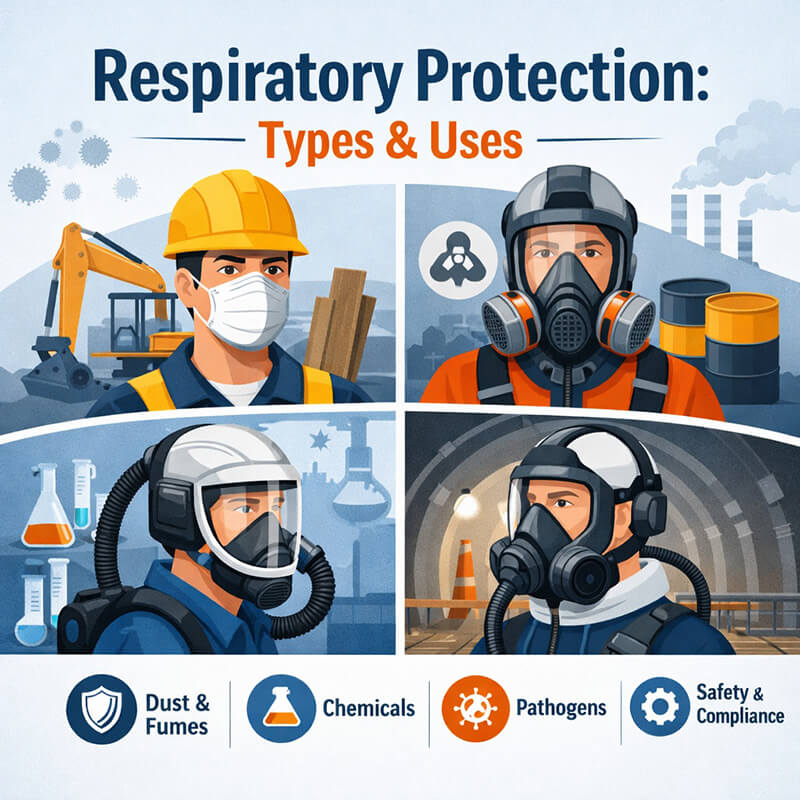
Respiratory protection is essential for workers exposed to dust, fumes, chemicals, or airborne pathogens. This guide explains the different types of respiratory protection and their applications to ensure safety in various work environments.
Why Respiratory Protection Matters
Respiratory hazards can cause serious health issues, including lung disease, chemical exposure, and infection. Using the right respiratory protection:
-
Shields workers from airborne hazards
-
Ensures compliance with safety standards
-
Enhances workplace safety and productivity
Types of Respiratory Protection
1. Disposable Masks (N95, FFP2, FFP3)
-
Protection: Filters dust, pollen, and some aerosols
-
Use Cases: Construction dust, woodworking, light chemical exposure, pandemic protection
-
Advantages: Lightweight, easy to wear, disposable
-
Limitations: Not suitable for high-risk chemical or gas exposure
2. Half-Mask Respirators
-
Protection: Covers nose and mouth, can attach filters or cartridges
-
Use Cases: Paint spraying, chemical handling, welding fumes
-
Advantages: Reusable, replaceable filters, good for moderate chemical or particulate hazards
-
Limitations: Limited eye and face protection
3. Full-Face Respirators
-
Protection: Covers eyes, nose, and mouth; attachable filters or cartridges
-
Use Cases: High-risk chemical exposure, welding, handling toxic gases
-
Advantages: Provides eye protection and higher sealing against contaminants
-
Limitations: Bulkier, requires fit testing
4. Powered Air-Purifying Respirators (PAPRs)
-
Protection: Uses a battery-powered blower to force air through filters
-
Use Cases: Hazardous chemical labs, pharmaceutical production, heavy smoke or dust
-
Advantages: Easier breathing, higher protection level, comfortable for long-term use
-
Limitations: Heavier, more expensive, maintenance required
5. Supplied-Air Respirators (SARs)
-
Protection: Provides clean air from a remote source
-
Use Cases: Confined spaces, high concentrations of toxic gases
-
Advantages: Highest level of protection, suitable for extended exposure
-
Limitations: Requires hoses or air tanks, mobility limited
Choosing the Right Respiratory Protection
-
Assess Workplace Hazards – Identify dust, chemicals, gases, or pathogens.
-
Check Standards – Ensure masks or respirators meet NIOSH, EN, or ISO certifications.
-
Consider Comfort and Fit – Proper fit is critical for effectiveness.
-
Plan Maintenance – For reusable respirators, ensure cleaning, filter replacement, and storage protocols.
Key Takeaways
-
Disposable masks are ideal for low-risk particulates.
-
Half-mask and full-face respirators offer enhanced chemical and dust protection.
-
PAPRs and SARs are suitable for high-risk or prolonged exposure.
-
Correct selection, fit, and maintenance are essential for maximum respiratory safety.
Learn more about mask types and filtration efficiency in our article on N95, FFP2, FFP3 Masks: What’s the Difference and How to Choose?