Skip to content
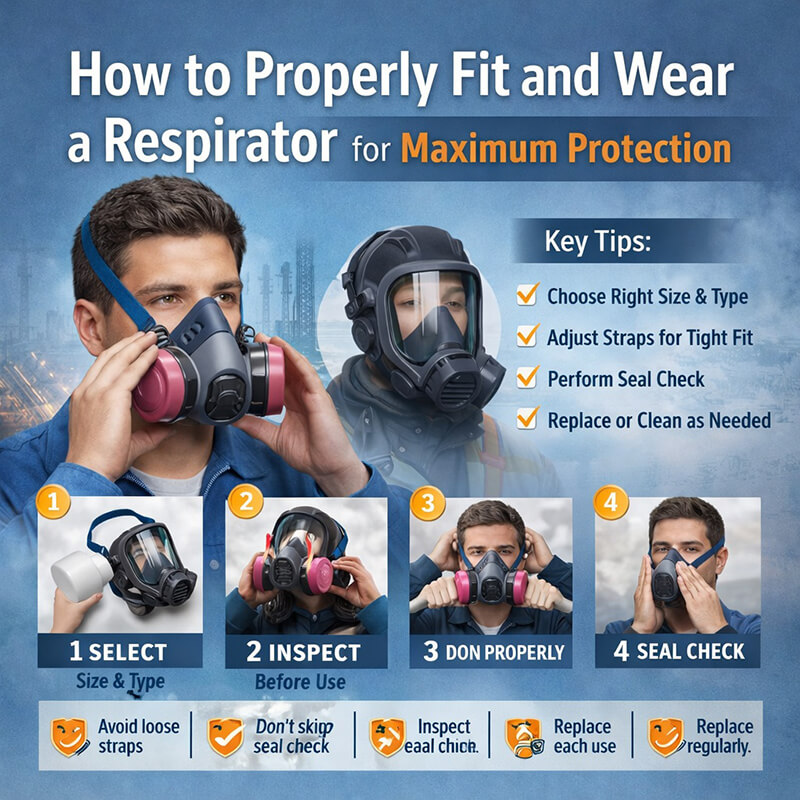
Proper fit and usage of respirators are essential for workplace safety. Learn step-by-step how to wear, adjust, and check your respirator to ensure maximum protection against dust, fumes, and airborne hazards.
Why Proper Fit Matters
Even high-quality respirators can fail if worn incorrectly. Poor fit allows contaminants to leak into the mask, reducing protection and increasing risk of exposure. Properly fitted respirators ensure:
-
Optimal filtration efficiency
-
Full-face or mouth/nose seal
-
Comfort for long-term wear
Step 1: Select the Right Size and Type
-
Use the respirator designed for your hazard type (dust, chemical, fume)
-
Choose the correct size based on face shape and manufacturer guidelines
-
Half-mask vs full-face: full-face also protects eyes
Step 2: Inspect Before Use
-
Check for cracks, tears, or damaged straps
-
Ensure filters and cartridges are correctly installed
-
Verify the nose clip, straps, and sealing material are intact
Step 3: Properly Don the Respirator
-
Hold the respirator in your hand with nosepiece at fingertips
-
Place over nose and mouth, ensuring a snug fit
-
Pull straps over head:
-
Top strap over crown
-
Bottom strap below ears
-
-
Adjust nose clip for a firm seal
Step 4: Perform a Seal Check
-
Positive Pressure Check: Cover exhalation valve, exhale gently. Mask should slightly expand without leaks
-
Negative Pressure Check: Cover filters, inhale gently. Mask should collapse slightly without air entering
-
Adjust straps and nose clip until no air leaks are detected
Step 5: Maintain and Wear Correctly
-
Avoid touching the mask surface during use
-
Replace filters or cartridges as recommended
-
Clean reusable respirators after each shift and store in a clean, dry area
Common Mistakes to Avoid
-
Wearing loose or improperly adjusted straps
-
Using a damaged respirator or expired filters
-
Failing to perform a seal check
-
Wearing a respirator for the wrong hazard type
Key Takeaways
-
Proper selection, fit, and seal checks are crucial for maximum protection
-
Inspect respirators and replace filters regularly
-
Full-face respirators provide eye protection; half-masks protect nose and mouth
-
Training and routine practice improve safety and comfort
Want to dive deeper? Explore these blogs:
→ N95, FFP2, FFP3 Masks: What’s the Difference and How to Choose?
→ Half-Mask vs Full-Face Respirators: Which One is Right for You?
→ Cleaning and Maintaining Your Respirator