Skip to content
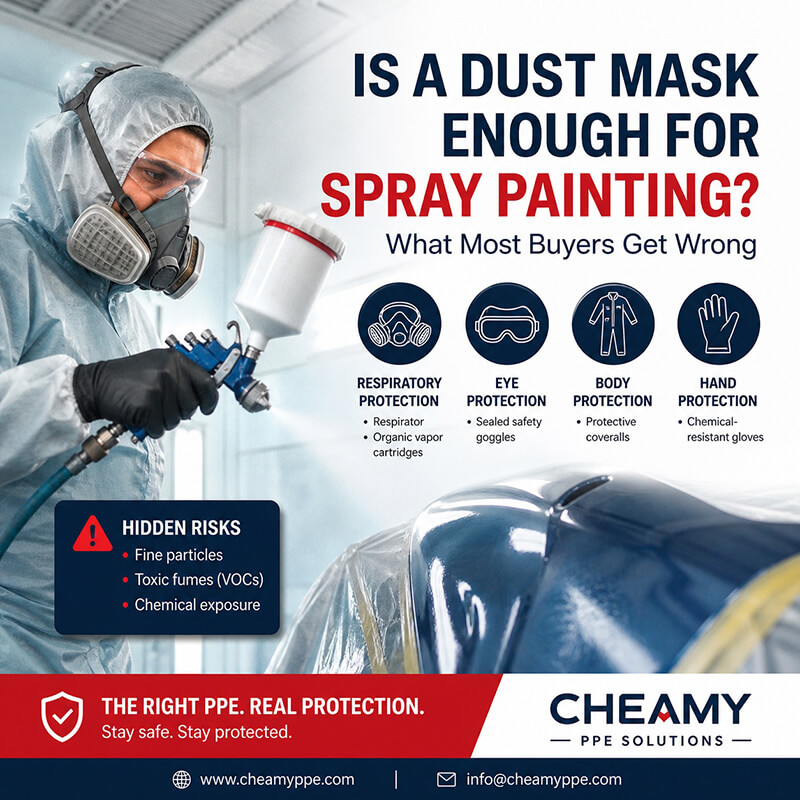
Spray painting may look less dangerous than heavy industrial work—but in reality, it involves invisible risks that many people underestimate.
The biggest mistake? Thinking a simple dust mask is enough.
1. What Makes Spray Painting Dangerous?
Spray painting produces:
- Fine airborne particles
- Toxic fumes (VOCs)
- Chemical exposure through skin
👉 These risks are often invisible but harmful over time.
2. The Most Common PPE Mistakes
❌ Using dust masks instead of respirators
❌ No skin protection
❌ Poor ventilation awareness
👉 Many workers feel “safe” but are not protected.
3. What PPE Is Actually Required?
✔ Respiratory Protection
- Half-mask or full-face respirator
- Organic vapor cartridges
✔ Eye Protection
- Sealed safety goggles
✔ Body Protection
- Disposable or reusable coveralls
✔ Hand Protection
- Chemical-resistant gloves
4. Cost vs Safety: What Buyers Should Know
Low-cost PPE may:
- Wear out faster
- Offer limited protection
- Increase long-term costs
👉 The goal is not the cheapest product—but the right protection for the job.
5. Conclusion
Spray painting risks are often underestimated—but proper PPE makes all the difference.
👉 Talk to CHEAMY PPE for cost-effective spray painting protection solutions.