Workers in agriculture and related industries may be exposed to pesticides during mixing, application, equipment cleaning, or contact with treated plants. Selecting suitable protective gloves is essential to reduce the risk of chemical exposure.
ISO 18889 is an international standard specifically developed for gloves used by pesticide operators and re-entry workers. Understanding this standard helps PPE buyers choose suitable gloves for agricultural chemical protection. ISO
What Is ISO 18889?
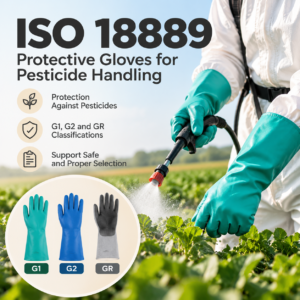
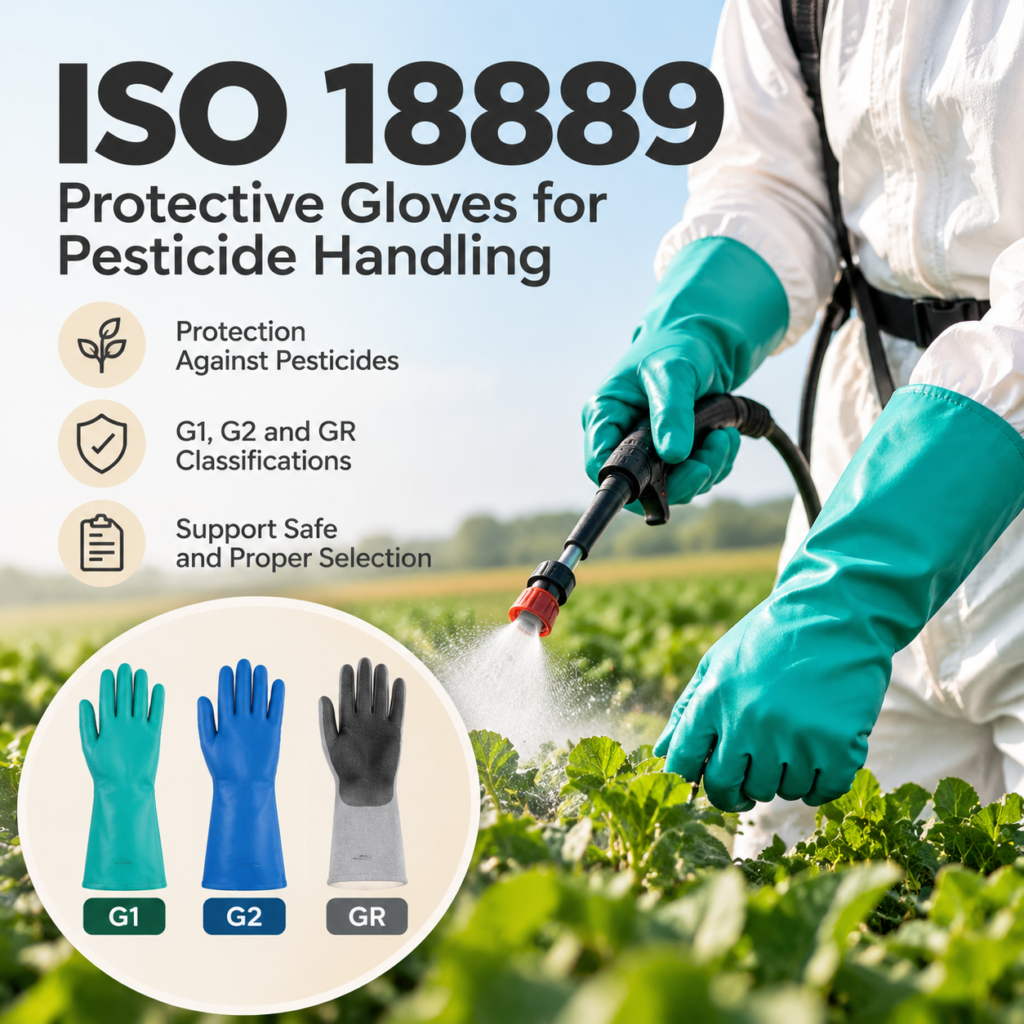
ISO 18889 specifies minimum performance requirements, classifications, and marking requirements for protective gloves used when handling pesticide products or working in areas treated with pesticides.
The standard focuses on protecting hands, and in some cases forearms, against contact with pesticide products.
ISO 18889 should be used together with ISO 21420, which covers general glove requirements such as design, comfort, sizing, and marking.
ISO 18889 Glove Classifications
ISO 18889 classifies protective gloves into three categories:
| Classification | Application | Protection Level |
|---|---|---|
| G1 | Lower-risk pesticide handling tasks | Basic pesticide protection |
| G2 | Higher-risk pesticide handling tasks | Higher chemical and mechanical protection |
| GR | Re-entry work involving contact with pesticide residues | Partial protection for specific tasks |
G1 Gloves
G1 gloves are designed for relatively lower-risk pesticide handling applications.
They are suitable for tasks where:
- Chemical exposure risk is limited
- Concentrated pesticides are not involved
- High mechanical protection is not required
G2 Gloves
G2 gloves provide a higher level of protection and are intended for applications involving greater pesticide exposure risks.
They are commonly considered for tasks such as:
- Preparing pesticide mixtures
- Handling pesticide products
- Applications where stronger protection is required
GR Gloves
GR gloves are designed for re-entry workers who may contact dry or partially dried pesticide residues on treated plants.
These gloves provide protection mainly on specific areas, such as the palm and fingertips, and are not intended to replace G1 or G2 gloves for direct pesticide handling.
ISO 18889 and Chemical Protection
ISO 18889 evaluates glove performance against pesticide exposure through requirements related to:
- Chemical permeation resistance
- Penetration resistance
- Mechanical performance
- Glove design and labeling
However, selecting pesticide-resistant gloves should not rely only on the standard classification.
Buyers should also consider:
- Type of pesticide
- Chemical concentration
- Contact time
- Working environment
- Required glove length and coverage
What Should Buyers Check When Purchasing ISO 18889 Gloves?
1. Application Scenario
Different agricultural tasks require different levels of protection.
Consider whether gloves will be used for:
- Mixing pesticides
- Spraying operations
- Equipment cleaning
- Crop inspection
- Re-entry work
2. Glove Material
Common materials for pesticide protective gloves include:
- Nitrile
- Neoprene
- Other chemical-resistant polymers
Material selection should match the chemical exposure conditions and required performance.
3. Technical Documents
Professional PPE buyers should request:
- Applicable standards
- Test reports
- Product specifications
- Chemical resistance information
- Usage instructions
Clear technical documentation helps ensure the selected gloves meet the intended application requirements.
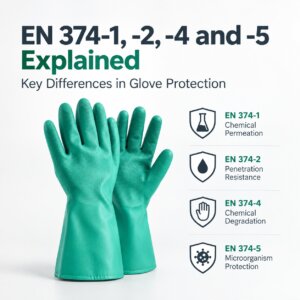
ISO 18889 vs EN ISO 374
Although both standards relate to chemical protection, they focus on different applications.
- EN ISO 374: General chemical and microorganism protective glove requirements.
- ISO 18889: Specifically designed for gloves used by pesticide operators and re-entry workers.
For agricultural chemical protection, ISO 18889 provides more application-specific guidance.
Conclusion
ISO 18889 helps buyers evaluate protective gloves designed for pesticide handling and agricultural applications. Understanding the differences between G1, G2, and GR classifications allows purchasers to select gloves according to actual workplace risks.
As an experienced PPE supplier, CHEAMY PPE supports global customers in sourcing chemical-resistant gloves and other safety equipment with suitable specifications, technical documentation, and customization options.
Contact CHEAMY PPE to discuss your protective glove requirements.