Skip to content


Impact-resistant gloves are designed to help protect workers’ hands from knocks, bumps, and impact hazards in demanding industrial environments. Featuring protective elements across the knuckles and fingers, these gloves are commonly used in construction, manufacturing, equipment maintenance, and material handling.
For distributors, importers, and industrial purchasing teams, choosing the right impact-resistant gloves involves more than comparing prices. Protection performance, grip, durability, comfort, and compliance with applicable standards all play important roles.
As a PPE supplier in China, CHEAMY PPE supports business buyers sourcing personal protective equipment for different industrial applications. This guide explains how TPR impact-resistant gloves work, what standards buyers should understand, and how to select suitable products for their markets.
1. What Are TPR Impact-Resistant Gloves?
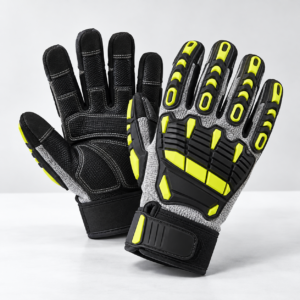
TPR impact-resistant gloves are work gloves featuring molded thermoplastic rubber (TPR) elements on the back of the hand and selected finger areas. These protective elements are designed to help absorb and distribute impact forces, providing additional protection for exposed areas of the hand.
Compared with ordinary work gloves, impact-resistant gloves incorporate additional protective structures while aiming to maintain the flexibility needed for handling tools and materials.
Common features include:
- TPR protective elements: Cover selected knuckle and finger areas to help manage impact forces.
- Reinforced palm: Helps improve durability and may enhance grip, depending on the materials used.
- Flexible construction: Supports hand movement during handling and maintenance tasks.
- Secure wrist closure: Helps keep the gloves in position during use.
- Multiple protection options: Some models combine impact protection with verified cut, abrasion, or other mechanical protection.
The actual performance of an impact-resistant glove depends on its construction and test results. TPR elements alone do not guarantee a specific level of impact protection.
2. How Do Impact-Resistant Gloves Work?
When a worker’s hand strikes a hard surface or comes into contact with equipment, impact forces may affect the knuckles, fingers, and other exposed areas.
TPR protective elements are designed to help manage these forces through their shape, material properties, and placement across the back of the hand.
When evaluating a glove, buyers should consider three factors.
Protective coverage
Check whether the glove covers the areas most exposed to impact during the intended task. Different designs offer different levels of coverage across the knuckles, fingers, and back of the hand.
Flexibility and dexterity
Protective elements should provide suitable coverage without unnecessarily restricting finger movement. Workers still need to grasp tools, handle components, and perform repetitive tasks.
Verified impact performance
A rugged appearance does not establish a glove’s impact protection level. Buyers should request relevant test reports and confirm that the specific model meets the required performance criteria.
3. Common Applications of Impact-Resistant Gloves
Impact-resistant gloves can be used in a variety of industrial environments where workers face hand-impact hazards.
Construction and Building Maintenance
Workers may handle metal components, building materials, tools, and equipment in environments where hands can strike hard edges or surfaces. Gloves with suitable impact protection and grip can provide an additional layer of protection.
Warehousing and Material Handling
Loading, unloading, moving equipment, and handling bulky materials may expose workers’ hands to knocks and bumps. The glove should provide appropriate protection while maintaining control over the materials being handled.
Manufacturing and Assembly
Some production and assembly tasks involve handling components or working around hard surfaces. Impact-resistant gloves may be suitable when identified impact hazards require additional hand protection.
Equipment Installation and Maintenance
Maintenance workers may operate in confined areas around machinery housings, metal structures, and equipment components. Suitable gloves can help protect exposed areas of the hand, provided their use does not introduce additional risks around moving machinery.
The correct glove should always be selected according to the workplace risk assessment and the specific hazards involved.
4. Impact Resistance vs. Cut Resistance
Impact resistance and cut resistance address different hazards. A glove with impact protection does not automatically provide adequate protection against sharp edges.
| Protection Type | Main Purpose |
|---|---|
| Impact resistance | Helps protect the back of the hand and fingers against impact forces |
| Cut resistance | Helps protect against cuts from sharp materials |
| Abrasion resistance | Helps resist surface wear caused by rubbing |
| Puncture resistance | Helps resist penetration by pointed objects under specified test conditions |
| Grip performance | Helps workers maintain control of tools and materials |
For example, workers handling sharp metal components may need both impact and cut protection. Buyers should check the relevant performance ratings rather than assuming one type of protection covers every hazard.
5. Understanding Impact-Resistant Glove Standards
Standards and test reports help purchasing teams evaluate glove performance using defined criteria.
ANSI/ISEA 138
ANSI/ISEA 138 is a US standard addressing the performance, classification, and labeling of occupational gloves designed to provide back-of-the-hand impact protection.
It establishes three impact protection levels. The classification is based on measured transmitted force, with Level 1 representing the lowest of the three performance levels and Level 3 the highest.
Buyers sourcing gloves for the US market should confirm that the specific product has been tested and labeled in accordance with the applicable standard before making compliance claims.
EN 388
EN 388 addresses protective gloves against mechanical risks, including abrasion, blade cuts, tearing, puncture, and applicable impact protection requirements.
For gloves tested under the relevant EN 388 requirements, the letter P in the designated marking position indicates that the glove meets the standard’s impact protection requirements.
Buyers should review the complete marking and supporting documentation to understand the glove’s performance across the different mechanical hazards.
Not every impact-resistant glove is certified to ANSI/ISEA 138 or EN 388 impact protection requirements. Always verify product-specific documentation.
6. How to Choose the Right Impact-Resistant Gloves
When sourcing industrial safety gloves, buyers should evaluate several factors beyond unit price.
Impact Protection and Coverage
Review the placement of the TPR elements and the areas they protect. Request product specifications and applicable test reports to verify that the glove matches the intended application.
Palm Material and Grip
Palm materials influence grip, abrasion resistance, and durability. Different coatings and surface textures may be more suitable for dry handling, oily components, or other working conditions.
Choose a design that matches the materials being handled and the conditions in which the gloves will be used.
Fit, Dexterity, and Comfort
A poorly fitting glove can reduce control and make repetitive work more difficult. Consider available sizes, finger mobility, wrist adjustment, and overall comfort.
Where possible, evaluate samples under representative working conditions before placing a bulk order.
Additional Protection Requirements
Determine whether workers also face cut, abrasion, puncture, chemical, or other hazards. Check the corresponding ratings and documentation rather than assuming that impact protection covers every risk.
Quality Consistency and Documentation
For repeat purchases, confirm that the supplied product matches the approved sample and agreed specifications. Request relevant technical data sheets, test reports, labeling details, and applicable certification documents.
Customization and Bulk Supply
For distributors and businesses purchasing under their own brands, consider available sizes, colors, packaging, logo options, minimum order quantities, and lead times.
As a PPE supplier in China, CHEAMY PPE can discuss product sourcing requirements, customization possibilities, and bulk purchasing needs with business buyers. Specific options depend on the selected product and supplier capabilities.
7. Common Mistakes When Buying Impact-Resistant Gloves
Avoid these common purchasing mistakes:
- Choosing by appearance alone: TPR elements do not automatically prove a particular impact protection rating.
- Ignoring cut hazards: Impact protection does not replace verified cut resistance when sharp materials are involved.
- Overlooking grip: A glove that does not suit the handling conditions may affect control and work performance.
- Selecting the wrong size: Poor fit can make handling tasks more difficult and reduce comfort.
- Assuming every model has the same rating: Different glove constructions may deliver different performance levels.
- Failing to check documentation: Protection claims should be supported by relevant product-specific test results or certification documents.
A structured evaluation helps purchasing teams compare products accurately and make more informed sourcing decisions.
8. Frequently Asked Questions
Are TPR impact-resistant gloves cut-resistant?
Not necessarily. Impact protection and cut resistance address different hazards. Check the specific glove’s cut-resistance rating if protection against sharp edges is required.
Do all impact-resistant gloves meet ANSI/ISEA 138?
No. The presence of TPR protective elements does not automatically mean a glove has been tested or classified under ANSI/ISEA 138. Request documentation for the exact model.
Are impact-resistant gloves suitable for heavy-duty work?
They may be suitable for certain heavy-duty tasks when their impact performance, grip, durability, and fit match the workplace risk assessment. No single glove is suitable for every application.
Can impact-resistant gloves be customized for distributors?
Customization options depend on the product and supplier. Buyers can ask about branding, colors, sizes, packaging, and other specifications while ensuring that changes do not compromise the glove’s tested performance.
What should buyers ask an impact-resistant gloves supplier?
Buyers should ask about impact protection ratings, additional mechanical protection, available sizes, product specifications, test documentation, sample availability, customization, minimum order quantities, and lead times.
Working with a supplier that provides clear product information makes it easier to compare options and assess suitability for the intended market.
Conclusion
TPR impact-resistant gloves can provide an additional layer of hand protection for workers exposed to impact hazards in construction, manufacturing, material handling, and maintenance environments.
The right choice depends on the actual workplace risks, verified protection performance, grip, flexibility, durability, and comfort. Buyers should review product documentation carefully and select gloves that meet the requirements of their intended applications.
Looking for an impact-resistant gloves supplier in China?
CHEAMY PPE supports business buyers sourcing industrial safety gloves and other personal protective equipment. Contact our team to discuss your product requirements, technical specifications, customization options, and bulk orders.
CHEAMY PPE — Safety Meets Comfort.