 Skip to content
PPE Requirements for Maintenance and Repair Workers
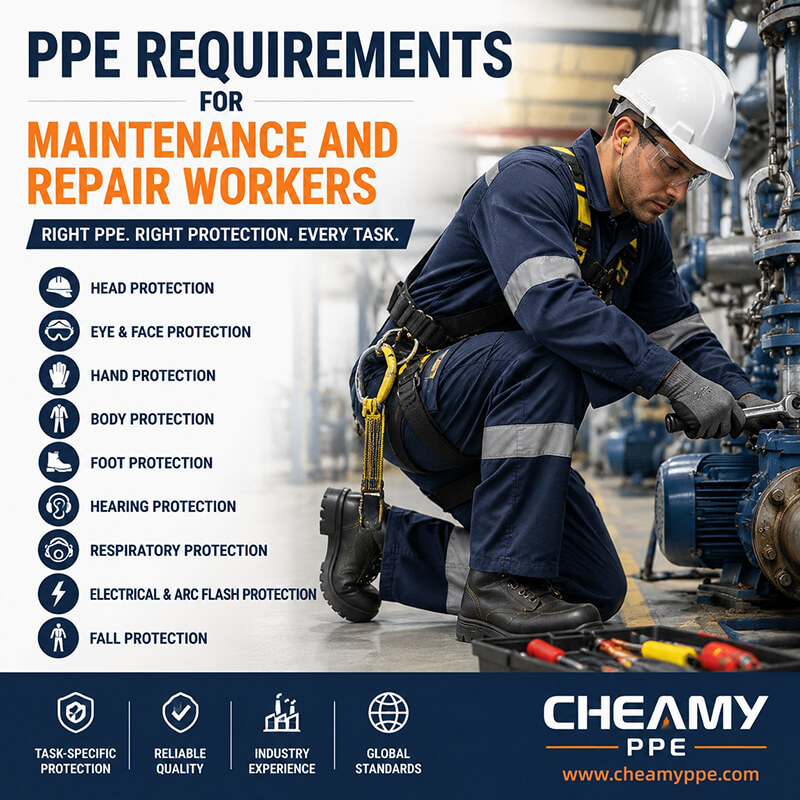
This guide outlines key PPE for maintenance and repair workers, covering head-to-toe protection such as helmets, gloves, respiratory equipment, fall protection, and electrical safety gear to reduce risks in varied job conditions.
Safety PPE Checklist for Factory Workers
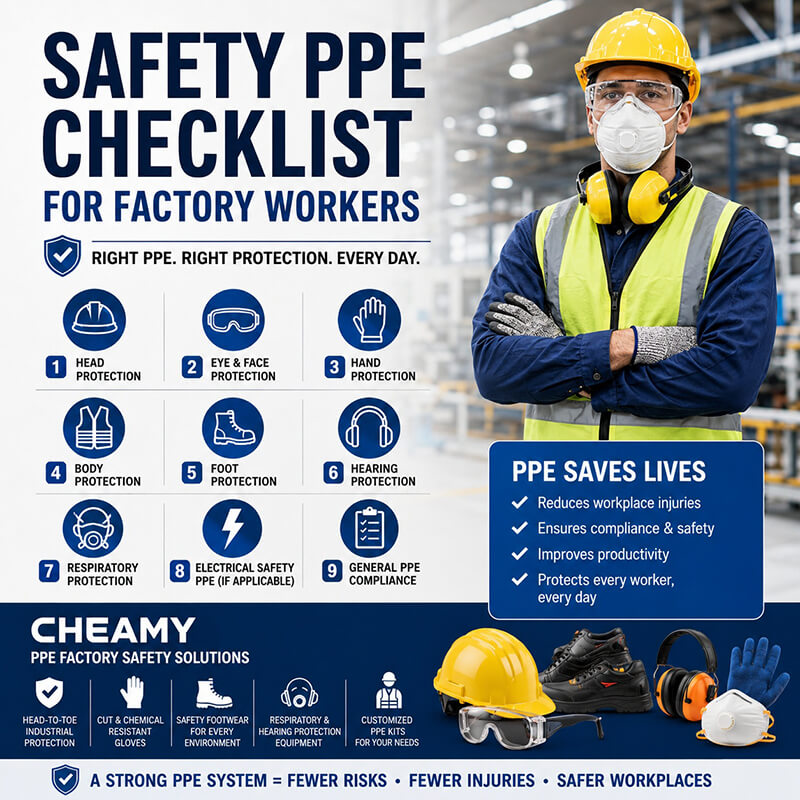
This checklist outlines essential PPE for factory workers, including head, eye, hand, body, foot, hearing, and respiratory protection to help reduce workplace risks and ensure daily operational safety.
PPE for Oil and Gas-Related Industrial Works (Energy Projects)
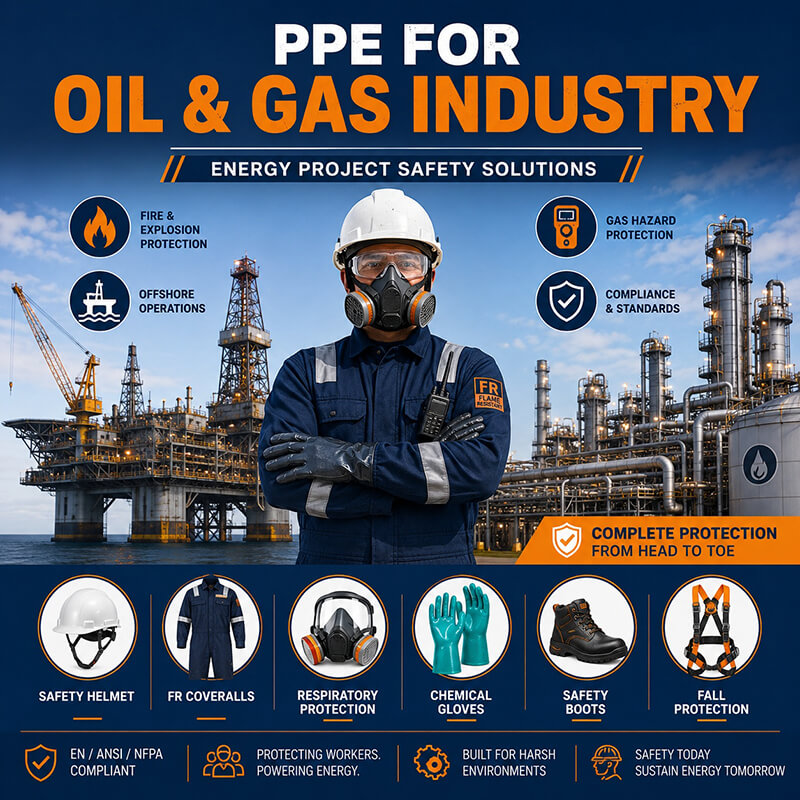
This guide covers key PPE for oil and gas-related industrial works, including FR clothing, respiratory protection, hand and foot safety, and fall protection systems to reduce risks in hazardous energy project environments.
PPE for Chemical Industry Safety Protection Guide
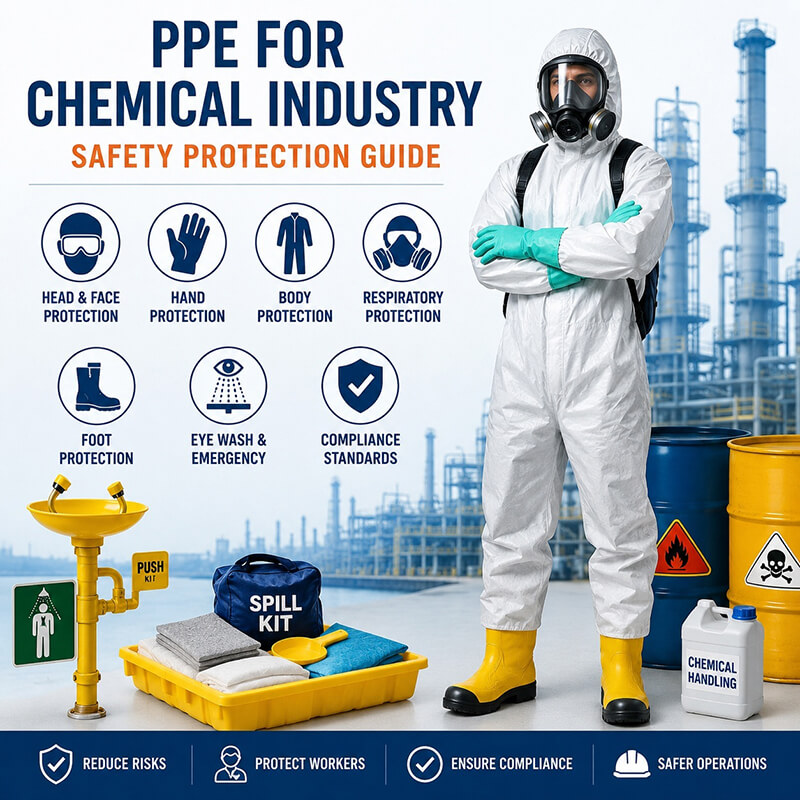
Learn the essential PPE requirements for chemical industry safety. Discover protective clothing, chemical-resistant gloves, respirators, safety boots, face protection, and compliance standards for handling hazardous chemicals safely.
PPE Requirements for Welding and Fabrication Industry
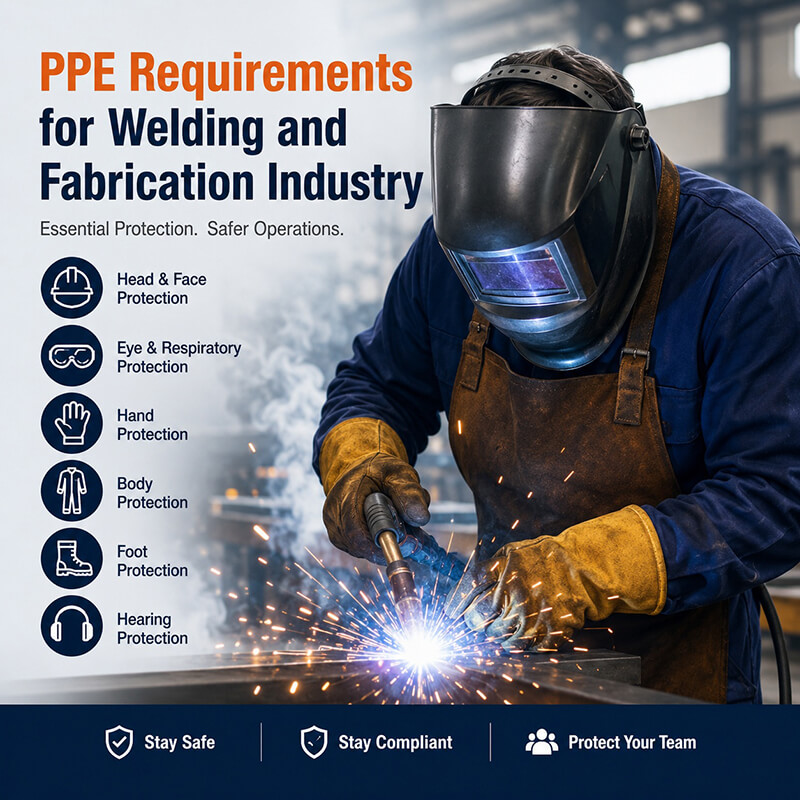
This blog outlines the key PPE requirements for welding and fabrication work, covering head-to-toe protection such as welding helmets, flame-resistant clothing, gloves, respiratory protection, and safety boots to reduce workplace hazards and improve safety compliance.
PPE for Infrastructure Projects in Hot Climates
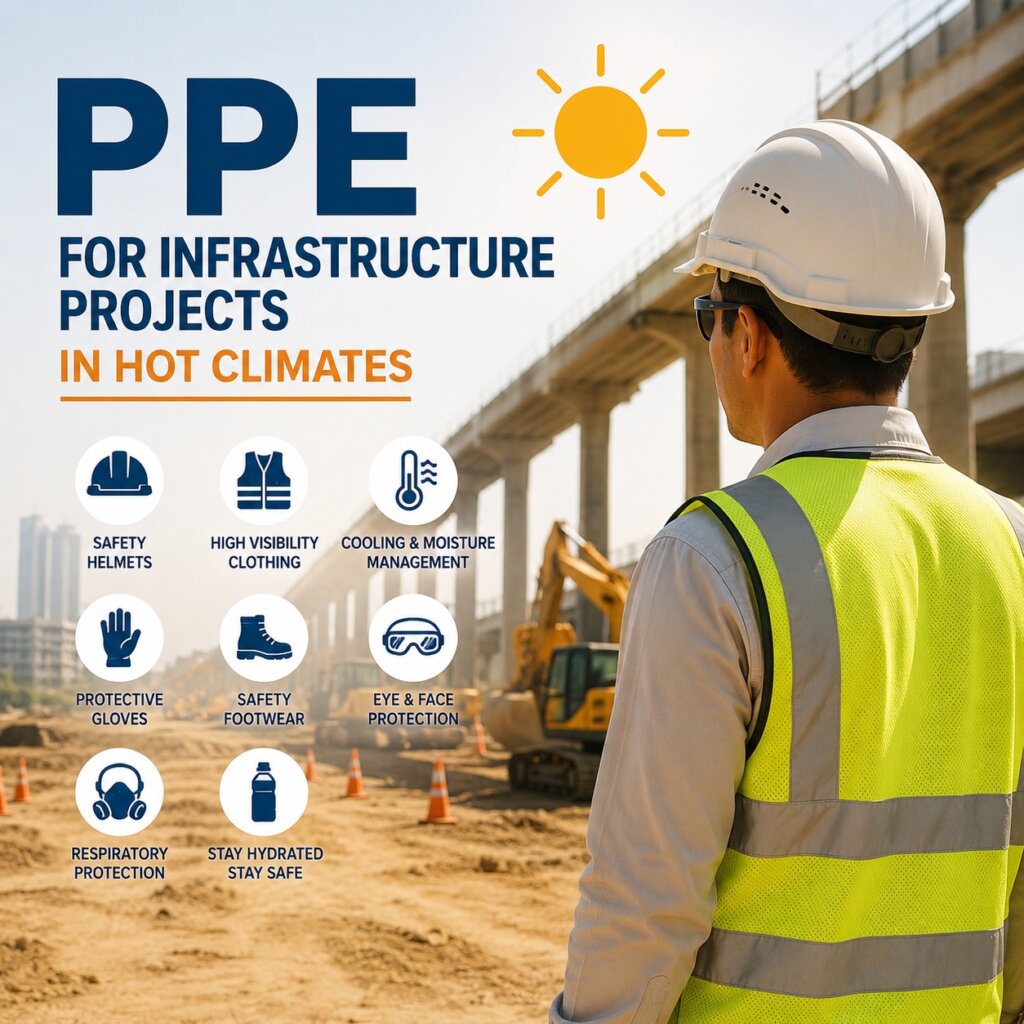
Infrastructure projects in hot climates require PPE that provides both protection and comfort for workers exposed to high temperatures, strong sunlight, dust, and physically demanding conditions. This guide explores lightweight safety helmets, breathable reflective clothing, protective gloves, safety footwear, respiratory protection, and heat stress prevention solutions that help improve safety, visibility, and productivity on outdoor construction and infrastructure worksites.
Mining PPE Safety Requirements and Equipment List
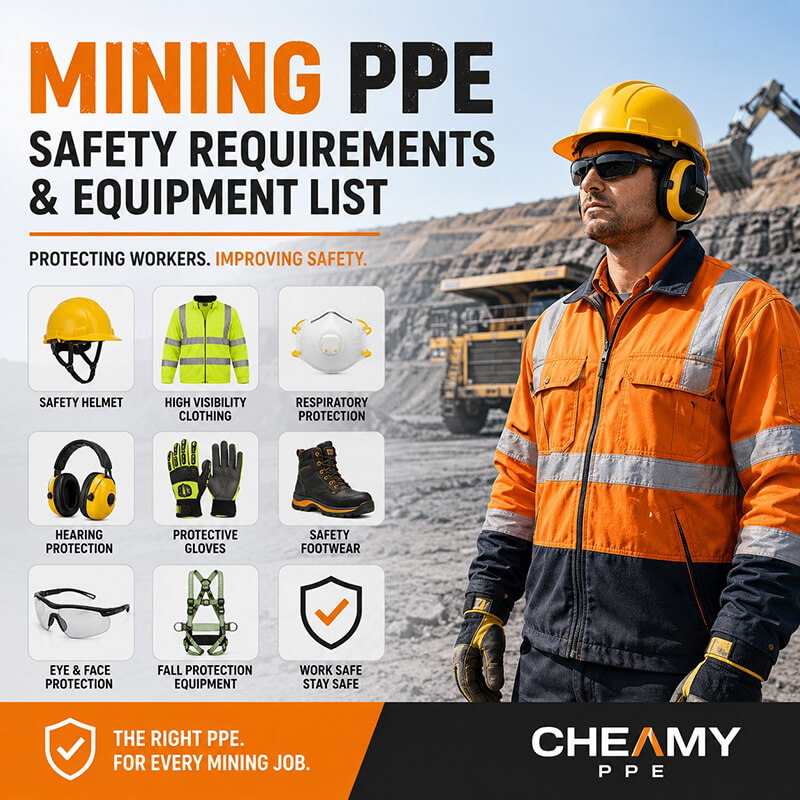
Explore the essential PPE safety requirements for mining operations, including helmets, respirators, reflective clothing, gloves, safety boots, hearing protection, and more. This guide provides a practical mining PPE equipment list to help improve workplace safety, visibility, and worker protection in demanding mining environments.
PPE for Warehouse and Logistics Workers: A Complete Guide
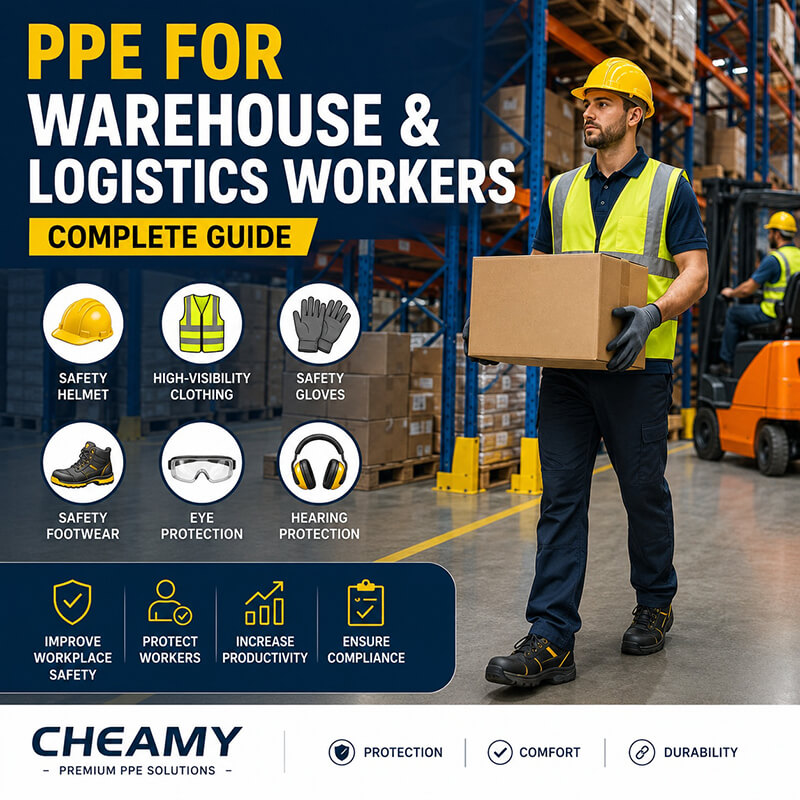
Essential PPE guide for warehouse and logistics workers, covering safety helmets, high-visibility clothing, gloves, safety shoes, and more to ensure workplace protection and efficiency.
PPE Requirements for Construction Workers on Job Sites
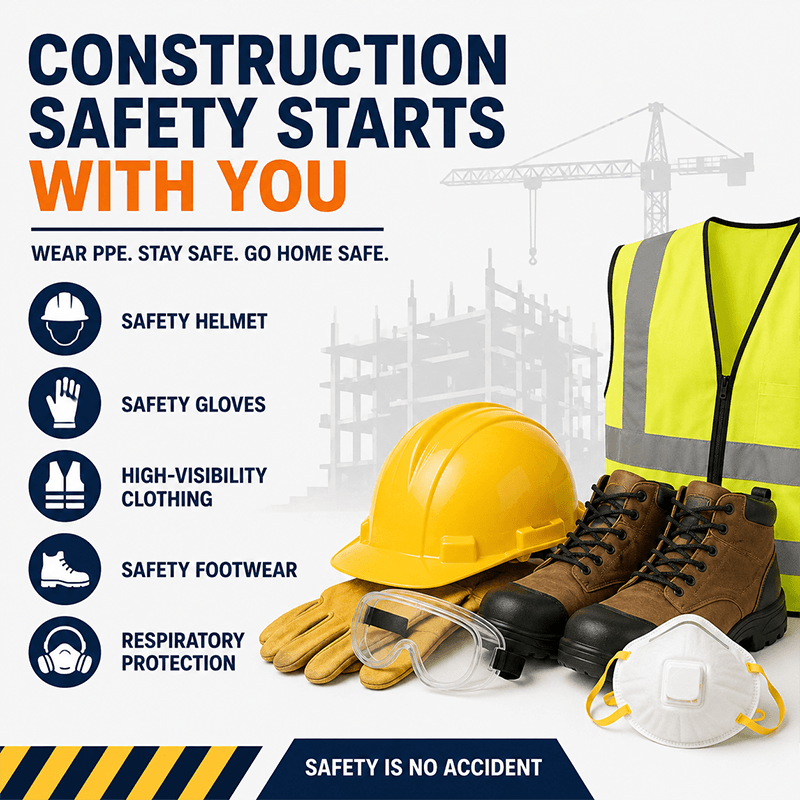
Personal Protective Equipment (PPE) is the first line of defense for workers on construction sites. Different job roles face different hazards such as falling objects, dust, noise, and chemical exposure, requiring appropriate protection like safety helmets, gloves, high-visibility clothing, safety footwear, and respiratory protection. Proper selection and correct use of PPE not only reduce the risk of workplace injuries but also improve overall site safety, efficiency, and compliance.
One-stop PPE Solution: What Should Contractors Look For?
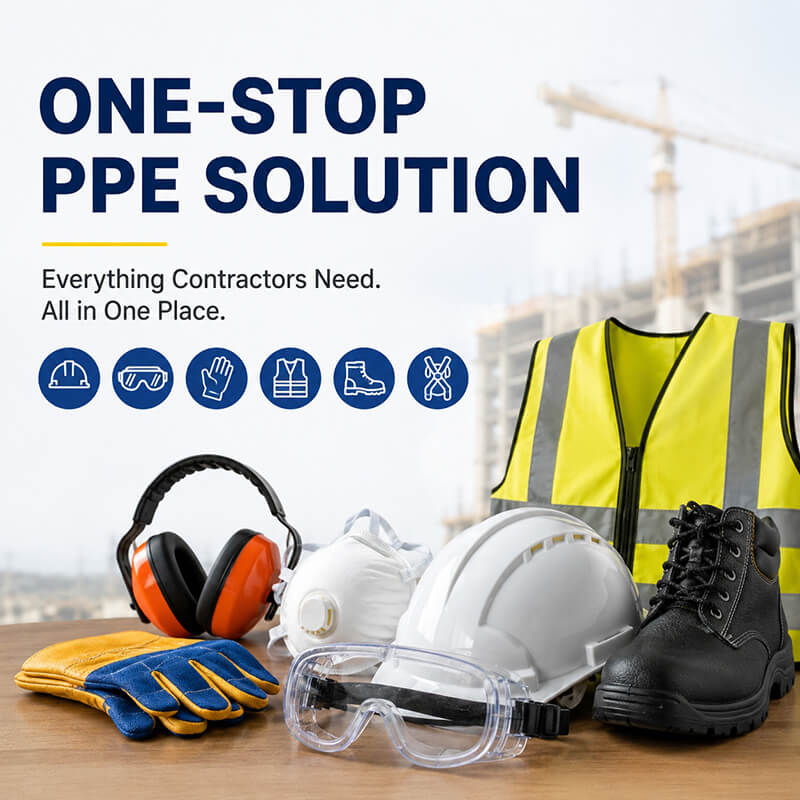
This article explains what contractors should look for in a one-stop PPE solution, including complete product coverage, consistent quality, bulk supply capability, customization options, and reliable logistics. It highlights how an integrated PPE solution helps contractors simplify procurement, reduce risks, and ensure consistent protection across large projects.
PPE Procurement Guide for International Projects
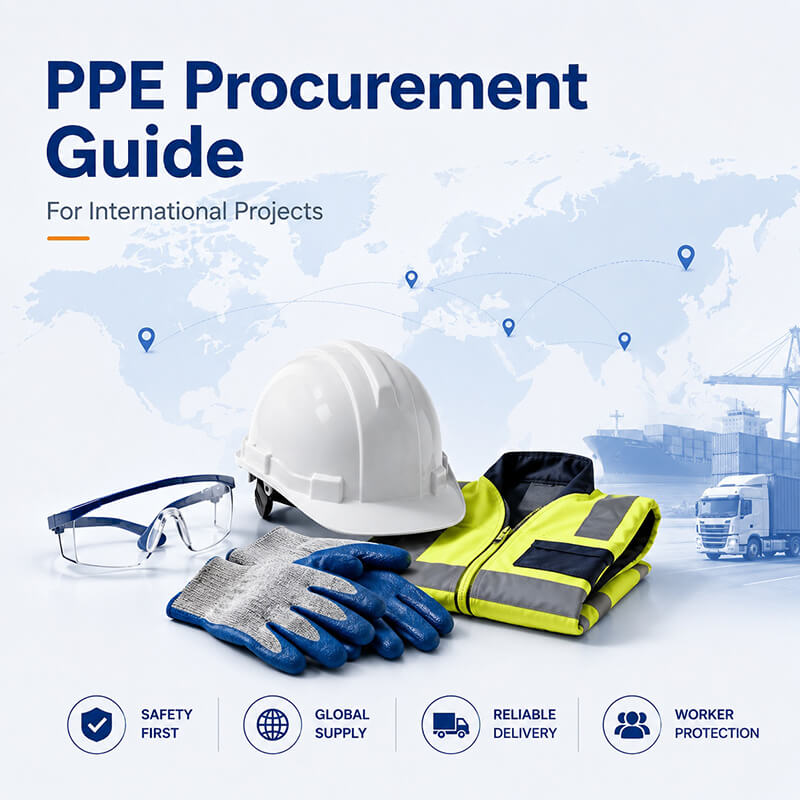
This PPE procurement guide explains how international projects can improve safety and supply stability through better supplier evaluation, compliance planning, logistics management, and long-term PPE sourcing strategies.
Why One-Stop PPE Suppliers Save Time and Cost?
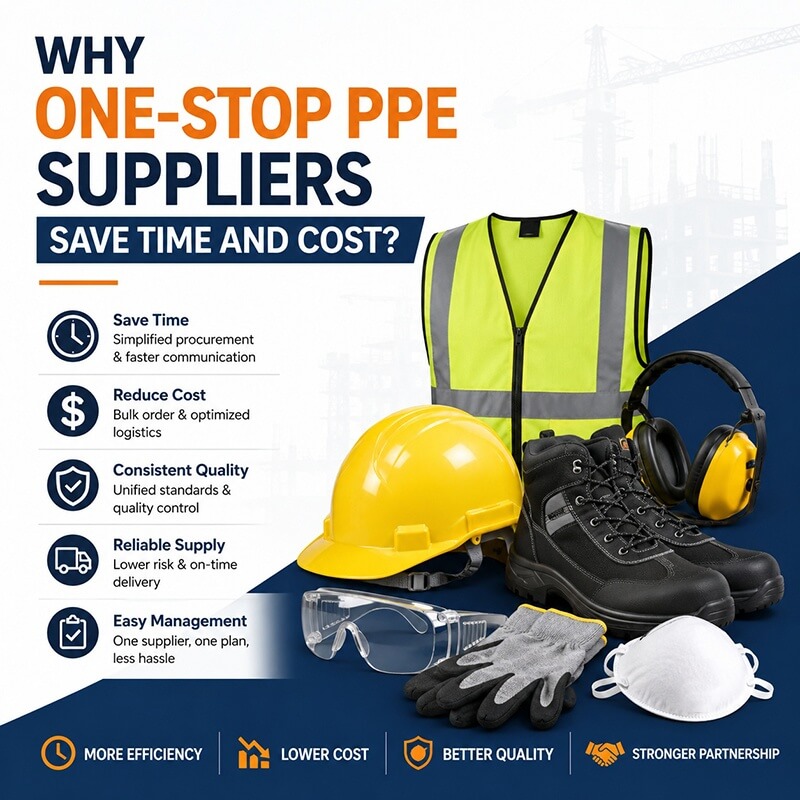
This article explains how one-stop PPE suppliers improve PPE sourcing efficiency by consolidating procurement, reducing administrative work, lowering logistics costs, improving communication, and streamlining production coordination. It highlights how contractors benefit from faster, simpler, and more cost-effective PPE procurement.
