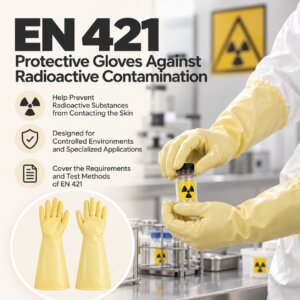
In specialized workplaces such as nuclear facilities, laboratories, and radioactive material handling areas, hand protection must be selected according to the specific hazards involved. Ordinary chemical-resistant or disposable gloves may not provide the protection required for radioactive contamination or ionizing radiation.
EN 421 is a European standard that specifies requirements and test methods for protective gloves against ionizing radiation and radioactive contamination. Understanding its scope helps professional buyers identify suitable gloves and evaluate technical documentation before purchasing.
What Is EN 421?
EN 421:2010 specifies requirements and test methods for gloves designed to protect the hands, and certain parts of the arms and shoulders, against ionizing radiation and radioactive contamination.
The standard also covers gloves intended for installation in permanent containment enclosures, such as glove boxes, as well as certain intermediate sleeves used with these systems.
An important limitation is that EN 421 does not apply to protective gloves against X-ray radiation. Buyers should therefore confirm the exact radiation hazard and applicable requirements before specifying a product.
Radioactive Contamination vs. Ionizing Radiation
Although these hazards are related, they are not the same. Understanding the difference is essential when selecting protective gloves.
1. Protection Against Radioactive Contamination
Radioactive contamination occurs when radioactive substances come into contact with a person’s skin, clothing, equipment, or working environment.
Gloves intended for contamination protection help prevent radioactive materials from reaching the skin. Their suitability depends on factors such as material integrity, leakage performance, fit, and the conditions in which they will be used.
Typical applications may include handling radioactive materials in controlled laboratory environments or working with containment equipment.
2. Protection Against Ionizing Radiation
Ionizing radiation can transfer enough energy to ionize atoms and may pose health risks depending on the type of radiation, exposure level, and duration.
Protection against external radiation depends on factors such as radiation type, energy, material composition, and material thickness. Specialized gloves may be required where the applicable radiation protection assessment calls for them.
Important: Gloves that help prevent radioactive contamination do not automatically provide effective shielding against external radiation. Buyers must verify the specific protection offered by the tested product.
Where Are EN 421 Gloves Used?
Protective gloves selected under EN 421 may be relevant to specialized applications such as:
- Nuclear facilities and controlled radiation areas
- Laboratories handling radioactive substances
- Radioactive material handling and containment operations
- Glove boxes and permanent containment enclosures
- Specialized industrial and research environments involving radiation hazards
The appropriate glove depends on the actual task, the type of hazard, and the site’s safety procedures. EN 421 compliance alone should not be treated as proof that a glove is suitable for every radiation-related application.
What Should Buyers Check When Sourcing EN 421 Gloves?
For international buyers, checking the standard reference is only the first step. Consider the following points before placing an order.
1. Test Reports and Product Traceability
Request relevant test reports and technical documentation for the exact glove model. Confirm that the product identification, material construction, and claimed protection correspond to the documentation supplied.
2. The Type of Protection Required
Clearly define whether the application requires protection against radioactive contamination, external ionizing radiation, or both. These requirements are different and may require different product designs.
3. Material and Design
Review glove material, thickness, cuff design, fit, dexterity, and compatibility with the intended containment system. For gloves used in glove boxes, the mounting interface and sealing arrangement may also be critical.
4. Intended Working Conditions
Consider the substances handled, exposure conditions, frequency of glove replacement, and any additional hazards such as chemicals or mechanical damage. Additional protection should be verified against the relevant product standards and test evidence.
5. Marking and Instructions
Check product marking, manufacturer information, instructions for use, limitations, storage conditions, and replacement guidance. Workers should understand the glove’s intended use and restrictions before handling hazardous materials.
EN 421 and Other Protective Glove Standards
EN 421 addresses specialized radiation-related hazards. It should not be confused with standards designed for other types of hand protection.
- EN ISO 21420: Covers general requirements for protective glove design, construction, comfort, fit, and marking.
- EN 374: Addresses protective gloves against chemicals and microorganisms under its applicable requirements.
- EN 388: Covers mechanical risks such as abrasion, blade cuts, tearing, and puncture.
These standards address different risks. A glove meeting one standard should not automatically be assumed to meet another. Buyers should select standards according to the hazards identified in their risk assessment.
Choosing a PPE Supplier for Specialized Gloves
When sourcing specialized protective gloves, buyers should look beyond price and general product descriptions. Clear specifications, traceable test documentation, consistent product identification, and communication about application limits are important parts of the purchasing process.
As a PPE supplier in China, CHEAMY PPE supports international buyers in sourcing personal protective equipment according to their product specifications and purchasing requirements.
For specialized applications involving radiation or radioactive materials, buyers should provide the intended use and required standards so that product suitability and supporting documentation can be reviewed before an order is confirmed.
Frequently Asked Questions
What does EN 421 cover?
EN 421 specifies requirements and test methods for protective gloves against ionizing radiation and radioactive contamination. Its scope excludes protective gloves against X-ray radiation.
Do EN 421 gloves block all radiation?
No. The protection provided depends on the glove’s design, material, and the radiation involved. EN 421 compliance should not be interpreted as complete protection against all forms of radiation.
Can ordinary disposable gloves be used for radioactive contamination?
Suitability depends on the material, glove integrity, contamination risk, task, and workplace procedures. Do not assume that an ordinary disposable glove is suitable without an appropriate assessment and supporting evidence.
What documents should buyers request?
Buyers should request relevant test reports, technical specifications, product identification, marking details, and instructions for use. Documentation should match the exact model being purchased.
Conclusion
EN 421 provides a framework for evaluating protective gloves against radioactive contamination and ionizing radiation within its defined scope. Buyers should distinguish contamination protection from radiation shielding, confirm the intended application, and review the product’s test documentation before purchasing.
Selecting the right hand protection begins with understanding the hazard—not simply choosing a glove with a standard number on its specification sheet.