Skip to content
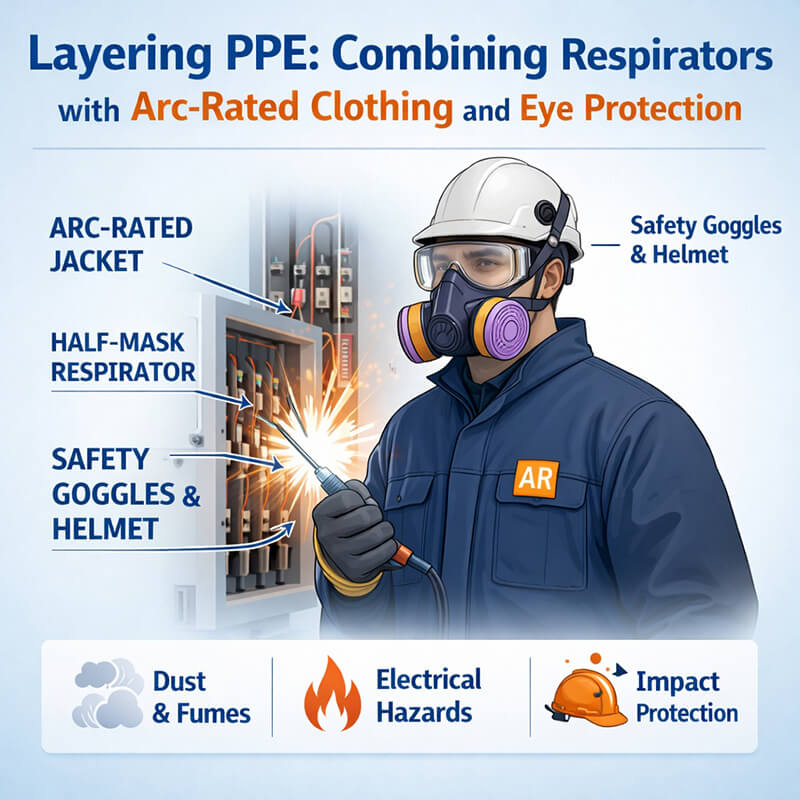
Proper layering of PPE enhances workplace safety. Learn how to combine respirators, arc-rated clothing, and eye protection to protect against dust, fumes, and electrical hazards.
Why Layering PPE Matters
In hazardous work environments, single PPE items may not provide full protection. Combining respirators, arc-rated clothing, and eye protection ensures:
-
Comprehensive coverage from inhalation, burns, and debris
-
Compliance with safety regulations
-
Worker comfort and mobility when properly fitted
How to Layer PPE Effectively
1. Start with Arc-Rated Clothing
-
Protects against arc flashes and electrical burns
-
Choose the right rating based on NFPA 70E, ASTM, or EN standards
-
Ensure proper fit for movement and ventilation
2. Add Respiratory Protection
-
Half-mask or full-face respirators depending on airborne hazards
-
For welding, chemical fumes, or dust, select appropriate cartridges or filters
-
Ensure the respirator fits over or under clothing collars without compromising seal
3. Include Eye and Face Protection
-
Safety goggles or full-face shields for impact, sparks, or chemical splashes
-
When using full-face respirators, additional eye protection may not be necessary
-
Ensure compatibility with arc-rated hoods or helmets
Best Practices for Layered PPE
-
Check Compatibility
-
Ensure respirator straps do not interfere with hoods or collars
-
Verify that eye protection does not break the respirator seal
-
-
Inspect Before Use
-
Check all components for damage
-
Replace worn-out respirator cartridges or filters
-
-
Train Workers
-
Proper donning and doffing techniques prevent cross-contamination or exposure
-
Practice layering PPE for ease of movement and comfort
-
-
Maintain PPE
-
Clean and store each component according to manufacturer guidelines
-
Check arc-rated clothing for wear, tears, or contamination
-
Key Takeaways
-
Layering PPE ensures protection from multiple hazards simultaneously
-
Respirators, arc-rated clothing, and eye protection must be compatible and properly fitted
-
Regular inspection, maintenance, and training are essential for safe, effective use