Skip to content
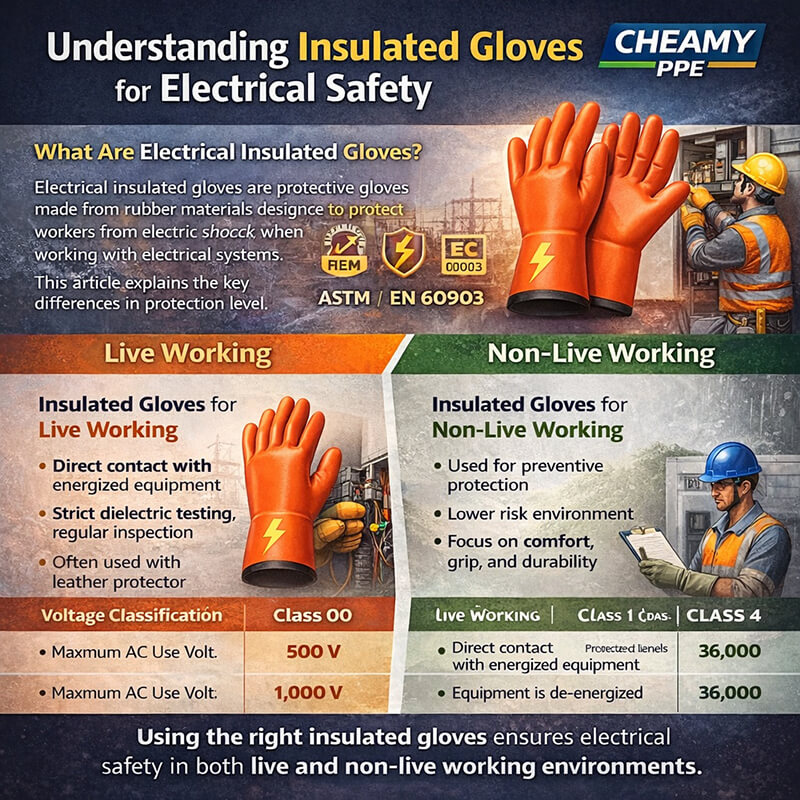
Insulated gloves are essential PPE for electrical safety. However, the requirements for gloves used in live electrical work and non-live electrical work are different. This article explains the key differences in protection level, testing standards, and application scenarios to help workers choose the right insulated gloves.
What Are Electrical Insulated Gloves?
Electrical insulated gloves are protective gloves made from rubber materials designed to protect workers from electric shock when working with electrical systems. They are widely used in industries such as power generation, electrical maintenance, utilities, and construction.
To ensure safety, these gloves must meet strict international standards such as ASTM D120, EN 60903, and IEC 60903.
Insulated Gloves for Live Working
Live working refers to performing tasks on electrical equipment while the circuit remains energized. In these situations, the risk of electric shock is significantly higher, so higher-grade protective equipment is required.
Key Characteristics
-
Designed for direct contact with energized equipment
-
Must meet strict dielectric strength requirements
-
Regular testing and inspection are required
-
Often used with leather protector gloves for mechanical protection
Voltage Classification
Electrical insulated gloves used for live working are classified according to maximum working voltage:
| Class | Maximum AC Use Voltage |
|---|---|
| Class 00 | 500 V |
| Class 0 | 1,000 V |
| Class 1 | 7,500 V |
| Class 2 | 17,000 V |
| Class 3 | 26,500 V |
| Class 4 | 36,000 V |
Workers must select gloves based on the voltage level of the equipment they are working on.
Insulated Gloves for Non-Live Working
Non-live working refers to electrical work performed after the power has been disconnected and verified safe.
In these situations, insulated gloves are mainly used as an additional safety measure, rather than the primary protection against electric shock.
Key Characteristics
-
Used for preventive protection
-
Lower risk environment compared to live working
-
Often combined with other PPE such as safety gloves or mechanical protection gloves
-
Focus on comfort, grip, and durability
These gloves may not require the same high voltage classification as gloves used in live working environments, depending on the safety procedures followed at the workplace.
Key Differences Between Live Working and Non-Live Working Gloves
| Feature | Live Working Gloves | Non-Live Working Gloves |
|---|---|---|
| Electrical Contact | Direct contact with energized equipment | Equipment is de-energized |
| Protection Level | High voltage protection required | Preventive protection |
| Testing Requirement | Strict dielectric testing and regular inspection | Usually less demanding |
| Voltage Classes | Class 00 – Class 4 | May not require full voltage classification |
| Typical Use | Power line maintenance, electrical repair | Inspection, installation, maintenance after power isolation |
Choosing the Right Insulated Gloves
When selecting insulated gloves, workers should consider:
-
Voltage level of the equipment
-
Whether the work is live or de-energized
-
Compliance with international safety standards
-
Comfort and flexibility for long working hours
Using certified insulated gloves that meet recognized standards ensures reliable protection and helps reduce the risk of electrical accidents.
Final Thoughts
Both live working and non-live working require proper electrical safety protection. Understanding the differences between these two scenarios helps ensure that workers choose the right insulated gloves and maintain safe working conditions.
Electrical safety always starts with the correct PPE.