Skip to content
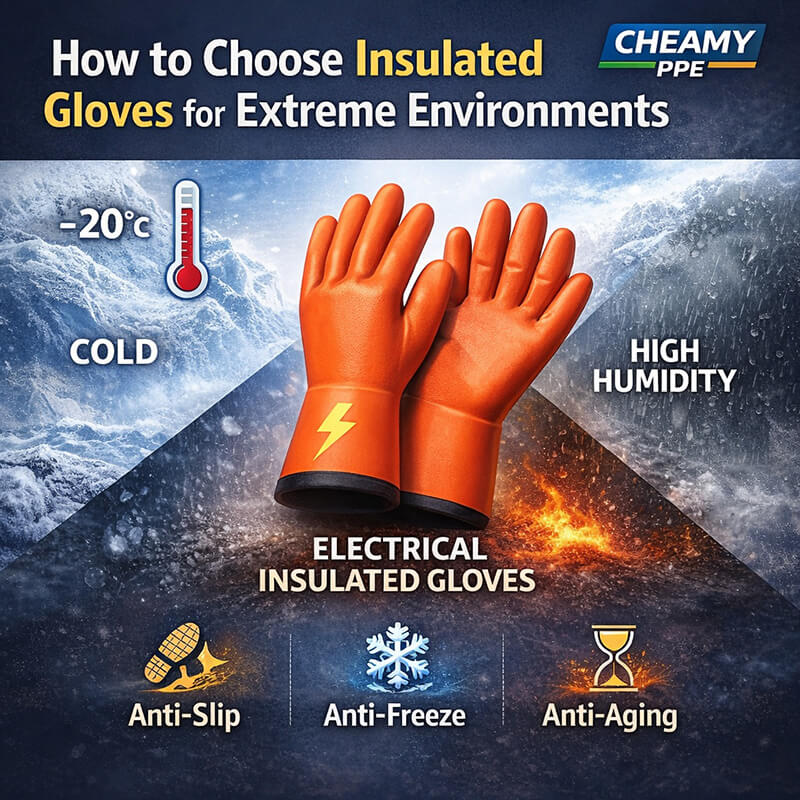
Selecting the right insulated gloves is crucial for working in high humidity or extreme temperature conditions. This article provides practical guidance on glove materials, environmental adaptability, anti-slip, anti-freeze, and anti-aging features to ensure safety and comfort for electrical workers.
Main Content
1. Understanding Your Work Environment: Humidity and Temperature
Environmental conditions directly affect glove performance:
-
High humidity: Gloves can absorb moisture, reducing insulation and increasing the risk of slipping.
-
High temperature: Rubber gloves may soften, deform, or age faster.
-
Low temperature: Gloves may stiffen, reducing dexterity and operational precision.
⚠️ For electrical insulated gloves, keeping them dry and intact is essential to maintain insulation ratings.
2. Core Materials for Electrical Insulated Gloves
| Material | Characteristics | Environmental Adaptability | Recommended Use |
|---|---|---|---|
| Natural Rubber (Latex) | Soft, elastic, comfortable | Suitable for normal humidity | Standard electrical work |
| Synthetic Rubber (EPDM, Neoprene, etc.) | Resistant to aging, chemicals, and temperature | Suitable for medium-high temperature or low temperature | High humidity, high or low temperature electrical work |
💡 Only rubber-based materials provide true electrical insulation. Other materials like PVC, PU, or nitrile are mainly for environmental protection or handling support.
3. Environmental Protection Gloves (Non-High Voltage)
For specific environmental conditions such as high humidity, extreme temperatures, or chemical exposure, extra functional gloves may be used:
-
Nitrile: Waterproof, oil-resistant, and anti-slip; ideal for wet or oily surfaces, but not suitable for high-voltage insulation.
-
Neoprene: Resistant to chemicals and temperature changes; suitable for high/low temperature environments.
-
PVC: Waterproof and chemical-resistant; suitable for general low-temperature or wet work.
⚠️ These gloves enhance environmental adaptability but cannot replace electrical insulated gloves.
4. Anti-Slip Design
-
Palm texture or dotted coatings: Enhances grip in wet or oily conditions.
-
Oil-resistant coatings: Ensure secure handling without slipping.
5. Anti-Freeze and Thermal Protection
-
Lined gloves: Cotton or fleece lining improves hand warmth in cold environments.
-
Maintain flexibility: Ensures dexterity even in low-temperature conditions, avoiding stiff gloves.
6. Anti-Aging Recommendations
-
Avoid prolonged exposure to sunlight or high temperatures.
-
Keep gloves dry in high-humidity environments and store them in a ventilated, cool place.
-
Inspect gloves regularly for cracks or hardening, and replace them as needed.
7. Purchase Tips
-
Electrical work → Choose latex or synthetic rubber gloves that meet the required insulation rating.
-
High humidity → Consider using nitrile or neoprene over-gloves for anti-slip and waterproofing, but still wear proper insulated gloves underneath.
-
Low temperature → Lined gloves provide extra warmth while maintaining insulation.
-
Regularly check and replace worn or damaged gloves to ensure safety.