Skip to content
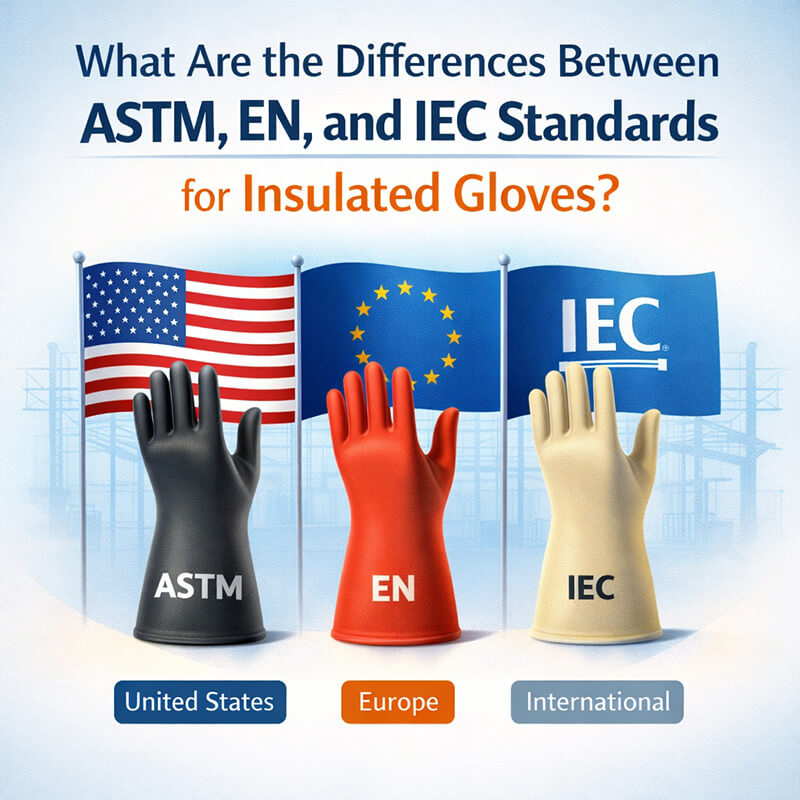
Electrical insulating gloves are essential PPE for workers dealing with live electrical systems. Different regions follow different standards, such as ASTM in the United States, EN in Europe, and IEC internationally. Understanding the differences between these standards helps ensure compliance and workplace safety.
What Are Electrical Insulated Gloves?
Electrical insulating gloves are protective gloves made from natural or synthetic rubber designed to prevent electrical current from passing through the hands. They are widely used in power generation, electrical maintenance, utilities, and industrial environments.
To ensure safety, these gloves must comply with strict international standards that regulate their dielectric strength, testing methods, classification, and marking requirements.
The most commonly used standards include:
-
ASTM D120 – United States standard
-
EN 60903 – European standard
-
IEC 60903 – International standard for live working gloves
1. ASTM Standard (United States)
The American standard for electrical insulating gloves is ASTM D120.
Key Characteristics
-
Developed by the American Society for Testing and Materials
-
Widely used in North America
-
Focuses on rubber insulating gloves used for electrical protection
-
Includes requirements for design, dielectric testing, inspection, and field use
Voltage Classes
ASTM D120 classifies insulated gloves into six voltage protection levels:
| Class | Maximum Use Voltage (AC) |
|---|---|
| Class 00 | 500 V |
| Class 0 | 1,000 V |
| Class 1 | 7,500 V |
| Class 2 | 17,000 V |
| Class 3 | 26,500 V |
| Class 4 | 36,000 V |
Higher classes provide protection for higher voltage environments.
2. EN Standard (Europe)
In Europe, insulated gloves must comply with EN 60903, which is the European adaptation of the international IEC standard.
Key Characteristics
-
Used across European Union markets
-
Regulated under European PPE regulations
-
Requires additional testing such as:
-
Mechanical strength
-
Aging resistance
-
Thermal performance
-
Marking and traceability
-
EN standards also include special category markings indicating resistance to environmental hazards.
Special Category Markings
| Marking | Meaning |
|---|---|
| A | Acid resistance |
| H | Oil resistance |
| Z | Ozone resistance |
| R | Acid, oil, and ozone resistance |
| C | Extremely low temperature resistance |
These markings help users choose gloves suitable for specific environments.
3. IEC Standard (International)
IEC 60903 is the international standard issued by the International Electrotechnical Commission for insulating gloves used in live electrical work.
Key Characteristics
-
Recognized globally
-
Basis for many national standards
-
Defines:
-
Dielectric performance
-
Physical properties
-
Testing procedures
-
Classification system
-
The voltage classification in IEC 60903 is generally aligned with EN standards.
Voltage Classification
| Class | Maximum Use Voltage (AC) |
|---|---|
| Class 00 | 500 V |
| Class 0 | 1,000 V |
| Class 1 | 7,500 V |
| Class 2 | 17,000 V |
| Class 3 | 26,500 V |
| Class 4 | 36,000 V |
These classes ensure gloves match the voltage level of the working environment.
Key Differences Between ASTM, EN, and IEC Standards
| Feature | ASTM D120 | EN 60903 | IEC 60903 |
|---|---|---|---|
| Region | United States | Europe | International |
| Focus | Rubber insulating gloves | PPE compliance within EU | Global live working standard |
| Voltage Classes | 00–4 | 00–4 | 00–4 |
| Extra Categories | Limited | Environmental resistance codes | Similar to EN |
| Regulatory System | OSHA related compliance | EU PPE Regulation | International technical reference |
How to Choose the Right Standard?
The standard required usually depends on the target market or project requirements:
-
North America → ASTM D120
-
European Union → EN 60903
-
International projects → IEC 60903
Many manufacturers design insulated gloves to comply with multiple standards simultaneously, ensuring broader global compatibility.
Final Thoughts
Electrical insulating gloves play a critical role in protecting workers from electric shock during live electrical work. Understanding the differences between ASTM, EN, and IEC standards helps companies select the right PPE for their market and safety requirements.
Choosing certified gloves that meet recognized international standards ensures reliable protection and compliance with workplace safety regulations.