Skip to content
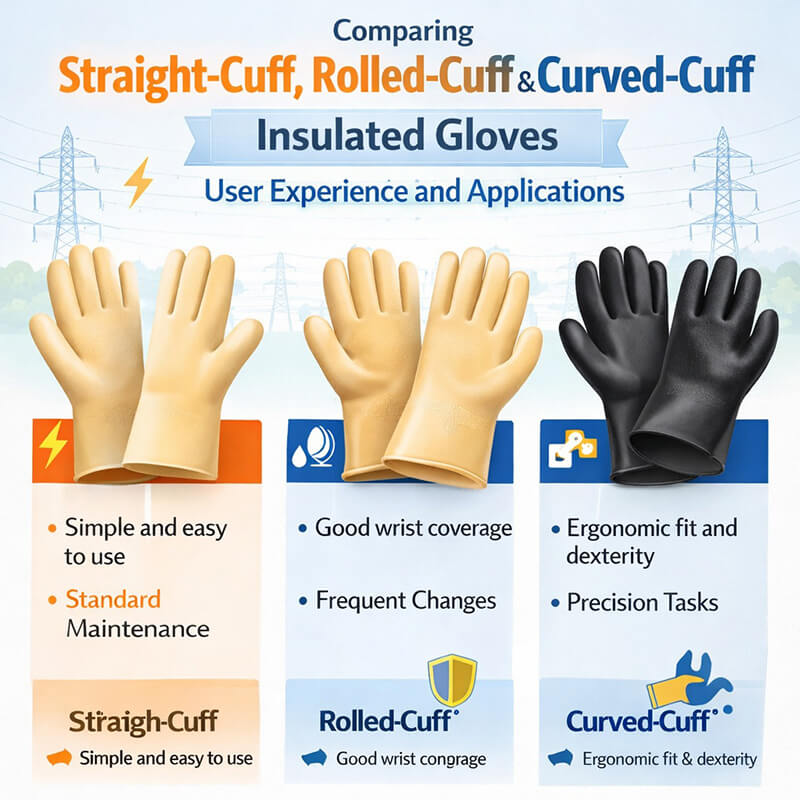
Insulated gloves come in different cuff designs—straight, rolled, and curved. Each design affects comfort, safety, and usability. This guide compares their features, user experience, and applications to help workers choose the right glove for their electrical tasks.
Introduction
Electrical insulated gloves are essential PPE for live or non-live electrical work. While material and insulation rating are critical, the cuff design also plays a significant role in safety, comfort, and ease of use.
The three main cuff designs are:
-
Straight-Cuff Gloves
-
Rolled-Cuff Gloves
-
Curved-Cuff Gloves
1. Straight-Cuff Gloves
Features
-
Simple, flat cuff design
-
Easy to put on and remove
-
Compatible with most leather protectors and outer gloves
User Experience
-
Provides basic protection against entry of dirt or moisture
-
May allow less secure fit around the wrist compared to rolled or curved cuffs
-
Best for standard electrical maintenance in controlled environments
Advantages
-
Lightweight and cost-effective
-
Quick to don and doff
-
Compatible with a wide range of PPE
Limitations
-
Less wrist coverage and protection from debris or liquids
2. Rolled-Cuff Gloves
Features
-
Cuff edge is rolled outward to form a rounded finish
-
Common in both latex and synthetic rubber gloves
User Experience
-
Easier to put on and remove without damaging the cuff
-
Provides slightly better protection against liquid ingress compared to straight-cuff
-
Comfortable for prolonged wear
Advantages
-
Reduces the chance of cuff tearing
-
Improves wrist coverage
-
Easier to handle for workers wearing multiple PPE layers
Limitations
-
Slightly bulkier at the cuff
-
May be less flexible when wearing over tight sleeves
3. Curved-Cuff Gloves
Features
-
Designed with a pre-formed curve to match the natural bend of the hand
-
Usually found in high-end synthetic rubber or premium latex gloves
User Experience
-
More ergonomic and reduces hand fatigue
-
Enhanced dexterity and flexibility for fine tasks
-
Better fit around the wrist and forearm
Advantages
-
Ideal for tasks requiring precision handling
-
Reduces stress on wrist and hand during prolonged use
-
Comfortable under gloves or leather protectors
Limitations
-
Higher cost due to ergonomic design
-
May be slightly more difficult to store in flat containers
Comparison Table
| Feature | Straight-Cuff | Rolled-Cuff | Curved-Cuff |
|---|---|---|---|
| Ease of Donning | High | Very High | Moderate |
| Wrist Protection | Basic | Good | Excellent |
| Comfort / Ergonomics | Moderate | Good | Excellent |
| Liquid / Debris Protection | Low | Moderate | High |
| Ideal Use | Standard maintenance | Frequent glove changes | Precision tasks, long-duration wear |
| Cost | Low | Moderate | High |
Choosing the Right Cuff Design
When selecting insulated gloves, consider:
-
Task type: High-precision work → curved-cuff, standard maintenance → straight-cuff
-
Frequency of donning/doffing: Rolled-cuff gloves are easier for frequent changes
-
Environment: Wet or dusty conditions → rolled or curved cuffs provide better wrist protection
-
Comfort and fatigue: Curved-cuff gloves reduce hand strain for long work sessions
Final Thoughts
The cuff design of insulated gloves significantly affects comfort, usability, and protection. By understanding the differences between straight, rolled, and curved cuffs, workers and companies can select gloves that improve safety, efficiency, and overall user experience.