Skip to content
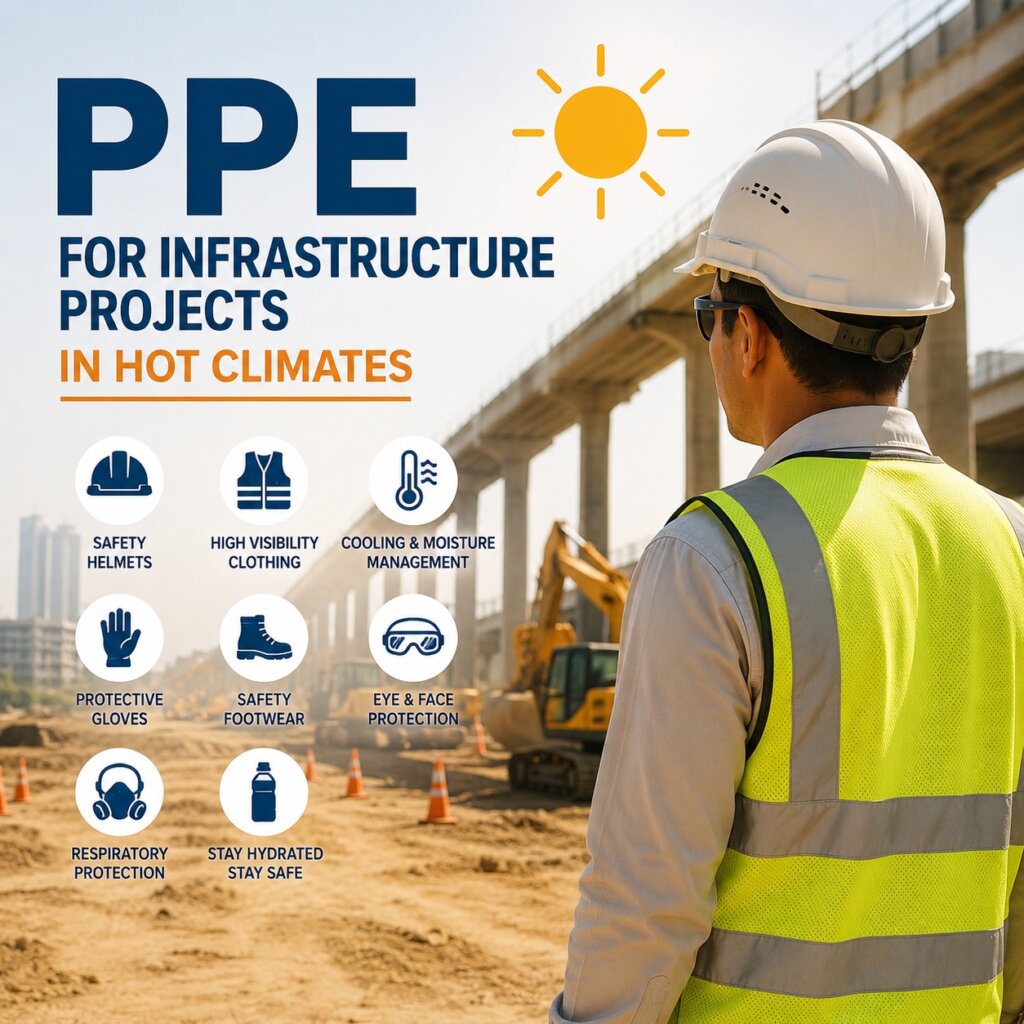
Infrastructure projects in hot climates present unique safety challenges for workers. Road construction, bridge development, railway installation, utility projects, and large-scale civil engineering works often require long hours under direct sunlight and high temperatures. In these environments, Personal Protective Equipment (PPE) must provide protection without causing excessive heat buildup or discomfort.
At CHEAMY PPE, we understand that comfortable PPE is more likely to be worn correctly throughout the workday. Selecting suitable PPE for hot weather conditions helps improve safety, efficiency, and worker well-being on infrastructure projects.
Challenges of Working in Hot Climate Infrastructure Projects
Construction and infrastructure workers in hot climates may face several environmental risks, including:
- Heat exhaustion and heat stress
- Strong UV exposure
- Heavy sweating and dehydration
- Dust and airborne particles
- Reduced visibility from sunlight and dust
- Slippery surfaces caused by sweat or weather conditions
- Fatigue caused by heavy protective clothing
Traditional PPE that traps heat or restricts airflow can make these conditions even more difficult.
Essential PPE for Hot Climate Infrastructure Projects
Lightweight Safety Helmets
Safety helmets remain essential for protecting workers from falling objects and impact hazards. In hot climates, lightweight helmets with ventilation features can improve airflow and reduce discomfort.
Recommended features:
- Lightweight shell materials
- Ventilation slots
- Sweatbands for moisture control
- UV-resistant construction
- Compatibility with face shields and earmuffs
Properly fitted helmets help improve comfort during long outdoor shifts.
Breathable High Visibility Clothing
Infrastructure projects often involve moving machinery, vehicles, and roadside operations. High visibility clothing is important for worker visibility, especially in dusty or high-traffic environments.
For hot climates, workers benefit from:
- Lightweight reflective vests
- Breathable mesh safety clothing
- Moisture-wicking fabrics
- UV-resistant materials
- Long-sleeve reflective shirts for sun protection
Comfortable reflective clothing can help reduce overheating while maintaining visibility standards.
Cooling and Moisture Management PPE
Heat management is increasingly important on outdoor worksites.
Popular hot weather PPE options include:
- Cooling towels
- Moisture-wicking base layers
- Neck shades for helmets
- Cooling safety vests
- Breathable workwear fabrics
These products help workers stay cooler during extended outdoor tasks.
Protective Gloves for Hot Conditions
Workers handling tools, construction materials, and equipment still require hand protection, even in high temperatures.
Suitable gloves may include:
- Lightweight cut-resistant gloves
- Breathable coated gloves
- Anti-slip grip gloves
- Impact-resistant gloves with ventilation
Gloves designed for airflow help reduce sweating and improve comfort.
Safety Footwear for High Temperatures
Infrastructure workers often walk long distances on concrete, gravel, asphalt, or uneven ground.
Hot climate safety footwear should offer:
- Slip-resistant soles
- Breathable lining materials
- Lightweight construction
- Toe protection
- Puncture resistance
Comfortable footwear helps reduce fatigue during physically demanding work.
Eye and Face Protection
Strong sunlight, dust, and flying debris are common hazards on infrastructure sites.
Recommended eye protection:
- Anti-fog safety glasses
- UV-protection lenses
- Dust-resistant goggles
- Face shields for grinding or cutting operations
Clear vision is essential for maintaining safety and accuracy on active worksites.
Respiratory Protection
Dust from cement, asphalt, excavation, and demolition work can affect worker health.
Depending on the work environment, workers may use:
- Disposable dust masks
- Reusable respirators
- Filters for fine dust particles
Breathable respiratory PPE is especially important in hot and humid environments.
Preventing Heat Stress on Infrastructure Sites
In addition to PPE, employers should support heat safety through proper site management practices.
Important measures include:
- Providing shaded rest areas
- Encouraging regular hydration
- Scheduling heavy work during cooler hours
- Allowing frequent rest breaks
- Monitoring workers for signs of heat stress
Combining suitable PPE with heat management practices helps improve worker safety and productivity.
Choosing the Right PPE Supplier
When sourcing PPE for infrastructure projects in hot climates, companies should consider:
- Product durability
- Breathability and comfort
- Compliance with safety standards
- Worker mobility
- Climate suitability
- Consistent product quality
Reliable PPE solutions help infrastructure teams work more safely under demanding weather conditions.
How CHEAMY PPE Supports Infrastructure Projects
CHEAMY PPE provides practical safety equipment designed for demanding industrial and construction environments.
Our product range includes:
- Safety helmets
- Reflective workwear
- Protective gloves
- Safety footwear
- Respiratory protection
- Hearing protection
- Protective eyewear
We focus on delivering PPE solutions that balance protection, comfort, and daily usability for workers in challenging climates.
Final Thoughts
Infrastructure projects in hot climates require PPE that protects workers without adding unnecessary heat stress or discomfort. Lightweight, breathable, and durable protective equipment can help improve safety, visibility, and overall working conditions on outdoor construction sites.
By selecting suitable PPE for high-temperature environments, companies can better support worker safety, comfort, and productivity throughout every stage of the project.