Skip to content
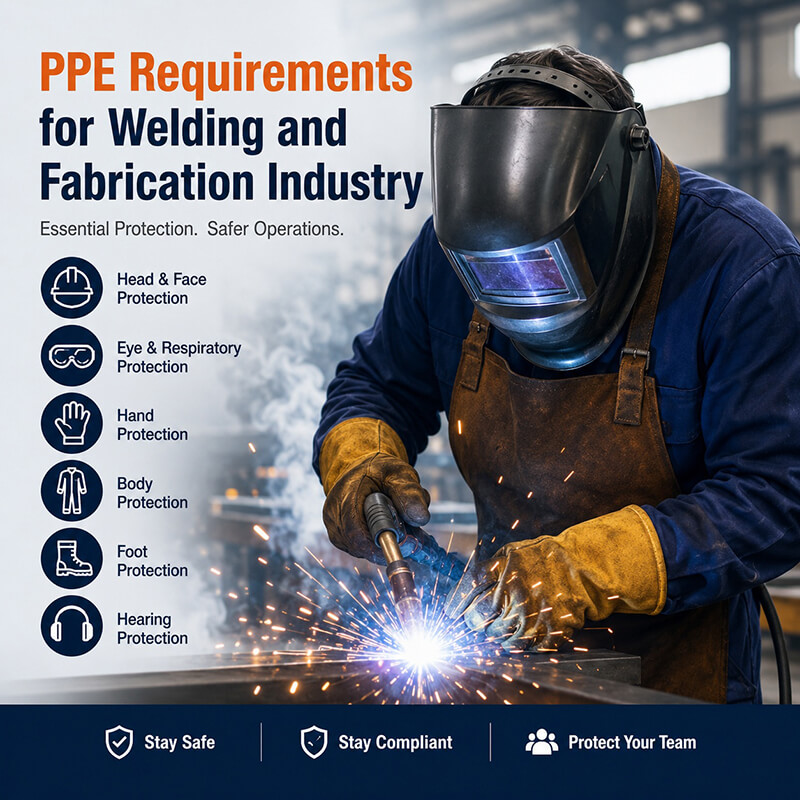
Welding and fabrication work involves high temperatures, molten metal, sparks, radiation, and sharp materials. Without proper personal protective equipment (PPE), workers are exposed to serious risks such as burns, eye injuries, respiratory issues, and long-term skin damage.
For employers and safety managers, selecting the right PPE is not optional—it is a core requirement for safe and compliant operations.
1. Head and Face Protection
Welding environments expose workers to flying sparks, slag, and radiant heat.
Required PPE:
- Welding helmet (with appropriate shade lens, usually DIN 9–13 depending on process)
- Face shield for grinding and cutting operations
- Hard hat (if working in construction or fabrication sites with overhead risks)
A proper welding helmet should provide:
- UV/IR protection
- Auto-darkening lens (recommended for efficiency and safety)
- Heat-resistant shell
2. Eye and Respiratory Protection
Even with a welding helmet, additional protection is often needed during grinding, cutting, and cleaning.
Eye protection:
- Safety goggles (impact-resistant, anti-fog)
- Side-shield safety glasses
Respiratory protection:
- Disposable respirators (for light fumes and dust)
- Half-mask or full-face respirators with appropriate filters (for metal fumes, gases, and confined spaces)
- Powered air-purifying respirators (PAPR) for heavy-duty welding environments
Welding fumes may contain hazardous substances such as manganese, chromium, and zinc oxide, making respiratory protection essential.
3. Hand Protection
Hands are constantly exposed to heat, sharp edges, and metal handling.
Required PPE:
- Welding gloves (leather, heat-resistant, reinforced stitching)
- TIG gloves (thin and flexible for precision welding)
- Heavy-duty cut-resistant gloves (for fabrication and handling raw materials)
Key requirements:
- Heat resistance
- Cut resistance (ANSI/EN cut level depending on risk)
- Durable stitching for long-term use
4. Body Protection
Clothing must protect against sparks, heat, and molten splashes.
Required PPE:
- Flame-resistant (FR) coveralls or jackets
- Leather welding aprons for high-spark environments
- FR shirts and pants (cotton treated or inherently FR fabric)
- Reflective FR clothing for low-light or outdoor fabrication sites
Avoid synthetic materials such as polyester, which can melt and stick to skin under heat exposure.
5. Foot Protection
Feet are exposed to heavy objects, sparks, and slippery surfaces.
Required PPE:
- Steel toe or composite toe safety boots
- Heat-resistant outsole (for welding sparks and slag)
- Slip-resistant soles
- Metatarsal protection (for heavy fabrication environments)
Boots should also be:
- Oil-resistant
- Puncture-resistant (recommended for fabrication shops)
6. Hearing Protection
Fabrication workshops often involve grinding, cutting, and hammering, which generate high noise levels.
Required PPE:
- Earplugs (disposable or reusable)
- Earmuffs (for long-duration exposure or high noise levels)
Noise above 85 dB requires hearing protection under most safety standards.
7. Additional Safety Equipment
Depending on work environment, additional PPE may be required:
- Welding screens and curtains (to protect nearby workers)
- Heat-resistant sleeves
- Knee pads for low-position welding
- Fall protection equipment (for elevated fabrication work)
- Gas detection devices (for confined space welding)
8. Compliance and Standards
PPE for welding and fabrication should comply with recognized safety standards such as:
- EN ISO 11611 (Protective clothing for welding)
- EN ISO 11612 (Heat and flame protection)
- ANSI Z87.1 (Eye protection)
- EN 12477 (Welding gloves standard)
- EN 20345 (Safety footwear)
Compliance ensures both worker safety and regulatory approval.
9. How CHEAMY PPE Supports Welding Safety
CHEAMY PPE provides a full range of welding and fabrication PPE solutions designed for industrial environments, including:
- Flame-resistant protective clothing
- Welding gloves and cut-resistant hand protection
- Safety helmets and face protection systems
- Respiratory protection for welding fumes
- Customized PPE solutions for different working conditions
We focus on delivering practical protection that matches real jobsite conditions—not just standard specifications.
Conclusion
Welding and fabrication industries demand a complete PPE system rather than a single protective item. From head to toe, each layer of PPE plays a role in reducing risk and improving productivity.
A well-designed PPE program helps reduce accidents, improve compliance, and ensure workers can perform their tasks safely and efficiently.