Skip to content
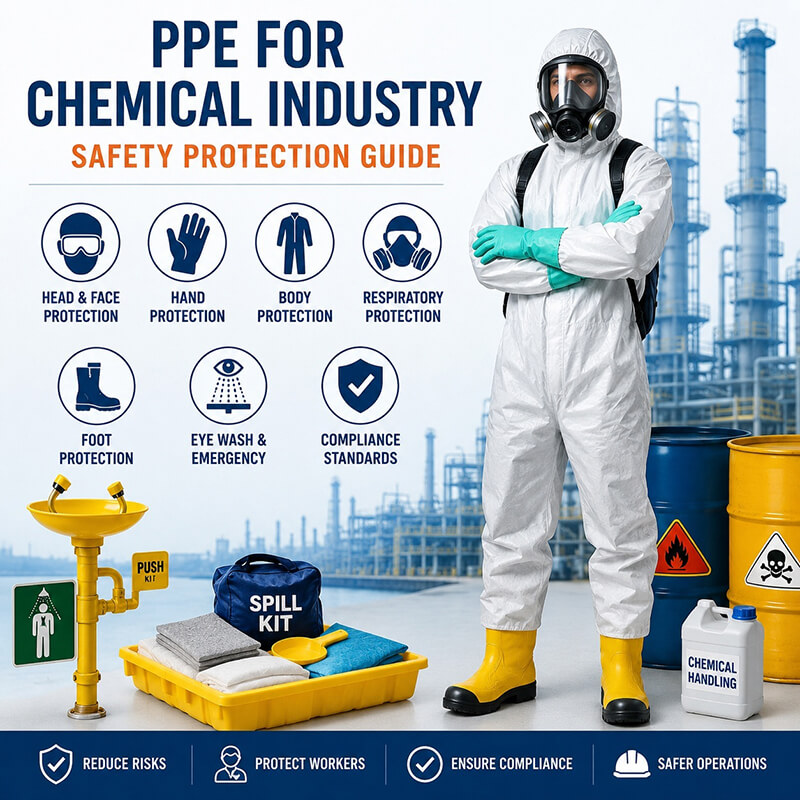
The chemical industry involves handling hazardous substances such as corrosive liquids, toxic gases, reactive chemicals, and flammable materials. Even small exposure can lead to severe burns, poisoning, respiratory damage, or long-term health risks.
A proper PPE system is not only a safety requirement but a critical barrier between workers and dangerous chemical exposure.
1. Head and Face Protection
Chemical splashes and airborne particles can cause serious eye and facial injuries.
Required PPE:
- Chemical splash goggles (sealed design)
- Face shield (for handling corrosive liquids or high-splash operations)
- Chemical-resistant helmet (for integrated head protection in high-risk areas)
Key requirements:
- Anti-fog coating for visibility
- Indirect ventilation (to prevent liquid entry)
- Full face coverage in high-risk mixing or transfer zones
2. Hand Protection
Hands are the most exposed body part in chemical handling tasks.
Required PPE:
- Chemical-resistant gloves (nitrile, neoprene, PVC, or butyl rubber)
- Extended cuff gloves for wrist and forearm protection
- Double-gloving for high-toxicity chemicals
Selection depends on chemical type:
- Acids → neoprene or PVC
- Solvents → nitrile or butyl rubber
- Strong oxidizers → specialized chemical-resistant materials
3. Body Protection
Chemical spills and splashes can penetrate regular work clothing quickly.
Required PPE:
- Chemical-resistant coveralls (Type 3/4/5/6 protection levels depending on exposure risk)
- Acid-resistant aprons for handling liquid transfer
- Disposable protective suits for contamination control areas
Key requirements:
- Seam-sealed construction
- Liquid-tight or spray-tight protection
- Antistatic properties for flammable environments
4. Respiratory Protection
Chemical fumes, vapors, and gases pose serious inhalation hazards.
Required PPE:
- Half-face respirators with chemical cartridges
- Full-face respirators for combined eye + respiratory protection
- Powered Air-Purifying Respirators (PAPR) for high-risk exposure
- Supplied-air respirators for confined spaces or high-toxicity chemicals
Common filters:
- Organic vapor cartridges
- Acid gas filters
- Multi-gas combination filters
5. Foot Protection
Chemical spills often occur at ground level, making foot protection essential.
Required PPE:
- Chemical-resistant safety boots (PVC, rubber, or neoprene)
- Steel toe or composite toe protection
- Anti-slip outsole for wet or contaminated surfaces
- Waterproof design to prevent chemical penetration
In high-risk areas, boot covers may also be required.
6. Eye Wash and Emergency Equipment (Support PPE System)
Although not PPE itself, emergency equipment is critical in chemical environments.
- Emergency eyewash stations
- Safety showers
- Spill containment kits
- Neutralizing agents for acid/alkali spills
Quick response significantly reduces injury severity.
7. Compliance Standards
Chemical PPE should comply with international safety standards such as:
- EN 374 (chemical-resistant gloves)
- EN 14605 (liquid-tight protective clothing)
- EN 14387 (respirator filters)
- ANSI/ISEA Z87.1 (eye protection)
- EN 20345 (safety footwear)
Compliance ensures proper protection performance and workplace approval.
8. CHEAMY PPE Chemical Protection Solutions
CHEAMY PPE provides a full range of PPE solutions for chemical industry environments, including:
- Chemical-resistant gloves for different exposure levels
- Full-body protective suits and coveralls
- Respiratory protection systems for gas and vapor exposure
- Eye and face protection for splash and impact safety
- Customized PPE solutions based on chemical risk assessment
We focus on practical protection that matches real industrial conditions and safety standards.
Conclusion
Chemical industry safety depends on selecting PPE that matches the specific hazard type. A single product is not enough—true protection requires a full system covering eyes, skin, respiratory system, and feet.
With the right PPE program, companies can significantly reduce workplace incidents and ensure safer chemical handling operations.