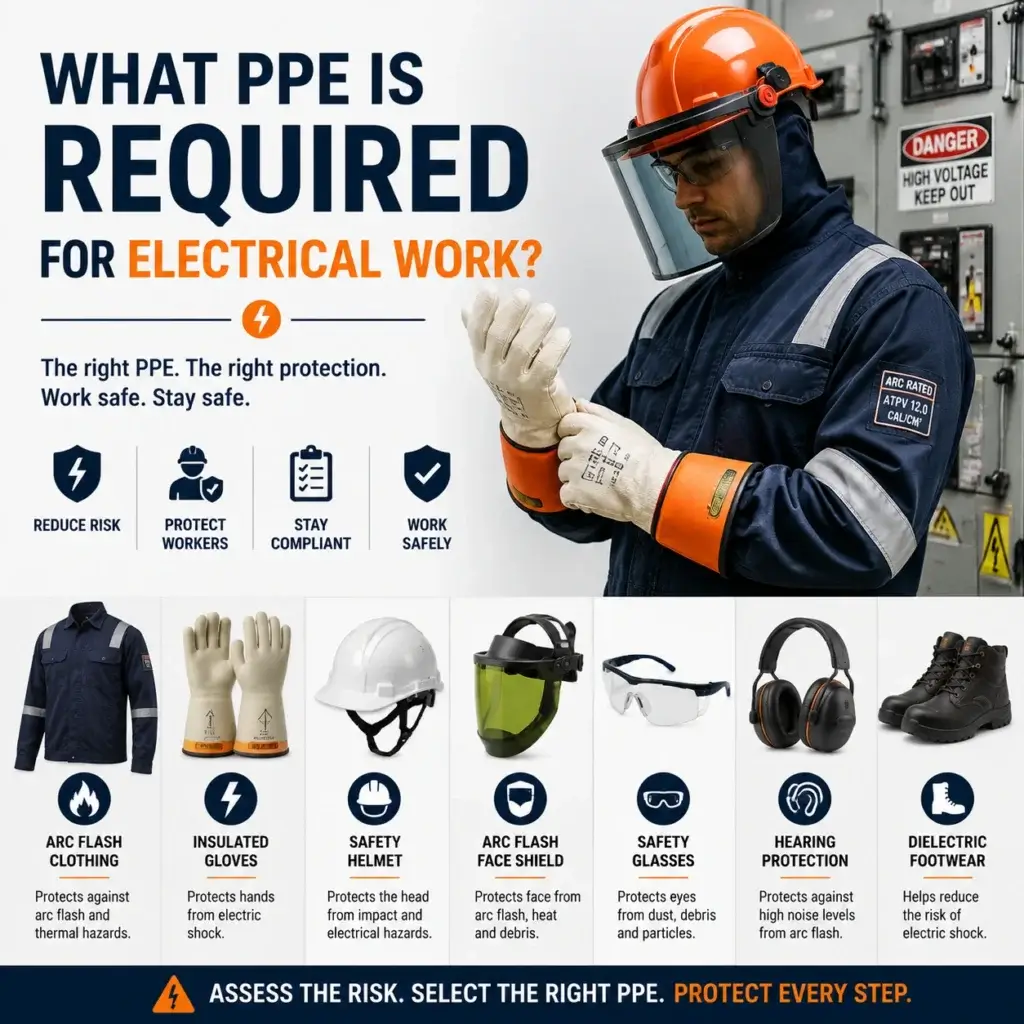
Electrical work is one of the most hazardous tasks in many industries. Electricians and maintenance personnel may face risks such as electric shock, arc flash, arc blast, burns, flying debris, and falling objects. While safe work procedures are always the first priority, Personal Protective Equipment (PPE) provides critical protection when electrical hazards cannot be completely eliminated.
So, what PPE is required for electrical work?
The answer depends on the voltage level, the type of electrical task, and the results of a workplace risk assessment. Selecting the correct PPE helps reduce the severity of injuries and supports compliance with workplace safety regulations.
This guide explains the essential PPE commonly used for electrical work and how to choose the right equipment.
Why Electrical PPE Is Important
Unlike many workplace hazards, electrical incidents can occur instantly and cause severe injuries.
Proper electrical PPE helps protect workers from:
- Electric shock
- Arc flash burns
- Arc blast injuries
- Flying particles
- Heat and flames
- Secondary injuries caused by explosions
PPE should always be used together with safe work practices, lockout/tagout procedures, and hazard assessments.
Essential PPE for Electrical Work
Arc Flash Clothing
Arc flash clothing is designed to reduce burn injuries caused by high-temperature arc flash incidents.
Typical garments include:
- Arc-rated shirts
- Arc-rated trousers
- Coveralls
- Jackets
- Balaclavas
Choose clothing with an appropriate Arc Thermal Performance Value (ATPV) or Energy Breakopen Threshold Rating (EBT) based on the hazard assessment.
Insulated Gloves
Insulated rubber gloves are one of the most important pieces of electrical PPE.
They help protect workers from electric shock when working on or near energized equipment.
Always:
- Select gloves with the appropriate voltage rating.
- Inspect gloves before every use.
- Store gloves correctly.
- Replace damaged gloves immediately.
Leather protector gloves are often worn over insulated gloves to reduce mechanical damage.
Safety Helmets
Electrical work requires helmets designed for electrical protection.
Look for helmets that:
- Provide impact protection
- Offer electrical insulation where required
- Are compatible with face shields and hearing protection
Replace helmets immediately after significant impact or when damaged.
Arc Flash Face Shields
Arc-rated face shields protect workers from:
- Heat
- Flying debris
- Molten metal
- Arc flash energy
For higher-risk tasks, face shields may be combined with arc flash hoods to provide additional protection.
Safety Glasses
Safety glasses should be worn beneath face shields to provide continuous eye protection against dust, debris, and unexpected impacts.
Choose eyewear that meets the applicable safety standards for your region.
Hearing Protection
Arc flash incidents can generate extremely high noise levels.
Depending on the task, workers may require:
- Earplugs
- Earmuffs
- Dual hearing protection for high-noise environments
Protecting hearing is an important part of a complete electrical PPE program.
Dielectric Safety Footwear
Electrical hazard (EH) safety footwear helps reduce the risk of electrical shock by providing insulation between the worker and the ground.
Features may include:
- Non-conductive soles
- Slip-resistant outsoles
- Protective toe caps
- Durable construction for industrial environments
Footwear should be selected based on workplace conditions and applicable standards.
Additional PPE That May Be Required
Depending on the work environment, additional protective equipment may include:
- Flame-resistant (FR) clothing
- Insulated sleeves
- Arc-rated rainwear
- High-visibility clothing
- Fall protection equipment
- Respiratory protection in confined spaces
Risk assessments determine which PPE combinations are appropriate for specific tasks.
How to Choose Electrical PPE
When selecting PPE for electrical work, consider:
- Voltage level
- Arc flash incident energy
- Work environment
- Applicable regulations and standards
- Comfort and mobility
- Product compatibility
All PPE should work together as a complete protective system.
Common Mistakes to Avoid
Electrical PPE may fail to protect workers if it is used incorrectly.
Avoid these common mistakes:
- Wearing non-arc-rated clothing.
- Using damaged insulated gloves.
- Failing to inspect PPE before use.
- Wearing conductive jewelry while working.
- Selecting PPE without performing a hazard assessment.
- Delaying replacement of worn equipment.
Regular training and inspections help reduce these risks.
Best Practices for Electrical PPE
To maximize protection:
- Perform a risk assessment before beginning work.
- Inspect PPE before every use.
- Replace damaged or expired equipment immediately.
- Follow manufacturer maintenance instructions.
- Train workers on proper PPE use and limitations.
- Store electrical PPE in a clean, dry environment.
Consistent PPE management is essential for electrical safety.
Conclusion
Electrical work requires specialized PPE designed to protect workers from electric shock, arc flash, burns, and other serious hazards. Essential equipment typically includes arc-rated clothing, insulated gloves, electrical safety helmets, face shields, safety glasses, hearing protection, and dielectric footwear.
Choosing the right PPE based on workplace hazards, maintaining it properly, and inspecting it before every use are critical steps toward creating a safer electrical work environment.