Skip to content
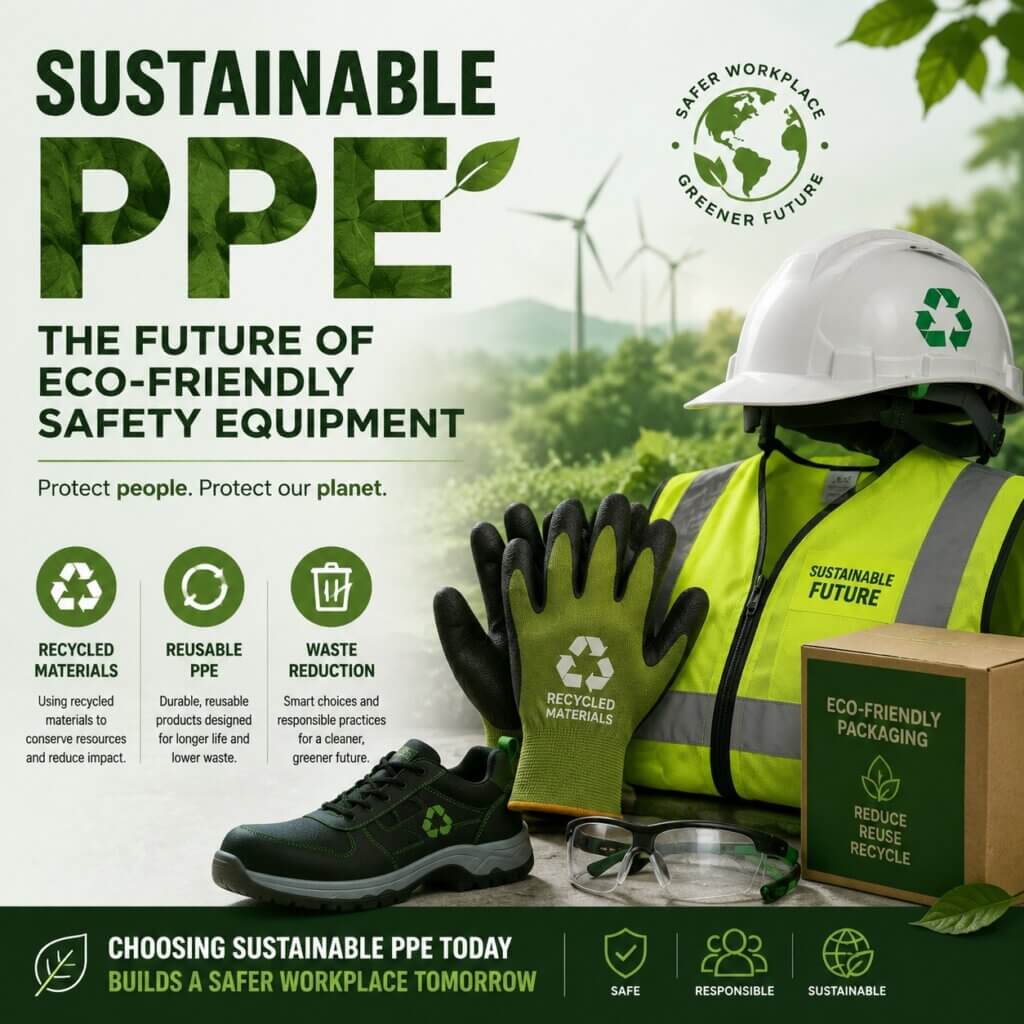
Sustainability has become a priority across industries, and workplace safety is no exception. As companies seek to reduce their environmental impact while maintaining high safety standards, sustainable PPE is becoming an important part of modern procurement strategies.
Today’s businesses are looking beyond protection alone. They want Personal Protective Equipment (PPE) that helps reduce waste, conserve resources, and support long-term environmental goals.
In this article, we’ll explore what eco friendly PPE is, why it matters, and how organizations can adopt more sustainable safety practices.
What Is Sustainable PPE?
Sustainable PPE refers to protective equipment designed to minimize environmental impact throughout its lifecycle—from material selection and manufacturing to usage and disposal.
Unlike traditional PPE, sustainable alternatives focus on:
- Recycled or renewable materials
- Longer product life
- Reduced packaging waste
- Reusable products where appropriate
- Responsible manufacturing processes
The goal is to protect both workers and the environment without compromising safety or performance.
Why Sustainability Matters in PPE
Millions of PPE items are used every day in industries such as construction, manufacturing, healthcare, logistics, and energy.
Many disposable products eventually become landfill waste after a single use.
By choosing more sustainable PPE solutions, businesses can:
- Reduce environmental impact
- Support corporate sustainability initiatives
- Lower long-term purchasing costs
- Improve resource efficiency
- Demonstrate social responsibility
As environmental regulations and customer expectations continue to evolve, sustainable procurement is becoming a competitive advantage.
Recycled Materials in PPE
One of the biggest developments in sustainable PPE is the use of recycled materials.
Today, many manufacturers are incorporating recycled content into products such as:
- Safety helmets
- High-visibility clothing
- Workwear
- Safety footwear
- Protective eyewear
- Packaging materials
Examples include:
- Recycled polyester fabrics
- Recycled plastics
- Recycled rubber components
- Environmentally friendly packaging materials
These materials help reduce the demand for virgin resources while maintaining the durability required for industrial use.
Reusable PPE Reduces Waste
Not every PPE product needs to be disposable.
Many workplaces can reduce waste by selecting reusable equipment whenever practical.
Examples include:
- Reusable half-face respirators with replaceable filters
- Washable protective clothing
- Reusable face shields
- Durable safety helmets
- Long-life safety eyewear
- Reusable hearing protection
Although reusable PPE may have a higher initial cost, it often delivers better value over time while generating significantly less waste.
Reducing PPE Waste in the Workplace
Waste reduction involves more than choosing reusable products.
Companies can improve sustainability by adopting better PPE management practices.
These include:
- Selecting durable, high-quality PPE
- Providing proper maintenance and cleaning
- Training employees on correct product use
- Replacing equipment only when necessary
- Recycling eligible materials whenever possible
- Optimizing inventory management to avoid unnecessary disposal
Even small improvements in purchasing and usage can make a meaningful difference over time.
Sustainable Packaging Matters Too
Packaging is another opportunity to reduce environmental impact.
Many PPE suppliers now offer:
- Recyclable cartons
- Paper-based packaging
- Reduced plastic packaging
- Optimized carton sizes
- Eco-friendly printing materials
Smarter packaging not only reduces waste but can also improve shipping efficiency by reducing overall package volume.
How to Choose Eco-Friendly PPE
When evaluating sustainable PPE products, buyers should consider:
Safety Compliance
Sustainability should never compromise protection. Ensure products meet the relevant safety standards for your industry.
Product Durability
Longer-lasting PPE reduces replacement frequency and lowers overall waste.
Material Transparency
Look for suppliers who clearly explain the materials used in their products and packaging.
Responsible Manufacturing
Choose suppliers that emphasize quality management, efficient production, and environmentally responsible practices.
Lifecycle Value
Consider the total value of a product, including durability, maintenance, and disposal—not just the purchase price.
The Role of PPE Suppliers
A professional PPE supplier can help businesses make more sustainable purchasing decisions by offering:
- Products made with recycled materials
- Reusable PPE options
- Environmentally conscious packaging
- Product recommendations based on lifecycle value
- Consolidated shipments to reduce transportation impact
- Guidance on selecting durable, high-quality products
Working with an experienced supplier makes it easier to balance sustainability, safety, and operational efficiency.
How CHEAMY Supports Sustainable PPE
At CHEAMY, we believe workplace safety and environmental responsibility should go hand in hand.
We help customers explore sustainable PPE solutions by offering:
- Durable, high-quality PPE with extended service life
- Reusable product options where appropriate
- OEM solutions with eco-conscious packaging choices
- Efficient sourcing across multiple certified manufacturers
- Consolidated shipments to improve logistics efficiency
- Continuous product innovation focused on long-term value
Our goal is to help customers build safer workplaces while supporting more sustainable procurement practices.
Conclusion
The future of workplace safety is not only about better protection—it is also about making smarter, more sustainable choices.
By adopting sustainable PPE, using recycled materials, choosing reusable products, and reducing waste, businesses can improve workplace safety while supporting environmental goals.
As industries continue to evolve, eco friendly PPE will play an increasingly important role in creating safer, greener workplaces.
FAQ
What is sustainable PPE?
Sustainable PPE refers to protective equipment designed to reduce environmental impact through recycled materials, reusable designs, durable construction, and responsible manufacturing practices.
Is eco-friendly PPE as safe as traditional PPE?
Yes. Eco-friendly PPE should meet the same applicable safety standards and performance requirements as conventional PPE.
What are examples of reusable PPE?
Reusable respirators, face shields, safety helmets, protective eyewear, hearing protection, and washable protective clothing are common examples.
How can businesses reduce PPE waste?
Businesses can reduce waste by selecting durable products, using reusable PPE where appropriate, maintaining equipment properly, optimizing inventory, and choosing recyclable packaging.