Skip to content
N95 respirators are among the most widely used forms of respiratory protection in construction, manufacturing, mining, healthcare, and other industries where airborne particles present a risk. Because they are designed to filter at least 95% of non-oily airborne particles, many employers and workers ask the same question:
Can an N95 mask be reused?
The answer is sometimes—but only under specific conditions. Whether an N95 respirator can be safely reused depends on its condition, the type of workplace exposure, and the manufacturer’s instructions.
This guide explains when N95 masks may be reused, when they should be discarded, and how to maximize protection while staying compliant with workplace safety requirements.
What Makes an N95 Mask Different?
Unlike ordinary disposable face masks, an N95 respirator is designed to create a close facial seal and provide a much higher level of filtration.
N95 respirators are commonly used to protect workers from:
- Dust and fine particles
- Grinding and sanding debris
- Welding fumes
- Construction dust
- Airborne biological particles
- Certain industrial aerosols
However, they are not suitable for oil-based particles unless specifically certified for that purpose.
Can You Reuse an N95 Mask?
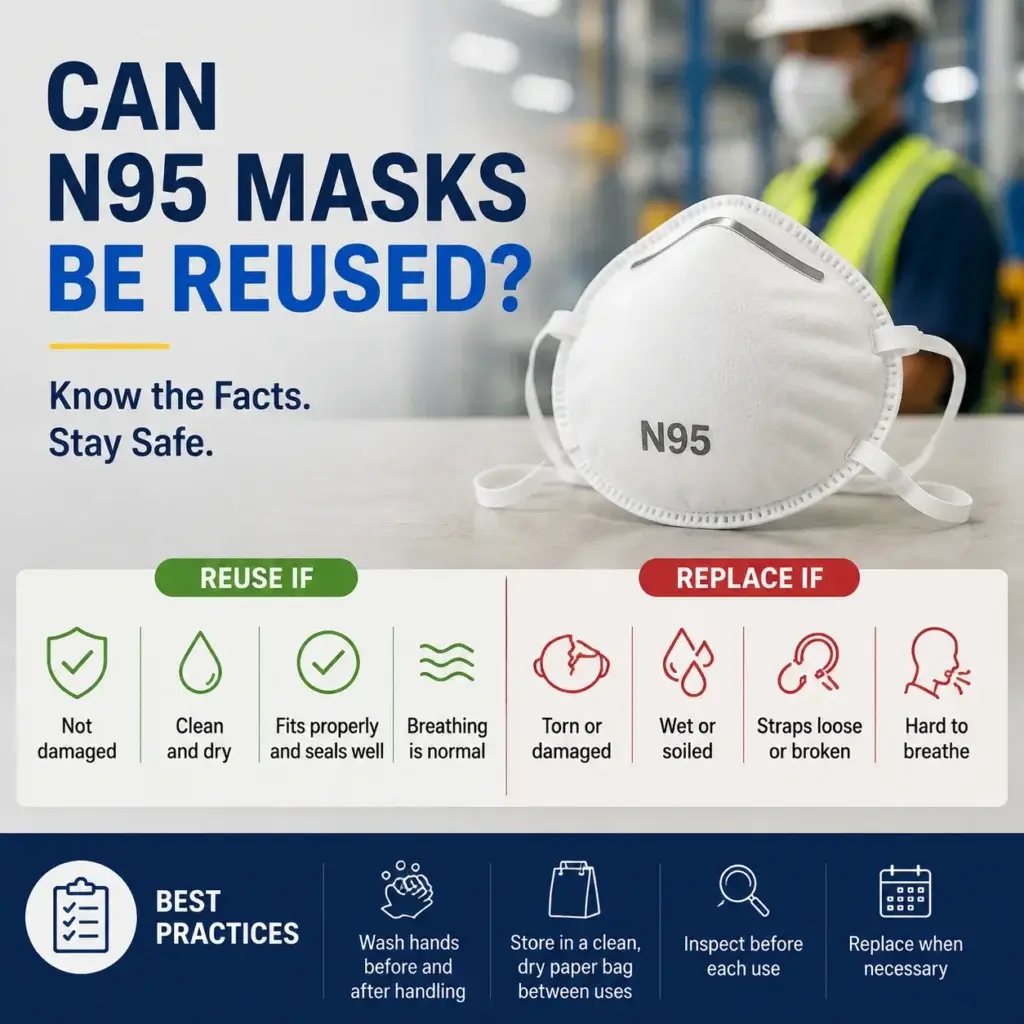
In many industrial workplaces, an N95 respirator may be reused for a limited number of uses if all of the following conditions are met:
- The respirator remains clean.
- It is not wet or damaged.
- The straps are intact and maintain a secure fit.
- Breathing resistance has not increased.
- The mask has not been contaminated by hazardous chemicals or biological materials.
If any of these conditions are not met, the respirator should be replaced immediately.
When Should an N95 Mask Be Discarded?
An N95 respirator should never be reused if it:
- Has visible tears or punctures
- No longer seals properly against the face
- Has stretched or broken straps
- Is dirty, dusty, or contaminated
- Has become wet from water, sweat, or other liquids
- Has an unusual odor after use
- Makes breathing noticeably more difficult
Continuing to wear a damaged respirator may significantly reduce its protective performance.
How Many Times Can an N95 Mask Be Reused?
There is no universal number that applies to every N95 respirator.
The usable life depends on factors such as:
- Workplace dust concentration
- Duration of use
- Environmental conditions
- Storage practices
- Manufacturer recommendations
Rather than counting the number of uses, employers should focus on the respirator’s condition and performance.
How to Store an N95 Mask Between Uses
Proper storage helps maintain the respirator’s shape and filtration performance.
Recommended practices include:
- Store the mask in a clean, dry, breathable container such as a paper bag.
- Avoid crushing or folding the respirator.
- Keep it away from direct sunlight and excessive heat.
- Do not place heavy objects on top of the mask.
- Keep each worker’s respirator separate to avoid cross-contamination.
Good storage habits can help preserve both fit and comfort.
Common Mistakes to Avoid
Many workers unknowingly reduce the effectiveness of their respirators.
Avoid these common mistakes:
- Sharing respirators between workers
- Washing or soaking disposable N95 masks
- Using damaged straps
- Wearing the respirator below the nose
- Touching the inside of the mask unnecessarily
- Ignoring poor facial fit
Even a high-quality respirator cannot provide effective protection if it does not fit correctly.
Tips for Extending N95 Respirator Life
Although disposable N95 respirators have a limited lifespan, these simple practices can help maximize their usability when appropriate:
- Perform a fit check before each use.
- Handle the mask by the straps whenever possible.
- Replace the respirator if breathing becomes difficult.
- Store it properly after use.
- Train employees on correct wearing procedures.
- Maintain an adequate inventory to avoid unnecessary reuse.
Remember, extending service life should never compromise worker safety.
Choosing the Right N95 Respirator
Not all workplaces require the same type of respiratory protection.
When selecting an N95 respirator, consider:
- Workplace hazards
- Particle type and concentration
- Comfort for extended wear
- Adjustable nose clip
- Secure head straps
- Compliance with applicable safety standards
A properly selected respirator provides better protection and encourages consistent use by workers.
Conclusion
Can N95 masks be reused? In some situations, yes—but only if the respirator remains clean, undamaged, fits properly, and has not been contaminated. Once an N95 respirator becomes damaged, dirty, wet, or difficult to breathe through, it should be replaced immediately.
Following proper inspection, storage, and replacement practices helps ensure that workers receive the level of respiratory protection the respirator was designed to provide. Prioritizing safety over extending product life is always the best decision for protecting employees in hazardous work environments.