Skip to content
Personal Protective Equipment (PPE) plays a critical role in protecting workers from workplace hazards. However, one question continues to come up among safety managers, procurement teams, and employees:
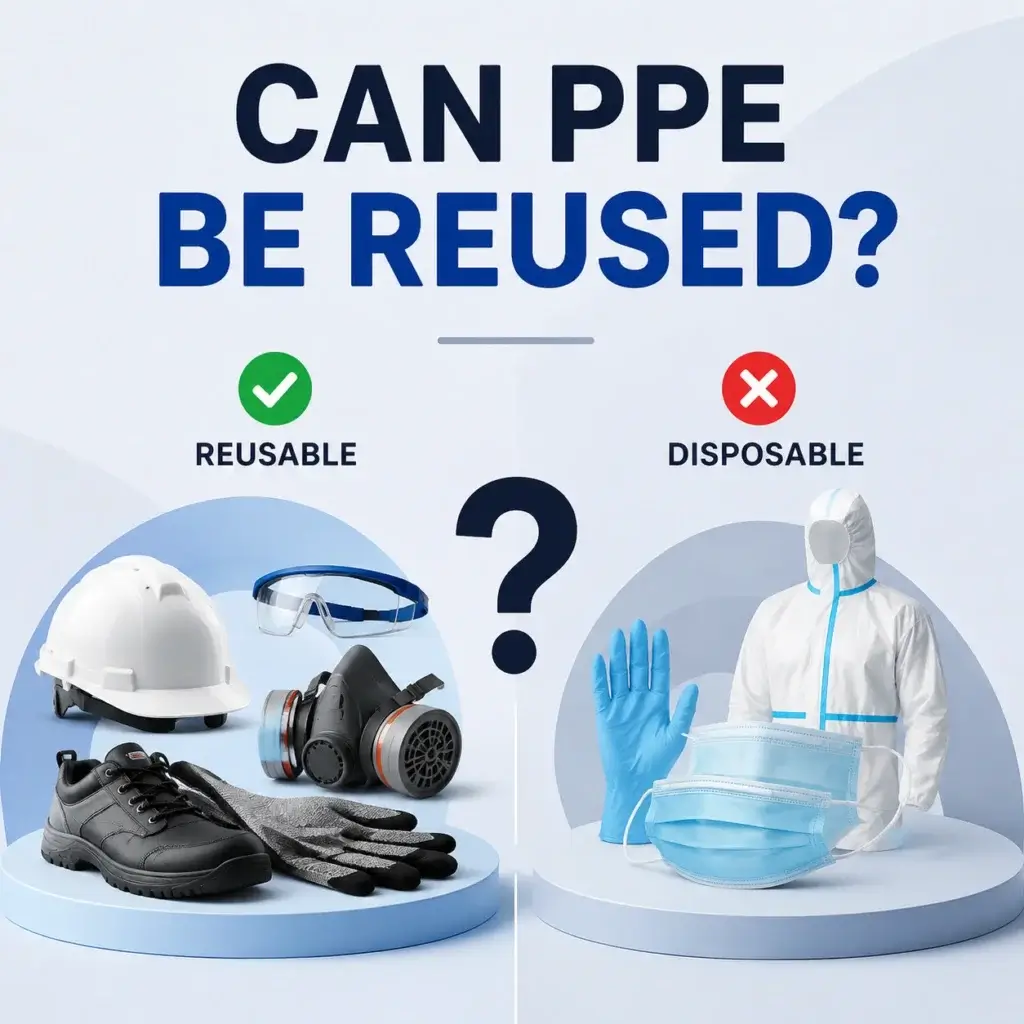
Can PPE be reused?
The answer depends on the type of PPE, the manufacturer’s instructions, workplace hazards, and whether the equipment can still provide its intended level of protection. While some PPE is designed for multiple uses, other items should be discarded immediately after use.
In this guide, we’ll explain which PPE can be reused, how to inspect and maintain reusable equipment, and best practices for extending PPE service life without compromising worker safety.
Why Reusing PPE Isn’t Always Safe
PPE is designed to act as a barrier against hazards such as impact, chemicals, dust, heat, biological agents, and electrical risks. Once damaged or contaminated, its protective performance may decrease significantly—even if the damage isn’t immediately visible.
Reusing unsuitable PPE can result in:
- Reduced protection against workplace hazards
- Increased risk of injury or contamination
- Failure to comply with workplace safety regulations
- Higher long-term costs due to accidents and downtime
For this reason, every company should establish clear PPE inspection and replacement procedures.
Which PPE Can Be Reused?
Many types of PPE are designed for repeated use when properly cleaned, maintained, and stored.
Safety Helmets
Reusable: Yes
Safety helmets can generally be reused as long as they:
- Have not experienced a significant impact
- Show no cracks, dents, or deformation
- Have an intact suspension system
- Remain within the manufacturer’s recommended service life
Replace the helmet immediately after a heavy impact, even if no visible damage is present.
Safety Glasses and Goggles
Reusable: Yes
Safety eyewear can often be reused after cleaning if:
- Lenses remain clear and scratch-free
- Frames are undamaged
- Elastic straps still fit securely
Scratched lenses may reduce visibility and should be replaced.
Safety Shoes
Reusable: Yes
Safety footwear can provide protection for months or even years depending on working conditions.
Inspect regularly for:
- Sole wear
- Damaged toe caps
- Broken stitching
- Chemical damage
- Loss of slip resistance
Proper cleaning and drying help extend their lifespan.
Reusable Respirators
Reusable: Yes
Half-face and full-face respirators are designed for repeated use.
However:
- Filters and cartridges have limited service lives.
- Facepieces should be cleaned after every use.
- Damaged seals should be replaced immediately.
Never continue using expired filters.
Protective Clothing
Reusable: Depends
Many industrial garments are reusable, including:
- Flame-resistant clothing
- Arc flash clothing
- High-visibility jackets
- Industrial workwear
These garments should be washed according to the manufacturer’s instructions. Clothing that has suffered chemical contamination, severe damage, or excessive wear should be replaced.
Protective Gloves
Reusable: Depends on the glove type
Reusable gloves include:
- Leather gloves
- Cut-resistant gloves
- Chemical-resistant gloves (certain types)
- Impact-resistant gloves
Disposable gloves should never be reused.
Inspect reusable gloves for:
- Tears
- Punctures
- Coating damage
- Chemical degradation
Which PPE Should Never Be Reused?
Certain PPE is designed for single use only.
Examples include:
- Disposable nitrile gloves
- Disposable latex gloves
- Disposable surgical masks
- Disposable coveralls
- Disposable shoe covers
- Single-use hair nets
These products should be discarded after use because cleaning cannot restore their original protective performance.
How to Inspect PPE Before Reuse
Before reusing any PPE, workers should perform a quick inspection.
Ask the following questions:
- Are there any cracks or tears?
- Has the item been exposed to chemicals?
- Is it heavily contaminated?
- Does it still fit properly?
- Has it exceeded its recommended service life?
- Are labels and certifications still readable?
If the answer to any of these questions raises concerns, replace the PPE.
Best Practices for Maintaining Reusable PPE
Proper maintenance not only improves safety but also reduces replacement costs.
Recommended practices include:
- Clean PPE after each use following manufacturer instructions.
- Store equipment in a cool, dry, and clean environment.
- Avoid prolonged exposure to sunlight, moisture, or chemicals.
- Replace damaged parts promptly.
- Maintain inspection records for reusable equipment.
- Train employees to recognize signs of wear and damage.
A preventive maintenance program helps ensure PPE remains effective throughout its intended lifespan.
Common Mistakes to Avoid
Many workplaces unintentionally reduce PPE effectiveness through poor maintenance.
Avoid these common mistakes:
- Reusing disposable PPE
- Ignoring minor damage
- Continuing to use expired filters
- Sharing contaminated PPE without proper cleaning
- Storing equipment in hot vehicles or direct sunlight
- Delaying replacement to reduce short-term costs
Replacing PPE at the right time is always less expensive than dealing with workplace injuries.
Choosing High-Quality PPE Matters
Reusable PPE delivers the best value when it is manufactured with durable materials and meets recognized international safety standards.
When selecting PPE, consider:
- Compliance with applicable standards
- Product durability
- Ease of maintenance
- Availability of replacement parts
- Comfort for long-term wear
- Reliable supplier support
Investing in quality PPE helps improve worker protection while lowering the total cost of ownership.
Conclusion
So, can PPE be reused? The answer is yes—but only when the equipment is specifically designed for reuse, remains in good condition, and is properly maintained. Disposable PPE should never be reused, while reusable equipment must be inspected, cleaned, and replaced according to manufacturer recommendations and workplace safety requirements.
By understanding the difference between reusable and disposable PPE, employers can improve workplace safety, remain compliant with regulations, and maximize the value of their PPE investment.