Skip to content
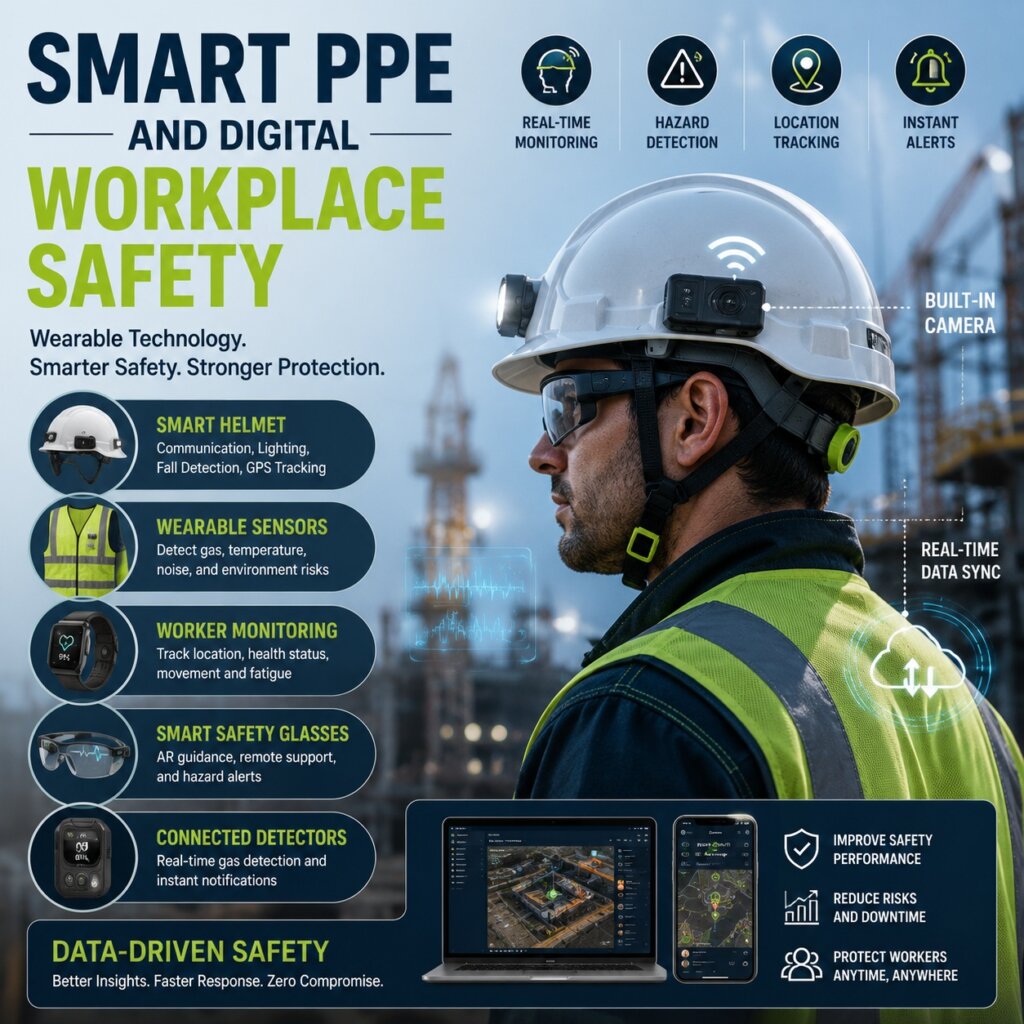
Workplace safety is entering a new era. Traditional Personal Protective Equipment (PPE) remains essential, but advances in digital technology are creating safer and smarter workplaces through connected devices and real-time data.
From smart helmets to wearable sensors, smart PPE enables employers to monitor workplace conditions, respond to emergencies faster, and make data-driven safety decisions.
In this article, we’ll explore how wearable safety equipment is changing industrial safety and what businesses should consider when adopting these technologies.
What Is Smart PPE?
Smart PPE refers to Personal Protective Equipment integrated with electronic technologies such as sensors, wireless communication, GPS, or Internet of Things (IoT) capabilities.
Unlike conventional PPE, smart PPE not only protects workers but also collects and transmits safety-related information in real time.
Common smart PPE includes:
- Smart helmets
- Connected safety vests
- Smart safety glasses
- Wearable gas detectors
- Smart hearing protection
- GPS-enabled worker trackers
- Wearable health monitoring devices
The goal is simple: improve worker safety through real-time awareness and faster decision-making.
Smart Helmets: More Than Head Protection
The smart helmet is one of the fastest-growing innovations in industrial safety.
In addition to impact protection, smart helmets may include features such as:
- Built-in communication systems
- LED safety lighting
- GPS location tracking
- Cameras for remote inspection
- Temperature monitoring
- Motion detection
- Fall detection
- Emergency SOS functions
These capabilities help improve communication and provide immediate support during emergencies.
Wearable Sensors Improve Hazard Detection
Modern wearable safety equipment uses sensors to monitor both workers and their surroundings.
Depending on the application, sensors can detect:
- Toxic gases
- Oxygen levels
- High temperatures
- Excessive noise
- Worker movement
- Fatigue indicators
- Environmental conditions
If abnormal conditions are detected, alerts can be sent to both the worker and the safety management team.
This enables quicker responses before minor issues become serious incidents.
Real-Time Worker Monitoring
Worker monitoring is one of the biggest advantages of smart PPE.
Real-time monitoring can help organizations:
- Track worker locations
- Detect falls or impacts
- Monitor lone workers
- Improve emergency response
- Verify safety compliance
- Reduce response times during accidents
In high-risk industries, knowing a worker’s location and status can significantly improve emergency management.
Which Industries Benefit Most?
Smart PPE is increasingly being adopted in industries where workers face complex or high-risk environments.
Examples include:
- Construction
- Manufacturing
- Mining
- Oil and gas
- Utilities
- Warehousing and logistics
- Renewable energy
- Chemical processing
As technology becomes more affordable, adoption is expanding across a wider range of workplaces.
Benefits of Smart PPE
Organizations investing in smart PPE can benefit from:
Enhanced Worker Safety
Real-time alerts help identify hazards before accidents occur.
Faster Emergency Response
Location tracking and automatic alerts enable quicker assistance during emergencies.
Better Safety Compliance
Digital records support inspections, audits, and internal safety programs.
Improved Operational Efficiency
Connected devices help safety managers identify trends and improve workplace processes.
Data-Driven Decision Making
Safety data provides valuable insights for continuous improvement.
Considerations Before Implementation
While smart PPE offers many advantages, businesses should evaluate several factors before deployment.
Safety Standards
Smart features should complement—not replace—the core protective performance of certified PPE.
Battery Life
Devices should provide reliable operation throughout the work shift.
User Comfort
Wearable technology should remain lightweight, comfortable, and easy to use.
Data Security
Organizations should establish clear policies for protecting worker data and complying with applicable privacy regulations.
Integration
Choose solutions that can integrate with existing workplace safety systems where appropriate.
The Future of Digital Workplace Safety
The next generation of smart PPE is expected to include:
- AI-assisted hazard detection
- Predictive safety analytics
- Augmented reality (AR) guidance
- Improved wearable communications
- More advanced health monitoring
- Enhanced IoT connectivity
These innovations will help organizations move from reacting to incidents toward preventing them.
How CHEAMY Supports Smart Safety Solutions
At CHEAMY, we closely follow developments in workplace safety technology to help customers prepare for the future.
In addition to our comprehensive PPE sourcing services, we assist businesses in exploring innovative safety products, including wearable safety equipment and emerging smart PPE solutions that align with evolving workplace needs.
Our focus remains on providing reliable PPE, professional sourcing support, and practical solutions that help customers build safer, more efficient workplaces.
Conclusion
Traditional PPE will always play a critical role in workplace protection, but digital technology is expanding what safety equipment can do.
By combining certified protective gear with sensors, communication systems, and real-time monitoring, smart PPE is helping organizations improve safety, increase efficiency, and better protect their workforce.
As digital workplace safety continues to evolve, businesses that embrace innovation will be better prepared for the future of occupational safety.
FAQ
What is smart PPE?
Smart PPE is Personal Protective Equipment equipped with technologies such as sensors, GPS, wireless communication, or IoT connectivity to provide real-time safety information and monitoring.
What is wearable safety equipment?
Wearable safety equipment includes PPE integrated with smart technologies, such as smart helmets, connected safety vests, wearable gas detectors, and health monitoring devices.
What are the benefits of smart helmets?
Smart helmets can provide communication, GPS tracking, fall detection, cameras, emergency alerts, and environmental monitoring in addition to head protection.
Can smart PPE replace traditional PPE?
No. Smart PPE enhances workplace safety by adding digital capabilities, but it should always meet applicable safety standards and complement—not replace—the protective function of conventional PPE.