Skip to content
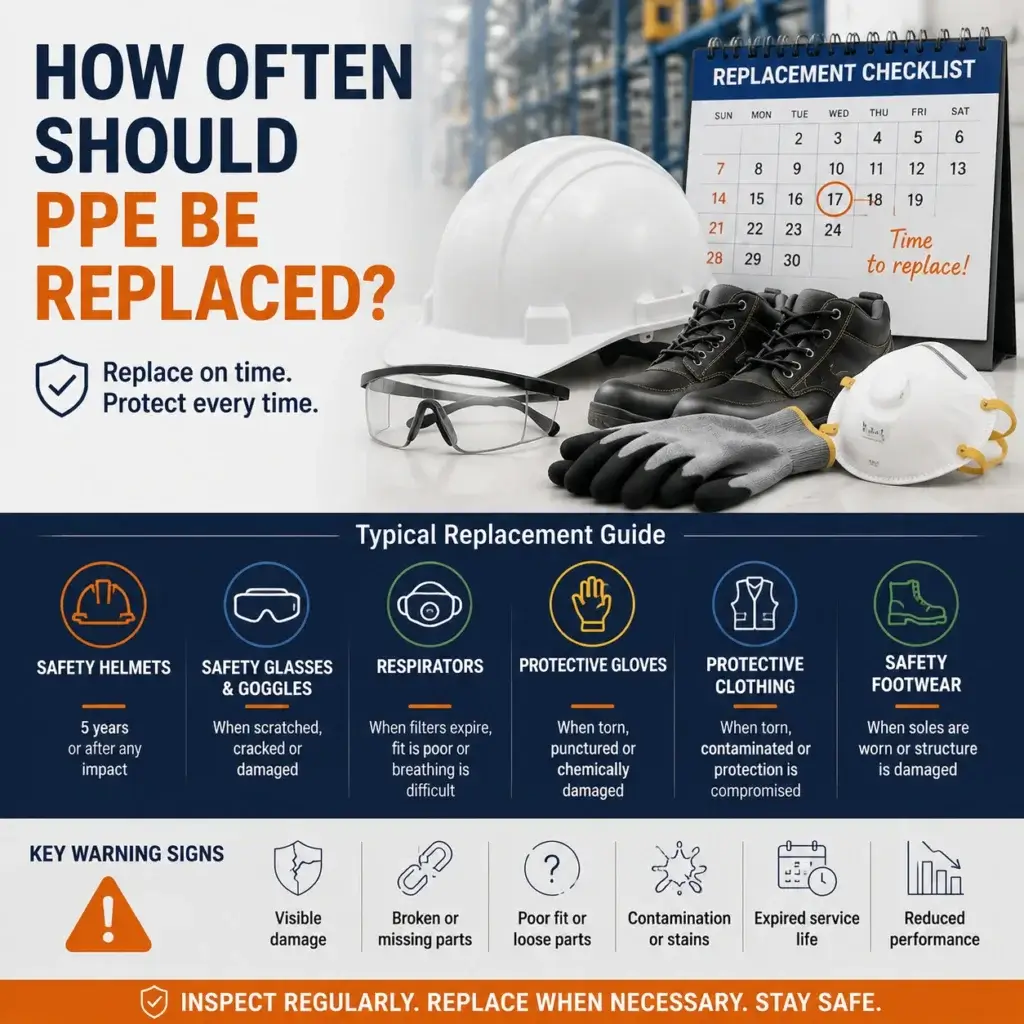
Personal Protective Equipment (PPE) is only effective when it is in good condition. Even the highest-quality safety equipment will eventually wear out due to regular use, environmental exposure, or accidental damage. Replacing PPE at the right time is essential for protecting workers and maintaining compliance with workplace safety requirements.
But one of the most common questions employers and workers ask is:
How often should PPE be replaced?
The answer depends on the type of PPE, the work environment, the level of exposure, and the manufacturer’s recommendations. Rather than following a fixed schedule for every product, companies should inspect PPE regularly and replace it whenever it can no longer provide adequate protection.
This guide explains the typical service life of common PPE and the signs that indicate replacement is necessary.
Why Replacing PPE Matters
PPE is designed to reduce the risk of injury, but damaged or worn equipment may no longer provide the protection workers expect.
Failing to replace PPE on time can lead to:
- Reduced protection against workplace hazards
- Increased risk of injury or illness
- Higher maintenance and replacement costs in the long run
- Non-compliance with workplace safety regulations
Regular inspection and timely replacement are key parts of every workplace safety program.
Factors That Affect PPE Lifespan
The lifespan of PPE varies depending on several factors, including:
- Frequency of use
- Workplace conditions
- Exposure to chemicals, heat, or UV light
- Cleaning and maintenance practices
- Storage conditions
- Product quality and materials
Equipment used in harsh industrial environments typically requires more frequent replacement than PPE used in light-duty applications.
When to Replace Common Types of PPE
Safety Helmets
Safety helmets should be replaced immediately if they:
- Experience a significant impact
- Show cracks, dents, or deformation
- Have damaged suspension systems
- Become brittle due to age or UV exposure
Even if no visible damage is present, helmets should be replaced according to the manufacturer’s recommended service life.
Safety Glasses and Goggles
Replace eye protection if:
- Lenses become scratched or cloudy
- Frames crack or lose their shape
- Straps no longer provide a secure fit
Clear vision is essential for maintaining workplace safety.
Respirators
Respirators should be replaced when:
- They no longer fit properly
- Filters become clogged or expire
- Facepieces are damaged
- Breathing becomes difficult
- Components cannot be cleaned effectively
For reusable respirators, filters and cartridges often require replacement more frequently than the facepiece itself.
Protective Gloves
Replace gloves when you notice:
- Tears or punctures
- Worn coatings
- Chemical damage
- Reduced grip
- Loss of flexibility
Disposable gloves should always be discarded after use.
Protective Clothing
Protective clothing should be replaced if it has:
- Tears or holes
- Burn damage
- Chemical contamination
- Broken zippers or closures
- Excessive wear that reduces protection
Garments used in hazardous environments should be inspected after every use.
Safety Footwear
Safety shoes or boots should be replaced when:
- Soles become excessively worn
- Toe caps are damaged
- Slip resistance decreases
- Uppers crack or separate from the sole
- Waterproof protection fails
Ignoring footwear damage can increase the risk of slips, trips, and foot injuries.
Warning Signs That PPE Needs Replacement
Regardless of the product type, replace PPE immediately if you notice:
- Visible damage
- Missing components
- Poor fit
- Permanent contamination
- Reduced comfort or performance
- Expired service life
- Failed inspection
If there is any doubt about whether PPE can still provide adequate protection, replacing it is the safest option.
Best Practices for Extending PPE Service Life
While PPE should never be used beyond its safe lifespan, proper care can help maximize its durability.
Follow these best practices:
- Inspect PPE before every use.
- Clean equipment according to manufacturer instructions.
- Store PPE in a cool, dry location away from direct sunlight.
- Avoid unnecessary exposure to chemicals and moisture.
- Train employees to recognize signs of wear.
- Keep replacement PPE readily available.
A proactive maintenance program reduces unexpected failures and improves worker safety.
Build a PPE Inspection Schedule
Instead of replacing all PPE at fixed intervals, many organizations establish routine inspection programs.
A typical inspection schedule may include:
- Before each use: Quick visual inspection by the worker.
- Weekly: Supervisor checks frequently used PPE.
- Monthly: Detailed inspection of reusable equipment.
- Annually: Review PPE inventory, replacement records, and compliance requirements.
Documenting inspections helps ensure consistency and supports workplace safety management.
Conclusion
There is no single replacement schedule that applies to every type of PPE. The right time to replace personal protective equipment depends on its condition, the work environment, and how it has been used.
Regular inspections, proper maintenance, and timely replacement help ensure workers remain protected while reducing the risk of equipment failure. Investing in quality PPE is important—but replacing it when necessary is equally essential for maintaining a safe and compliant workplace.