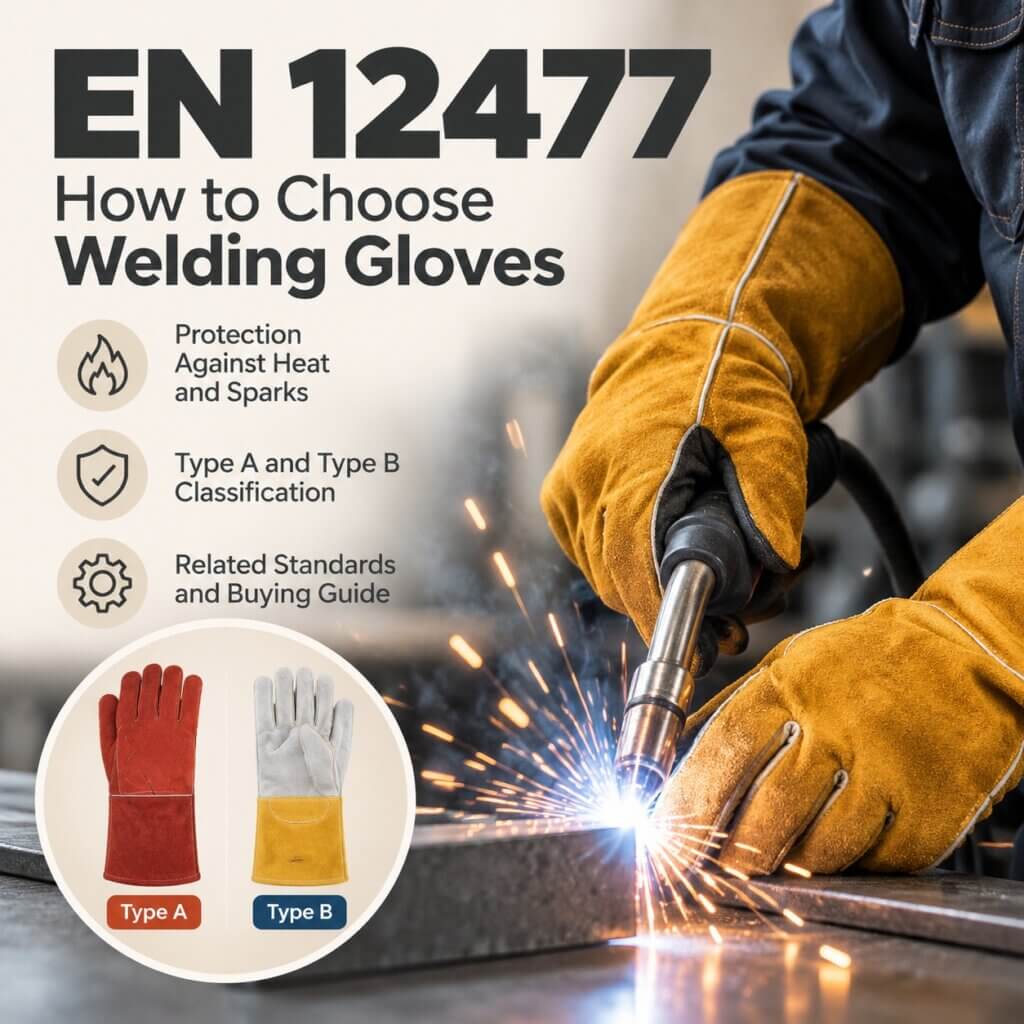
Welding operations expose workers to multiple hazards, including heat, sparks, molten metal splashes, and mechanical risks. Choosing suitable welding gloves requires more than selecting a thick leather glove.
EN 12477 is the key European standard for protective gloves used in welding and related processes. Understanding this standard helps PPE buyers select welding gloves with the right balance between protection, comfort, and dexterity.
What Is EN 12477?
EN 12477 specifies requirements and test methods for protective gloves used during manual metal welding, cutting, and related processes.
Welding gloves designed according to EN 12477 are evaluated for protection against common welding hazards, including:
- Small molten metal splashes
- Limited flame exposure
- Contact heat
- Convective heat
- Mechanical risks
For buyers, EN 12477 provides a useful reference when evaluating welding glove performance and supplier documentation.
EN 12477 Type A vs Type B Welding Gloves
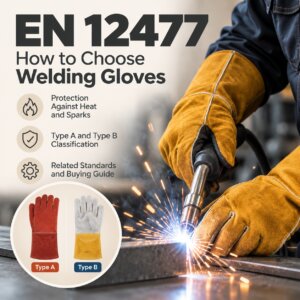
EN 12477 classifies welding gloves into two main types: Type A and Type B.
| Type | Main Characteristics | Typical Applications |
|---|---|---|
| Type A | Designed for applications requiring higher protection performance | General welding tasks where protection is the priority |
| Type B | Designed for applications requiring greater dexterity and flexibility | Precision welding tasks where hand movement is important |
Type B gloves are often selected for applications such as TIG welding, where better finger control is needed.
Type A gloves are commonly used for general welding operations where stronger protection against welding hazards is required.
The correct choice depends on the welding process, working environment, and required level of protection.
EN 12477 and Related Glove Standards
EN 12477 should be considered together with other relevant protective glove standards.
EN ISO 21420: General Requirements for Protective Gloves
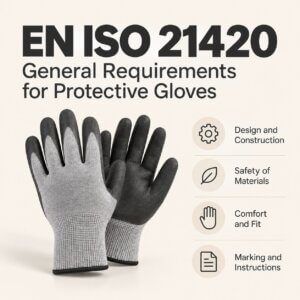
EN ISO 21420 covers general requirements such as glove design, comfort, sizing, marking, and user instructions.
EN 388: Protection Against Mechanical Risks
EN 388 evaluates protection against mechanical hazards, including abrasion, cut, tear, and puncture resistance.
EN 407: Protection Against Thermal Risks
EN 407 evaluates thermal protection performance, including resistance to heat and flame.
While EN 407 focuses on thermal performance, EN 12477 specifically addresses gloves designed for welding applications. In practice, buyers should review the complete product specification rather than relying on one standard alone.
What Should Buyers Consider When Purchasing Welding Gloves?
1. Welding Application
Different welding processes create different protection requirements.
Consider:
- MIG/MAG welding
- TIG welding
- Arc welding
- Welding-related grinding and metal handling
The ideal glove should provide suitable protection while allowing the required level of hand movement.
2. Material and Construction
Common welding glove materials include:
- Cowhide leather
- Split leather
- Goatskin leather
Buyers should also consider:
- Glove length
- Stitching quality
- Heat resistance
- Comfort and flexibility
- Reinforced areas
Material selection should match the actual working conditions and required protection level.
3. Product Documentation
When sourcing welding gloves, buyers should request:
- Product specifications
- Applicable standards
- Test reports or technical documents
- Size information
- Packaging details
Clear documentation helps buyers compare suppliers and confirm whether the product matches their requirements.
EN 12477 Gloves Are Only Part of Welding Protection
Although welding gloves provide important hand protection, they are only one part of a complete welding PPE system.
Depending on the working environment, additional PPE may include:
- Welding helmets
- Flame-resistant clothing
- Safety footwear
- Respiratory protection
- Face and eye protection
A complete risk assessment should determine the appropriate PPE combination.
Conclusion
EN 12477 helps buyers evaluate protective gloves designed for welding applications. Understanding the difference between Type A and Type B gloves, related standards, and application requirements allows purchasers to select more suitable welding protection.
As an experienced PPE supplier, CHEAMY PPE supports global customers in sourcing welding gloves and other safety equipment with suitable specifications, technical documentation, and customization options.
Contact CHEAMY PPE to discuss your welding glove sourcing requirements.